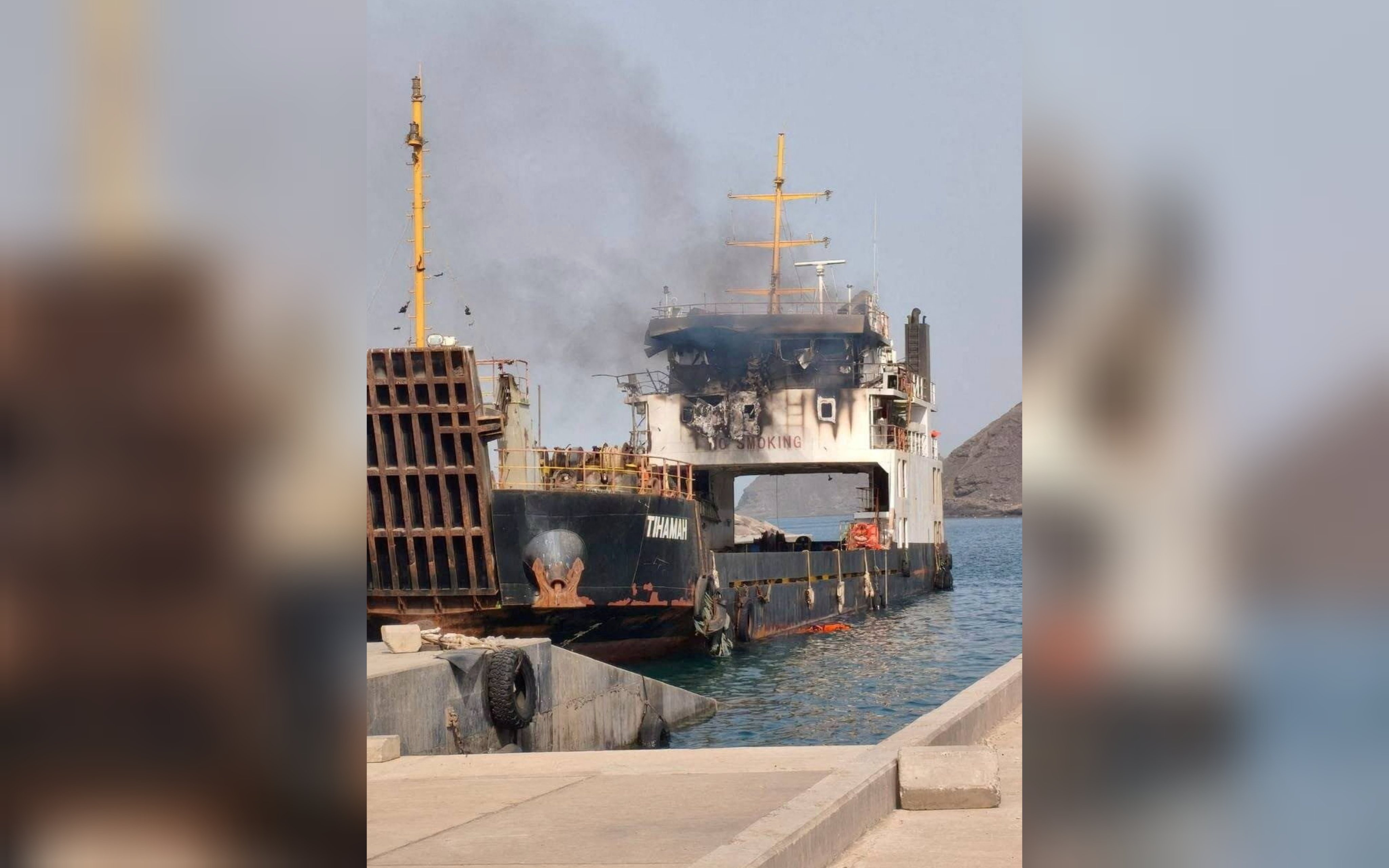
A commercial vessel transporting food supplies has become the latest casualty in Yemen's Houthi campaign of maritime disruption. On Tuesday, the Yemeni-flagged ship Tihamah came under sustained ballistic missile attack while navigating the Bab al-Mandeb Strait, resulting in six deaths and ten injuries, according to Yemen's Coast Guard. The incident underscores the deteriorating security situation in one of the world's most critical shipping corridors and the humanitarian implications of ongoing militant operations in the region.
The attack proved devastating in both immediate and secondary effects. Houthi forces fired three ballistic missiles at the Tihamah, igniting fires aboard the vessel and inflicting substantial structural damage. As rescue teams mobilized to assist the stricken ship and evacuate personnel, militants launched an additional missile strike apparently designed to impede rescue operations and inflict further casualties. This tactic of targeting humanitarian response efforts represents an escalation in the sophistication and lethality of Houthi operations against civilian maritime assets.
The human toll reflects the multinational character of Red Sea shipping networks. Those killed comprised four crew members—three Pakistani nationals and one Indonesian—alongside two members of Yemen's 2nd Naval Brigade. Among the wounded were seven seafarers from the merchant vessel, two coast guard personnel engaged in rescue efforts, and another member of the naval brigade. Eleven additional Pakistani and Indonesian sailors were successfully rescued from the scene, highlighting the international dimension of maritime commerce in the region and the indiscriminate danger posed by such attacks.
Yemen's Transportation Ministry characterized the assault as a calculated targeting of civilian infrastructure and supply chains essential to the nation's survival. The ministry's statement emphasized that the Tihamah's cargo of food supplies was destined to support civilian populations across contested territories, both in government-controlled zones and areas held by Houthi forces. This detail reveals a paradox at the heart of the conflict: attacks ostensibly motivated by political and military objectives directly undermine the food security of populations the attackers claim to represent.
The incident forms part of a documented pattern of escalating Houthi operations targeting Yemen's maritime economy. According to official statements, the militant group has systematically attacked commercial vessels, ports, and civilian infrastructure concentrated in government-controlled areas. This campaign extends beyond military installations to encompass the broader logistics networks sustaining civilian life—supply chains for foodstuffs, consumer goods, and essential commodities serving millions of Yemenis regardless of their location or political affiliation.
The Bab al-Mandeb Strait occupies exceptional geopolitical and commercial importance that amplifies the consequences of such attacks. Positioned as the southern gateway to the Red Sea—directly opposite the better-known Strait of Hormuz—this waterway channelizes a substantial portion of global maritime trade between Europe, Africa, and Asia. Any disruption to transit through this chokepoint reverberates through international supply chains and energy markets, affecting nations far removed from Yemen's internal conflicts. Malaysia and other Southeast Asian trading nations depend on reliable passage through these waters for connections to European and African markets.
The transportation ministry's condemnation of the attack as a "terrorist crime" reflects official frustration with operations that contravene international maritime law and humanitarian principles. More significantly, the characterization underscores how such incidents damage Yemen's already fragile economy and discourage legitimate commercial activity. Shipping companies and insurers factor maritime violence into route calculations and premium assessments; sustained attacks therefore impose economic penalties extending far beyond immediate casualties to encompass reduced trade, elevated insurance costs, and diminished foreign investment.
The humanitarian dimensions deserve particular emphasis given Yemen's status as the world's worst humanitarian crisis by several metrics. A nation dependent on imports for the majority of its food consumption cannot sustain protracted disruptions to maritime supply routes without triggering widespread civilian suffering. The targeting of food-laden vessels thus carries implications extending far beyond the immediate incident to encompass potential malnutrition, disease outbreaks, and accelerating displacement among vulnerable populations unable to absorb supply shocks.
Houthi silence regarding the incident's details contrasts with their typically assertive public communications around military operations. This reticence may reflect internal debate about operational strategy, tactical adjustments following perceived international pressure, or simply the practical difficulties of coordinating propaganda messaging around complex maritime strikes. Regardless, the absence of claimed responsibility does not diminish the established pattern of such attacks or the logical attribution to forces under Houthi command.
For regional observers and maritime powers with interests in Red Sea stability, the Tihamah incident reaffirms the persistent security challenges confronting one of the world's most important strategic waterways. Efforts to establish safe passage protocols, strengthen coastal state capacity for maritime defense, and internationally mediate underlying Yemeni conflicts all remain essential to preventing future incidents. Southeast Asian nations, dependent on unobstructed Red Sea transit for substantial portions of their international commerce, have inherent interests in supporting initiatives promoting maritime security and civilian protection in these critical waters.

