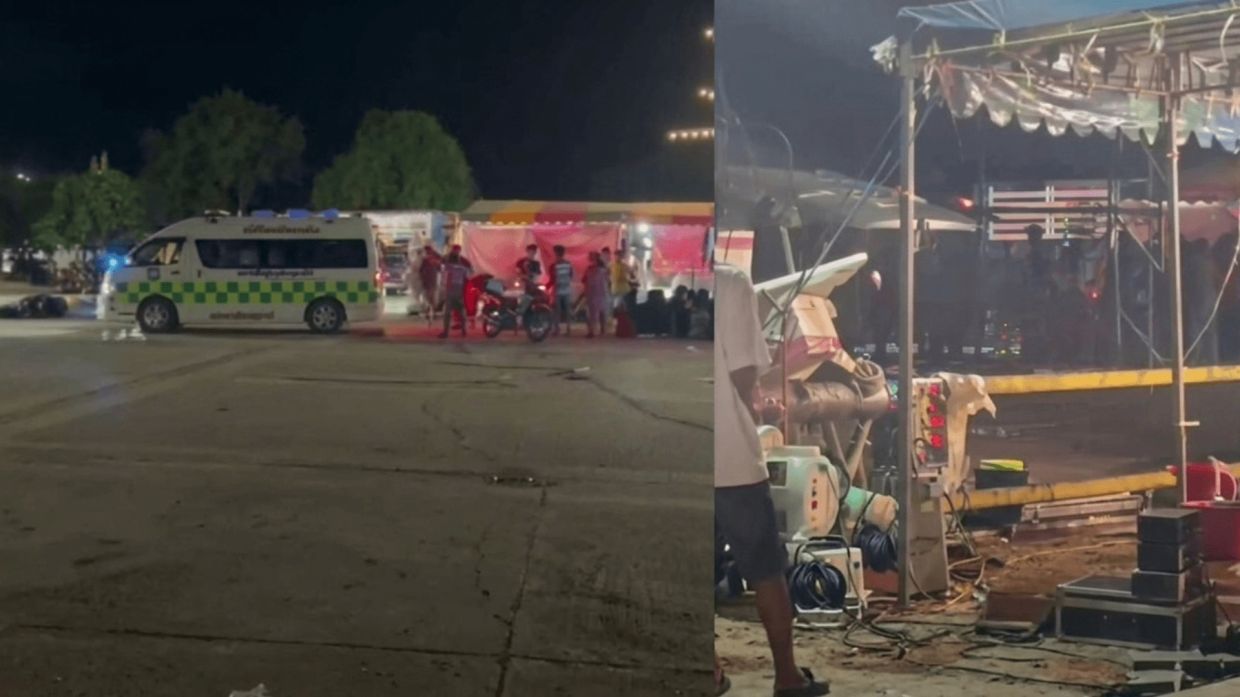
A shooting at a popular outdoor shopping fair in northeastern Thailand has left six people wounded, marking the third gun violence incident in the country within a single week. The attack occurred late Wednesday night at the "Chim Shop Chai" event held in Dan Khun Thot district, Nakhon Ratchasima province, as the gathering was winding down for the evening and merchants were closing their stalls.
According to Prakob Patin, who organized the fair, the violence erupted around 10:30pm when an armed assailant and associates attacked both vendors and visitors using knives alongside what police identified as a homemade firearm. The timing of the assault—during the event's closing phase when crowds were dispersing and business owners were packing merchandise—meant that the full force of potential casualties was limited by the reduced number of people present at that hour. All six wounded individuals were initially admitted to Luang Pho Koon Parisuttho Dan Khun Thot Hospital, though two patients with more severe injuries were subsequently relocated to Maharat Nakhon Ratchasima Hospital for advanced care.
The condition of the victims varies considerably. While most have remained stable, one of the more seriously wounded remains in a comatose state at Maharat Nakhon Ratchasima Hospital, raising concerns about long-term outcomes. The medical response appears to have been swift, with hospital facilities coordinating between local and provincial levels to ensure appropriate treatment based on injury severity. Details regarding the nature and extent of injuries to the four other victims remain limited.
Police have moved quickly in their investigation and apprehension efforts. A law enforcement team under the direction of Dan Khun Thot Police Station Deputy Investigation Inspector Pol Lt Col Akom Chutkhunthot arrested a 32-year-old male suspect at the scene and confiscated a homemade firearm, suggesting that the weapon was likely improvised rather than an officially manufactured firearm. The recovery of such a weapon raises questions about security protocols at public gatherings and the accessibility of materials used to construct firearms in Thailand.
The motive behind the attack has become clearer through preliminary police investigation. The suspect allegedly attempted to steal a motorcycle parked at the fairgrounds, which brought him into direct confrontation with the vehicle's owner. This initial conflict proved to be the catalyst for escalating violence. Rather than accepting defeat or withdrawing from the confrontation, the suspect apparently fled the scene only to return shortly afterward with armed accomplices carrying knives and firearms, suggesting a deliberate decision to exact revenge rather than a spontaneous altercation.
The presence of multiple attackers indicates this was not an isolated incident of personal conflict but rather a coordinated assault. Police have stated that the suspect will face charges related to jointly attempting to murder others through firearm use, a serious offense that carries substantial penalties under Thai criminal law. However, law enforcement remains actively searching for the remaining suspects who participated in the attack, meaning the investigation is far from concluded. The identification and apprehension of these additional individuals remains a priority for authorities.
The significance of this incident extends beyond the immediate injuries and arrests. This shooting represents the third act of gun violence in Thailand within a seven-day period, reflecting a disturbing pattern of escalating violence in the country. On August 7, a separate shooting incident at Debsirin Nonthaburi School claimed nine lives, making it one of Thailand's deadliest recent mass shooting events. Just days before the shopping fair attack, on Monday, the president of the Nonthaburi Provincial Administrative Organisation was shot allegedly by a former Thai lawmaker, indicating that firearms violence is occurring across different contexts and involving individuals from various backgrounds.
For Malaysian readers and observers across Southeast Asia, this clustering of shooting incidents within Thailand warrants attention as a regional security concern. Thailand's experience with gun violence, particularly the recurring mass shooting events, contrasts with varying legal frameworks across neighboring countries. The proliferation of homemade firearms, as evidenced by the weapon seized at Dan Khun Thot, suggests that weapon manufacturing control remains a challenge for Thai authorities. The involvement of a former lawmaker in one incident and what appears to be organized accomplices in another indicates that gun violence spans both common criminal activity and higher-profile actors within Thai society.
These developments also raise questions about Thailand's public safety infrastructure and crowd management at community events. Shopping fairs and local markets are commonplace gathering spaces throughout Thailand and Southeast Asia, venues typically considered relatively safe for families and merchants. The breach of security at such an event, even if incident rates remain statistically low, creates public concern about vulnerability in spaces traditionally considered protected. Event organizers and local authorities may need to reassess security measures at outdoor public gatherings.
The rapid police response and arrest in this particular case demonstrates effective law enforcement coordination at the district level. However, the continuing search for accomplices underscores that investigations of this nature require sustained effort beyond initial arrests. Thai police will need to establish connections between the various shooting incidents if any links exist, and determine whether the August 7 school shooting, the Monday assault on the PAO president, and the Dan Khun Thot shopping fair attack represent isolated incidents or symptoms of broader violence trends.
The injuries sustained at the shopping fair, while significant, appear less severe than those inflicted in the school shooting tragedy. This distinction may reflect the chaotic nature of the attack—occurring outdoors in a dispersing crowd rather than in a confined institutional setting. Nevertheless, the pattern of multiple gun incidents within days raises urgent questions for Thai policymakers regarding firearm regulation, particularly concerning homemade weapons, and the broader societal factors contributing to this spike in violence.

