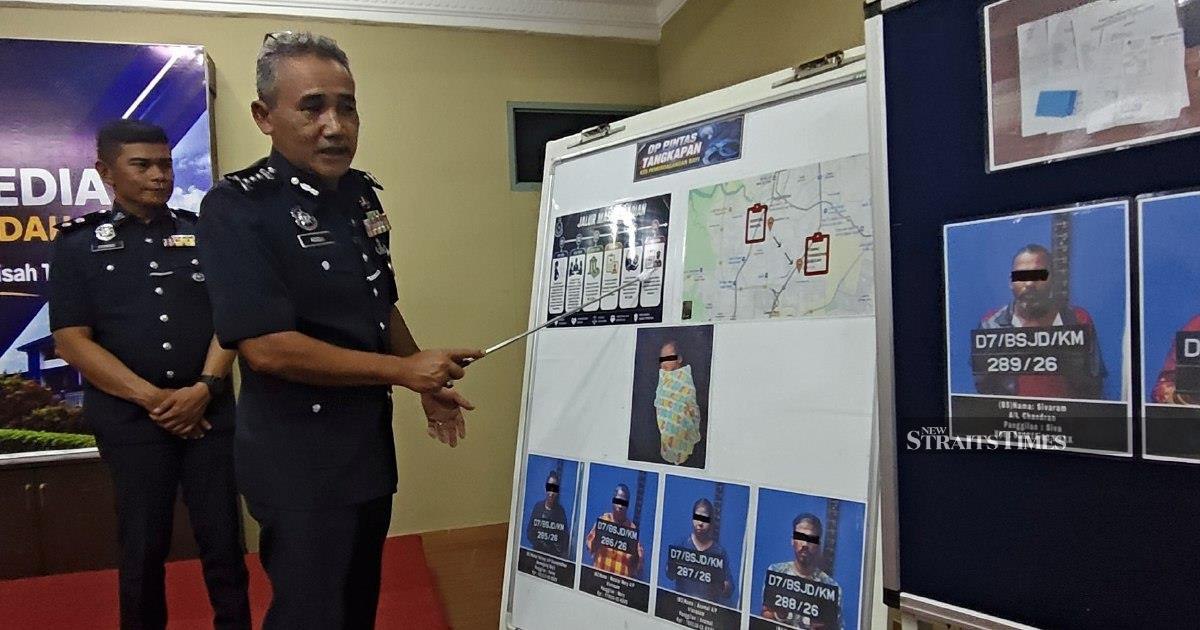
Authorities in Kedah have moved swiftly to dismantle what investigators believe is an organized baby trafficking network, with six arrests made in the Kuala Muda district. Among those detained is a mother who delivered just five days before her apprehension, signalling the complex and disturbing nature of the operation that police have uncovered.
The arrest operation represents a significant intervention by law enforcement in a case that touches upon one of the most vulnerable segments of society—newborn infants and exploited mothers. The involvement of a recently postpartum woman in the suspected trafficking scheme raises difficult questions about coercion, desperation, and the systemic vulnerabilities that criminals exploit in reproductive healthcare and family arrangements across the region.
Baby trafficking remains an underreported but persistent problem throughout Southeast Asia, where demand for infants in adoption markets, particularly from wealthier families or abroad, creates dangerous criminal incentives. Malaysia, as a middle-income nation with significant wealth disparities and a diverse population, has occasionally served as both a source and transit point for such illicit activities. The Kuala Muda operation, located in northern Peninsular Malaysia's industrial and agricultural heartland, suggests that trafficking networks operate beyond major urban centres, exploiting communities with limited awareness or resources to report suspicious activities.
The arrest of a recently postpartum mother indicates that the suspected trafficking ring may have targeted vulnerable women during their most physically and emotionally fragile period. Hospitals and birthing facilities, which should serve as protective environments, can inadvertently become contact points for traffickers who identify mothers in financial distress or without adequate family support networks. The five-day timeline between delivery and arrest suggests the operation moved with alarming speed to exploit this window of vulnerability.
Police investigations into such cases typically reveal layered criminal involvement, ranging from medical professionals or facility staff who provide information or facilitate transfers, to intermediaries who identify and approach vulnerable families, to downstream recipients who pose as legitimate adoptive families or charitable organizations. The arrest of multiple individuals suggests that investigators have begun to map this criminal chain, though prosecuting cases often proves difficult due to the emotional complexity, evidentiary challenges, and the extreme reluctance of victims to testify against those who may have offered them financial assistance during desperate circumstances.
The implications for Malaysia's child protection framework are substantial. While the country has legal mechanisms to prevent trafficking and protect children's rights, enforcement remains inconsistent across state boundaries and healthcare settings. Kuala Muda's location in Kedah underscores that rigorous oversight must extend beyond major metropolitan areas where regulatory attention naturally concentrates. Rural and semi-industrial zones often lack the institutional infrastructure and trained personnel necessary to identify and report suspicious transactions involving newborns.
International dimensions of baby trafficking frequently involve forged documents, fraudulent adoption papers, and cross-border movement of infants to neighbouring countries or further afield. Malaysian authorities cooperate with regional partners through ASEAN frameworks and bilateral agreements, yet gaps remain in intelligence-sharing and coordinated enforcement. The Kuala Muda arrests may prompt deeper investigation into whether the network had transnational connections or operated purely within domestic markets.
For Malaysian readers, this case highlights the importance of reporting suspicions about rapid infant transfers, unusual adoption arrangements, or offers of money to pregnant women or new mothers. Community awareness campaigns and training for healthcare workers remain essential tools in disrupting trafficking networks before infants are separated from their biological families or placed into exploitative situations. The fact that authorities detected and arrested participants relatively quickly suggests that vigilant reporting or investigation by informed individuals may have contributed to the breakthrough.
The psychological and physical trauma inflicted on mothers separated from newborns, as well as the lifelong consequences for infants trafficked into uncertain circumstances, represent profound human costs that statistics and legal proceedings cannot fully capture. Recovery and rehabilitation services for identified victims in Malaysia remain underdeveloped compared to the scale of potential demand, leaving survivors with limited institutional support as they process their experiences and attempt to rebuild family connections.
As investigations deepen and prosecution proceeds, the Kuala Muda case will likely yield insights into how Malaysian criminal networks operate and where preventative interventions prove most effective. Strengthening collaboration between police, healthcare providers, social workers, and community organizations remains essential to disrupting the economic incentives that drive traffickers and protecting Malaysia's most defenceless citizens from exploitation.

