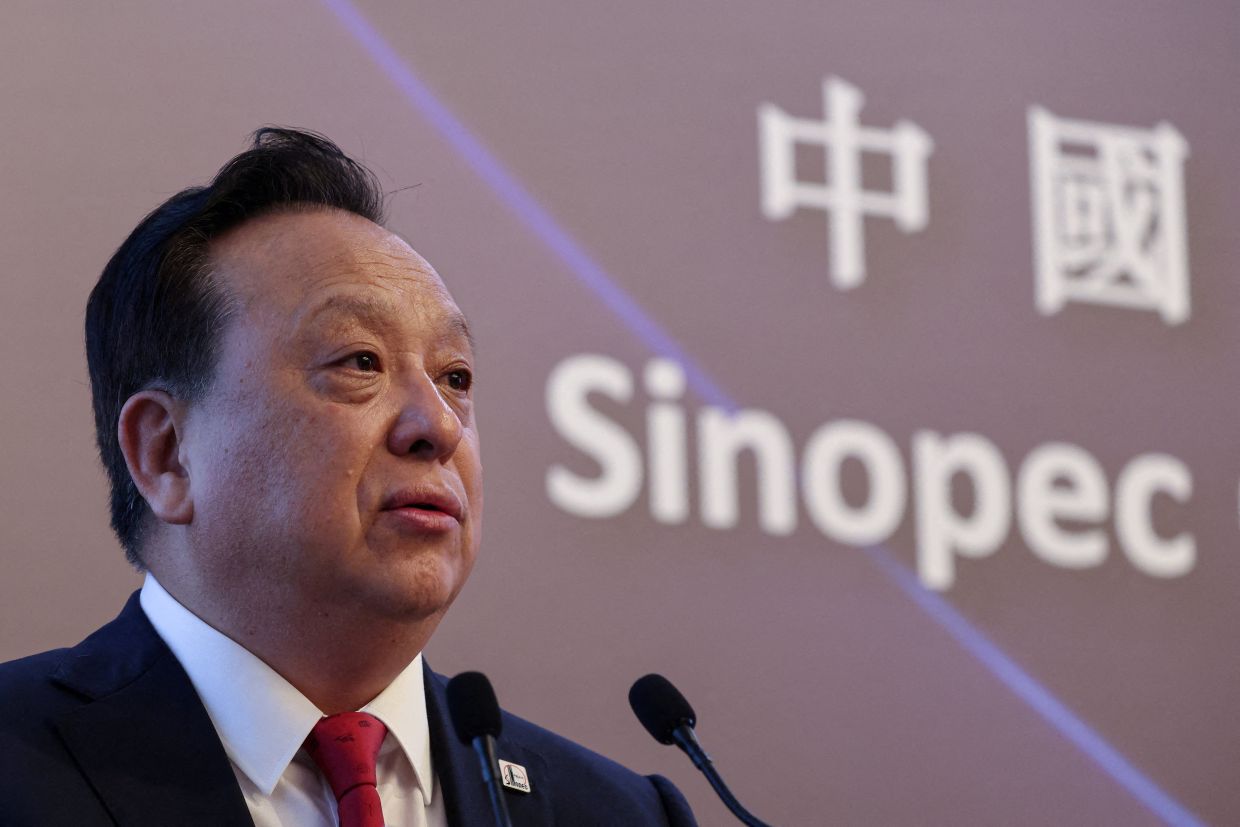
Hou Qijun, who took the helm of Sinopec just over a year ago, is pursuing an unusually ambitious corporate overhaul for a state-controlled enterprise in China. Unlike many peers content to manage decline during their twilight professional years, the 60-year-old is steering the world's largest oil refiner through a comprehensive restructuring aimed at addressing fundamental market challenges threatening its future viability. His appointment as chairman came at a critical juncture when Sinopec faced mounting pressures from shrinking fuel demand, bloated petrochemical capacity, and unprecedented supply disruptions linked to geopolitical conflicts in the Middle East.
The restructuring programme has consolidated Sinopec's sprawling operations into four distinct profit centres designed to operate with greater commercial autonomy: upstream oil, gas and new energy; refining and petrochemicals; finance and strategic ventures; and a fourth business combining global commodity trading with the company's extensive domestic marketing infrastructure for fuel products, liquefied natural gas, and chemicals. This architectural shift represents a deliberate departure from the traditional hierarchical model that has characterised Chinese state oil companies, introducing competitive pressure and accountability mechanisms within internal divisions. The goal is to instil entrepreneurial discipline throughout an organisation that has historically grown resistant to market signals as it expanded in scale.
Hou articulated his strategic vision with remarkable candour for a leader of a state-owned behemoth, addressing fundamental weaknesses in an official publication released by China's State-owned Assets Supervision and Administration Commission. Rather than blaming external factors, he identified internal institutional paralysis as the primary obstacle to transformation. The "big company syndrome" he referenced—a phenomenon where bureaucratic inertia prevents agile responses to market disruptions—represents a chronic ailment across Chinese state enterprises, yet one rarely acknowledged so directly by their executives. His willingness to diagnose organisational dysfunction suggests a departure from typical state company leadership patterns and signals commitment to substantive rather than cosmetic change.
The challenges confronting Sinopec are both immediate and systemic. Fuel sales have contracted to levels not seen since 2017, while the company operates at a disadvantage in defending domestic market share against nimbler competitors. Most critically, the fundamental demand trajectory for transport fuels has shifted decisively downward as vehicle electrification accelerates across China and globally. Sinopec's current production capacity of approximately 3.6 million barrels daily of gasoline and diesel represents increasingly stranded infrastructure in a market experiencing structural decline. Hou's stark observation at a Hong Kong earnings briefing captured this predicament: with half of China's new vehicle sales now comprising electric models requiring no fuel, continuing to expand traditional refining capacity appears economically irrational.
The company's pivot toward higher-value petrochemicals and novel energy sources reflects recognition that commodity refining offers diminishing returns. By allocating over 30 billion yuan annually—representing approximately 20 percent of total capital expenditure over the 2026-2030 planning period—toward new energy and advanced materials development, Sinopec is attempting to rebalance its portfolio. The financial commitment underscores genuine strategic intent rather than rhetorical positioning. The targeted completion of more than thirty projects by 2030 encompasses diverse initiatives including reserve building, shale oil development, sustainable aviation fuel production, and refining cost reduction. These projects collectively articulate a vision of gradual decarbonisation: transitioning from high-carbon to low-carbon to eventually zero-carbon energy sources.
Hou's background as a geologist who spent formative career decades at Daqing oilfield and subsequently held senior positions at China National Petroleum Corporation provides both technical credibility and intimate knowledge of China's entire energy value chain. His prior stewardship of PipeChina—a state entity consolidating pipeline assets of China's three major oil companies—demonstrates capacity to execute large-scale restructuring within the state-owned sector. Colleagues describe him as unusually decisive and action-oriented for a state enterprise executive, capable of extended off-the-cuff technical discussions grounded in genuine conviction. This combination of geological expertise, experience managing integrated energy systems, and demonstrated willingness to implement structural change distinguishes him from counterparts primarily trained in bureaucratic administration.
The intensity of competition in downstream petrochemicals presents a formidable challenge to Sinopec's transformation strategy. Local government-backed enterprises like Wanhua Chemical and privately-held competitors including Satellite Chemical have already established dominant positions in ethylene and other key chemical building blocks. Overcapacity plagues the entire sector, constraining margins and limiting pricing power. Sinopec cannot simply reallocate capital from refining to chemicals and expect commensurate profitability; it must identify differentiated market niches and develop competitive advantages in novel materials where demand growth remains robust. The transition from commodity-scale volume production to specialty chemistry represents not merely different products but fundamentally different competitive dynamics requiring distinct operational capabilities.
Shale oil development at the Jiyang trough within Sinopec's flagship Shengli oilfield represents another crucial pillar of the transformation agenda. Conventional reserves at Shengli have been depleted through decades of production, necessitating investment in more technically demanding and capital-intensive unconventional extraction methods. Hou's personal designation as "commander-in-chief" of this project signals its strategic centrality to Sinopec's future production profile. Successful shale development would partially offset declining conventional crude availability and extend the company's viability as an upstream producer, though at substantially higher cost and requiring sustained technological innovation.
The government backdrop supporting commercially challenging investments substantially enhances Sinopec's strategic flexibility compared to privately-owned international energy companies. State support for hydrogen development, carbon capture technologies, and other emerging energy sectors creates a de facto subsidy mechanism enabling Sinopec to pursue investments that might prove uneconomical in a purely market-driven environment. This structural advantage—what some characterise as patient state capital willing to absorb losses for strategic objectives—permits longer-term positioning in nascent technologies. However, as Oxford Institute for Energy Studies researcher Michal Maiden points out, this advantage remains incomplete. The critical question facing Sinopec and other state-owned energy giants concerns their capacity to compete effectively against non-state actors entering new energy sectors without the bureaucratic constraints and path dependencies that encumber traditional state enterprises.
Sinopec's reported 19 percent increase in net profit for the first half of 2026 provides some reassurance regarding near-term financial resilience despite severe headwinds including oil supply disruptions from Middle Eastern conflicts and government restrictions on passing elevated crude costs to consumers. This profitability cushion provides breathing room for the multiyear transformation programme, though profit growth masks underlying structural vulnerabilities. The constraint on fuel price transmission—a policy measure protecting Chinese consumers from volatile international markets—effectively limits Sinopec's ability to defend margins during periods of elevated crude costs, squeezing profitability from the refining segment that previously generated reliable cash flows. As consumer demand for traditional fuels inexorably contracts, this regulatory constraint becomes increasingly binding.
The broader significance of Hou's transformation programme extends beyond Sinopec itself, offering insights into how Chinese state enterprises are reckoning with disruptive structural change in global energy markets. The energy transition poses existential questions for organisations built around fossil fuel production and refining when demand trajectories shift decisively. Hou's willingness to challenge institutional inertia and acknowledge the inadequacy of traditional response mechanisms suggests senior Chinese leadership recognises that cosmetic adjustments and incremental change prove insufficient when confronted with fundamental market transformation. Whether his restructuring succeeds depends partly on execution capability and partly on broader government policies regarding energy pricing, energy security objectives, and subsidy frameworks that influence downstream investment returns.
For Malaysian and Southeast Asian observers, Sinopec's transformation carries important implications. Regional energy security depends partly on stable refining infrastructure and petrochemical supply chains; disruptions at the world's largest refiner could reverberate throughout Asia's downstream sectors. Additionally, Sinopec's shift toward new energy and advanced materials creates potential competitive pressures for regional petrochemical producers and alternative energy suppliers across Southeast Asia. The company's substantial capital allocation toward new energy suggests that Chinese state enterprises will aggressively develop competitive positions in hydrogen, carbon capture, and other emerging technologies that regional economies similarly pursue. As Sinopec evolves from traditional refiner toward diversified energy company, it will reshape competitive dynamics across multiple downstream segments affecting Malaysian and regional energy industries.

