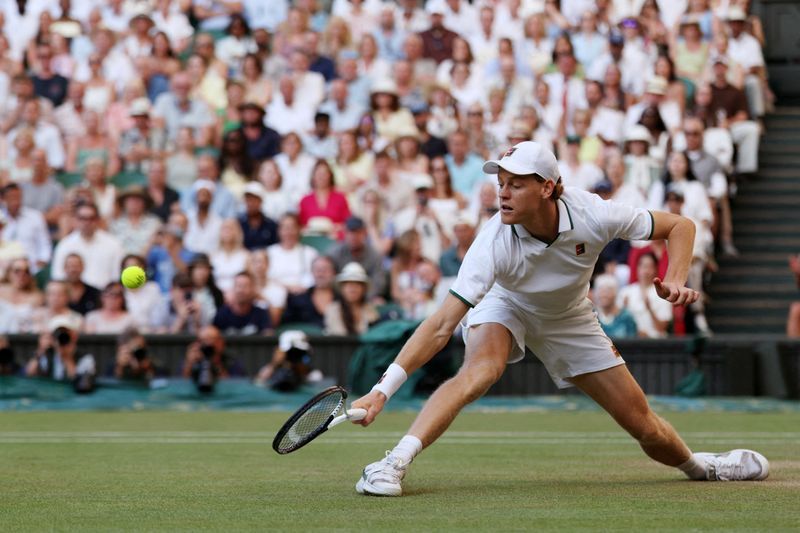
World number one Jannik Sinner will miss the US Open after a right knee injury forced him to withdraw from the season's final Grand Slam tournament. The 24-year-old Italian announced his decision on Friday, marking a significant blow to what promised to be a competitive field in New York. Sinner's withdrawal deprives the event of one of tennis's most dominant figures and reshapes the tournament's competitive landscape heading into the August 23 to September 13 event.
Sinner's injury troubles began earlier this month, preventing him from competing since. Despite intensive rehabilitation efforts with his medical team and coaching staff, recovery has progressed slower than anticipated. The player acknowledged in a statement that even after returning to training in Monte Carlo over recent days, the knee issue remains unresolved. This cautious approach reflects the severity of the injury and the risks posed by rushing back to elite competition on hard courts, traditionally the most physically demanding surface in professional tennis.
The absence compounds Sinner's missed opportunities at two crucial hard-court preparatory events. He sat out both the Cincinnati Open and Canadian Open, tournaments that serve as vital tuning grounds before the US Open. These absences already signalled concerns about his fitness, with the knee proving problematic enough to warrant skipping high-profile competitions that typically feature the sport's elite players. For Sinner, missing these events and now the Grand Slam represents a significant disruption to momentum he had built through winning his fifth major title at Wimbledon last month.
The timing of Sinner's withdrawal creates immediate advantages for his primary rival, Spain's Carlos Alcaraz. Alcaraz announced just Thursday that he would return to competitive play at Flushing Meadows following a four-month break away from professional tennis. The world number two now arrives in New York as the highest-ranked player competing, a substantial boost to his title credentials despite questions surrounding his own recent injury recovery. Alcaraz's four-month absence raises questions about match fitness and preparation, yet Sinner's withdrawal removes uncertainty about facing the player most capable of challenging him throughout the tournament.
Alcaraz brings considerable recent history to the US Open, having claimed the title last year by defeating Sinner in the final. That victory demonstrated his capacity to perform under pressure on hard courts and against top-ranked opposition. With Sinner now absent, Alcaraz holds a clearer path through the draw and enters the tournament as the primary favourite despite the rust that typically accompanies extended breaks from competition. His return to play at the season's most prestigious remaining event carries both motivational weight and practical uncertainty about whether four months away has dulled his competitive edge.
The withdrawal carries broader implications for the ATP Tour's competitive balance heading into the year's closing months. Sinner, who has dominated much of 2024 with consistent performances and major victories, suddenly faces an uncertain timeline for his return to top-level tennis. The caution exercised by his team reflects the unforgiving nature of hard-court tennis, where surface-induced stress on joints can spiral into chronic problems if not properly managed. Young players at Sinner's career stage typically face pressure to compete through minor injuries, making the decision to sit out a Grand Slam particularly notable.
From a Southeast Asian perspective, the US Open remains a crucial tournament for regional tennis aspirations and global sporting prestige. The absence of Sinner, one of the modern era's most compelling young champions, diminishes the tournament's star power for broadcasters and audiences across the region. Malaysian tennis fans accustomed to following top players will note how injuries at this level can derail seasons and affect sponsorship prospects, coaching adaptations, and player trajectories. The situation underscores the physical toll of the modern professional tennis calendar, particularly for athletes competing across multiple surfaces and time zones throughout the year.
Sinner's situation also reflects evolving attitudes toward player welfare and recovery in professional tennis. Rather than risk long-term damage by forcing his return, the Italian's camp has prioritized healing over immediate competition. This contrasts with historical approaches where players often competed injured to avoid falling in rankings or losing sponsorship relationships. The decision suggests growing recognition that protecting long-term careers sometimes requires missing prestigious events, though such withdrawals still carry reputational risks and ranking implications.
The US Open's competitive field will now be reshaped without Sinner's presence, potentially opening opportunities for other contenders who might struggle against the Italian's aggressive baseline game. Players ranked outside the immediate top tier could benefit from an altered draw, though Alcaraz's positioning as favourite remains largely unchanged. The tournament nevertheless loses the narrative intrigue of a potential rematch between last year's finalists and instead faces questions about whether Alcaraz can win without facing the player many consider his closest rival.
Sinner's recovery timeline remains unclear, with no specific date announced for his competitive return. The player and his team will likely take additional weeks beyond the US Open to ensure the knee can withstand the demands of tour-level tennis. This conservative approach, while understandable medically, means Sinner will miss crucial ranking points and tournament opportunities during the season's final months. For Malaysian sports observers interested in how elite athletes manage injuries and career longevity, Sinner's withdrawal offers instructive lessons about the intersection of ambition, physical limits, and professional decision-making.

