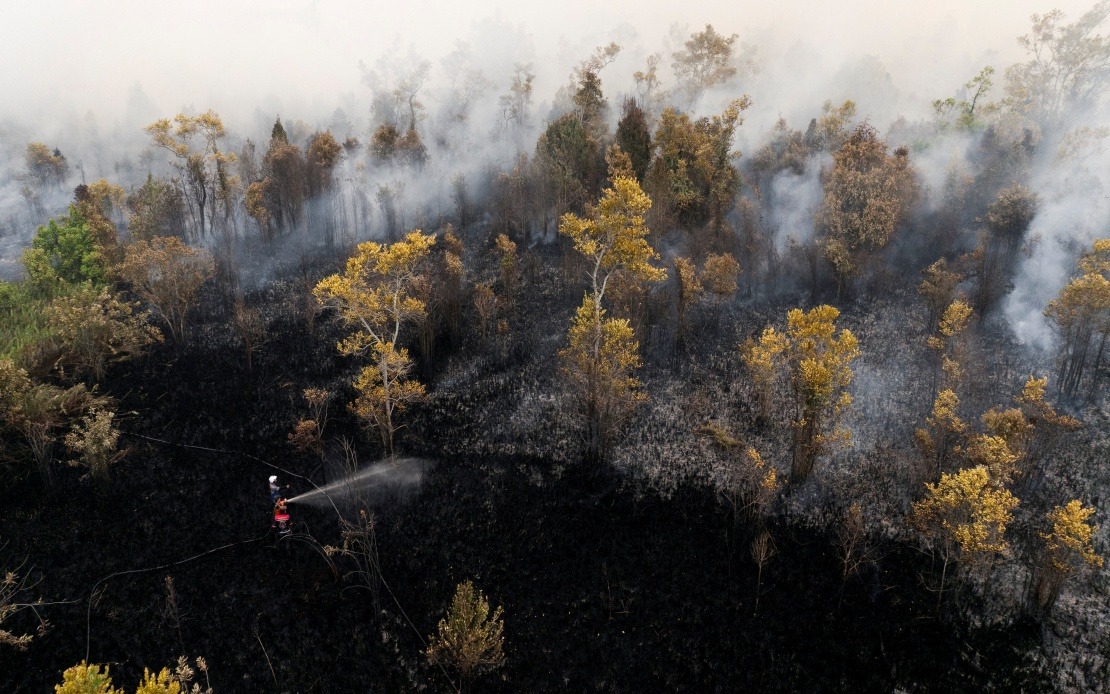
Singkawang Airport in West Kalimantan ceased all flight operations on Saturday as deteriorating haze conditions from active forest and land fires forced authorities to prioritise passenger safety over scheduled departures and arrivals. The decision to ground flights at the facility, which ordinarily handles domestic services to and from the region, underscores the severity of the environmental crisis engulfing Indonesia's portion of Borneo as the dry season intensifies fire activity across multiple provinces.
The airport authority announced the suspension through its official Instagram account, citing safety considerations as the determining factor. Travellers whose flights were affected were directed to liaise directly with their respective airlines regarding rebooking and compensation arrangements. The closure represents a significant disruption to regional connectivity, given that Singkawang sits approximately 145 kilometres north of Pontianak, the capital of West Kalimantan, and serves as a key transportation hub for the western section of the island.
Indonesia's Transport Ministry disclosed on Friday that it was maintaining heightened surveillance over smoke plumes originating from fire-affected areas and monitoring the cascading impact on aviation operations at multiple airports throughout Kalimantan. The ministry's focus on this issue reflects concern that fire-induced haze could trigger a broader transportation crisis affecting multiple facilities simultaneously, potentially disrupting logistics networks and business operations across Southeast Asia. Lukman F. Laisa, the Director-General of Civil Aviation, emphasised that visibility represents a non-negotiable safety parameter in aviation operations, with airlines obligated to implement delays, route diversions, or complete cancellations when atmospheric conditions deteriorate below regulatory minimums.
The operational philosophy articulated by Laisa demonstrates the tension authorities navigate between economic interests in maintaining flight schedules and the paramount concern for passenger protection. Airlines operating in affected regions face mounting pressure to balance commercial obligations against regulatory compliance, knowing that proceeding with flights in hazardous conditions exposes operators to significant liability and regulatory sanctions. The ministry's continued coordination with all relevant stakeholders suggests a structured response framework has been activated to manage the unfolding crisis systematically.
Satellite monitoring conducted by NASA's Terra and Aqua systems revealed an alarming distribution of fire hotspots across Kalimantan as of late Friday evening. Central Kalimantan registered 56 high-confidence hotspots, West Kalimantan identified 51, and South Kalimantan recorded 19, totalling 126 active fire locations requiring immediate suppression. These figures, derived from thermal imaging technology capable of detecting ground heat signatures, indicate a fire emergency of substantial geographic scope, suggesting that suppression efforts face considerable logistical challenges given the dispersed nature of the outbreak.
Indonesia's Meteorology, Climatology and Geophysics Agency (BMKG) corroborated the satellite findings through ground-based air quality monitoring, reporting that substantial portions of West and Central Kalimantan were experiencing air quality conditions classified as very unhealthy. This classification carries serious implications for public health, particularly for vulnerable populations including children, elderly persons, and individuals with respiratory conditions. The geographic extent of very unhealthy air quality indicates that the problem transcends localised inconvenience and has evolved into a regional public health emergency.
Government response mechanisms have been mobilised across multiple operational domains. Ground-based firefighting teams and aerial units, including water-bombing aircraft, are actively engaged in suppression operations across affected areas. Additionally, authorities have prepared weather modification capabilities, which involve cloud-seeding techniques designed to induce precipitation when atmospheric conditions prove favourable. However, the effectiveness of such interventions depends heavily on meteorological circumstances, creating uncertainty about the timeline for achieving meaningful fire reduction.
The law enforcement dimension of the crisis has garnered particular attention from Central Kalimantan authorities. By mid-August, the provincial police force had identified approximately 12 suspects in connection with forest and land fire incidents, indicating that human activity—whether through negligence, accident, or deliberate action—features prominently in the current outbreak. Central Kalimantan's police chief, Inspector-General Iwan Kurniawan, indicated that systematic investigations were underway to establish causation and apportion responsibility in individual cases, suggesting that prosecutions may follow.
The timing of this crisis carries significant implications for Malaysia and Southeast Asian economies. For Malaysian airlines and cargo operators, extended disruptions at Indonesian airports translate into operational complications, increased fuel consumption from rerouting, schedule delays affecting connectivity, and potential revenue losses. Regional supply chains reliant on cross-border air transport face uncertainty, particularly sectors dependent on rapid shipment of perishable goods or time-sensitive components. Beyond immediate commercial disruption, transboundary haze also affects air quality in neighbouring Malaysian states, particularly Sarawak and Sabah, creating public health concerns in addition to aviation complications.
The broader pattern of recurring dry-season fire crises in Kalimantan reflects structural vulnerabilities in land management, forest protection, and environmental enforcement across the region. While this particular episode may subside with the eventual onset of wetter conditions, the underlying conditions—including agricultural conversion pressures, inadequate forest patrol capabilities, and occasional involvement of commercial interests in land clearing—remain unresolved. The transportation disruption caused by Singkawang's closure exemplifies how environmental degradation cascades into economic disruption, affecting regional competitiveness and investor confidence.
Moving forward, the effectiveness of Indonesia's response mechanisms will determine whether the current situation stabilises or deteriorates further. For Malaysian readers and businesses, the situation warrants attention regarding potential flight disruptions, air quality impacts, and supply chain complications. The episode also underscores the interdependent nature of Southeast Asian environmental challenges, as pollution and transportation disruptions respect no borders, making collaborative regional approaches to forest fire prevention increasingly essential for maintaining economic stability and public welfare across the region.

