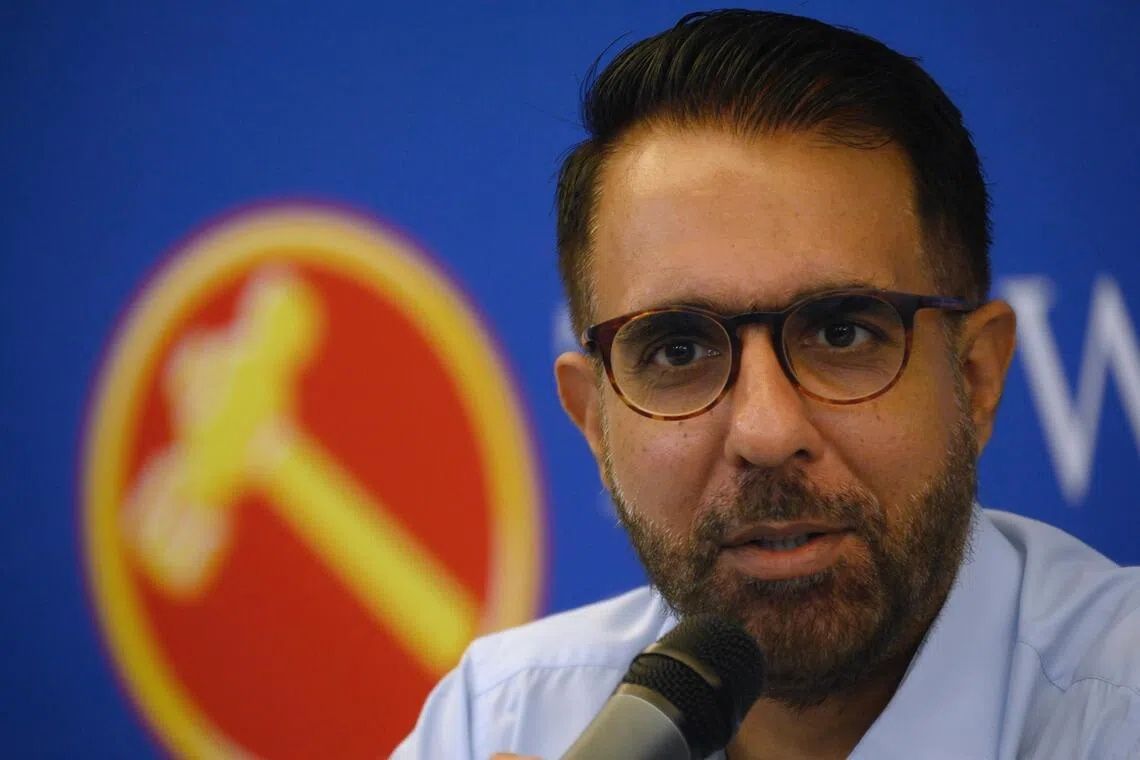
A leadership crisis looms for Singapore's Workers' Party as discontented cadres plot to remove Pritam Singh from his position of secretary-general at internal elections scheduled for June 28. The push for change gained momentum following a High Court ruling in December 2025 that upheld Pritam's conviction for providing misleading information to a parliamentary committee, a legal defeat that has galvanised efforts within the opposition party's inner circle to find a replacement leader.
The movement to oust Pritam represents a dramatic escalation of tensions that have simmered within the party for months. A coordinated letter from 25 cadres in December 2025 formally triggered a special conference, where Pritam will be required to justify his actions leading to his conviction. These petitioners, a mix of former central executive committee members and unsuccessful election candidates, have explicitly called for his resignation and requested a secret ballot to determine his fate should he decline to step down voluntarily. The mood among this faction reflects deep frustration with how Pritam managed a significant scandal involving former Sengkang GRC MP Raeesah Khan, whose parliamentary falsehood he allegedly helped conceal.
The identity of potential challengers remains shrouded in uncertainty, with party insiders revealing that overtures have been made to several senior Members of Parliament. The names circulating include Gerald Giam of Aljunied GRC, Hougang's Dennis Tan, and Sengkang GRC representatives He Ting Ru and Jamus Lim. Notably, both He and Lim served on the disciplinary panel that found Pritam violated the party's constitution through his conduct. However, none of these figures have publicly confirmed their willingness to stand for election, a cautious silence likely driven by fear of party disciplinary measures against outspoken dissenters. The fluid nature of the situation means circumstances could shift dramatically before the June 28 vote, according to party sources.
What makes this internal struggle particularly significant for Malaysian and regional observers is its reflection of broader tensions affecting opposition politics in the city-state. The Workers' Party, long regarded as Singapore's most credible alternative political force, has built its electoral appeal on an image of integrity and competence in contrast to the dominant People's Action Party. Pritam's conviction undermines this carefully cultivated brand positioning, creating a strategic vulnerability that concerns party veterans. The irony is stark: the party's core electoral appeal rests on trustworthiness, yet its leader now carries a court judgment of dishonesty. This existential question about whether the party can maintain its moral authority with Pritam at the helm drives much of the internal rebellion.
The role of former party chief Low Thia Khiang has emerged as a critical variable in determining whether a challenger will successfully materialise. Low, who led the Workers' Party from 2001 to 2018 and achieved the historic breakthrough of winning Aljunied GRC in 2011, retains substantial influence among the cadre base. Intelligence from party insiders suggests Low may have voted against Pritam during a central executive committee discussion of the disciplinary findings, potentially signalling a withdrawal of support. Should Low explicitly back an alternative candidate, calculations by unhappy cadres suggest approximately 30 votes could combine with Low's sympathisers to form a majority capable of removing Pritam. The precedent exists: Low himself faced a challenge from Chen Show Mao in 2016, which many of today's dissidents supported, demonstrating that leadership contests within the party are possible when sufficient dissatisfaction accumulates.
The underlying grievances extend beyond Pritam's legal troubles. The handling of Raeesah Khan's false parliamentary statement in August 2021, which she only admitted in November that year, represents a critical failure in party management that cadres believe tarnished the Workers' Party's reputation for integrity. Pritam's alleged guidance to Khan in maintaining her falsehood constitutes the core of his conviction. This episode created lasting resentment among cadres who view it as a fundamental betrayal of party principles and a self-inflicted wound that the opposition simply could not afford. The conviction validates their concerns and crystallises arguments that Pritam's continued leadership is incompatible with the party's stated values.
Additional concerns about Pritam's leadership effectiveness have surfaced regarding parliamentary representation and electoral performance. Prime Minister Lawrence Wong removed Pritam as Leader of the Opposition in January 2026, a significant diminishment of the Workers' Party's institutional standing in Parliament. When offered the opportunity to nominate another MP to assume this role, the party declined, seemingly choosing solidarity with Pritam over parliamentary influence. This decision has attracted private criticism from some cadres who question whether maintaining loyalty to a discredited leader serves the broader opposition cause or merely perpetuates institutional decline. The party's inability to gain ground in the 2025 general election, despite fielding what cadres considered a competitive slate, has further eroded confidence in Pritam's strategic direction.
The June 28 proceedings will unfold across two separate meetings, each with distinct implications. The special conference will afford Pritam a platform to address the cadres directly and potentially mount a defence of his conduct, though his conviction significantly constrains available arguments. More consequentially, the ordinary cadres' conference will determine whether he retains the secretary-general position. Under party rules, any cadre in good standing may nominate themselves or another for the post. Pritam requires only a simple majority to prevail, a threshold that might seem attainable given his unopposed tenure for the past eight years, yet the circumstances differ markedly from previous elections. The toxic combination of judicial conviction, moral credibility questions, electoral disappointment, and parliamentary marginalisation creates a more volatile environment than at any point during his leadership.
The procedural architecture of the two-meeting format creates strategic complications. Should Pritam be voted out at the first meeting, he remains eligible to contest at the second, potentially complicating efforts to install a new leader. Conversely, if he narrowly survives the first vote, the narrowness of his victory could embolden challengers to emerge for the second meeting, a calculation that cadres have already begun making. One insider suggested that the outcome of the special conference will directly influence whether a challenger materialises for the secretary-general election. This sequential voting structure means June 28 will likely not conclusively resolve the party's leadership question, but rather set conditions for continuing internal conflict or consolidation depending on how the day unfolds.
For Singapore's political ecosystem, the stakes extend beyond internal Workers' Party management. A successful challenge to Pritam would signal that even established opposition leaders face consequences for legal and ethical failures, a principle important for democratic accountability. Conversely, Pritam's survival would indicate either that party loyalty supersedes concerns about conviction, or that no credible alternative has emerged. For Malaysian observers, this internal contest illuminates how opposition parties navigate leadership crises when a leader faces legal jeopardy, a question increasingly relevant across Southeast Asia as courts become more active in political matters. The Workers' Party's response to its current predicament may offer instructive lessons, both positive and cautionary, about institutional resilience and the relationship between legal judgment and political legitimacy in opposition politics.
The June 28 elections will ultimately reflect whether the Workers' Party prioritises continuity and internal unity, or whether member dissatisfaction has reached a threshold sufficient to compel change. The cadre base, numbering slightly above 100 members, will determine whether Pritam Singh's eight-year tenure continues or ends. What remains clear is that Singapore's opposition now confronts a moment of genuine democratic choice within its own ranks, a process that will reverberate through the broader regional discourse on how opposition parties govern themselves during periods of crisis.

