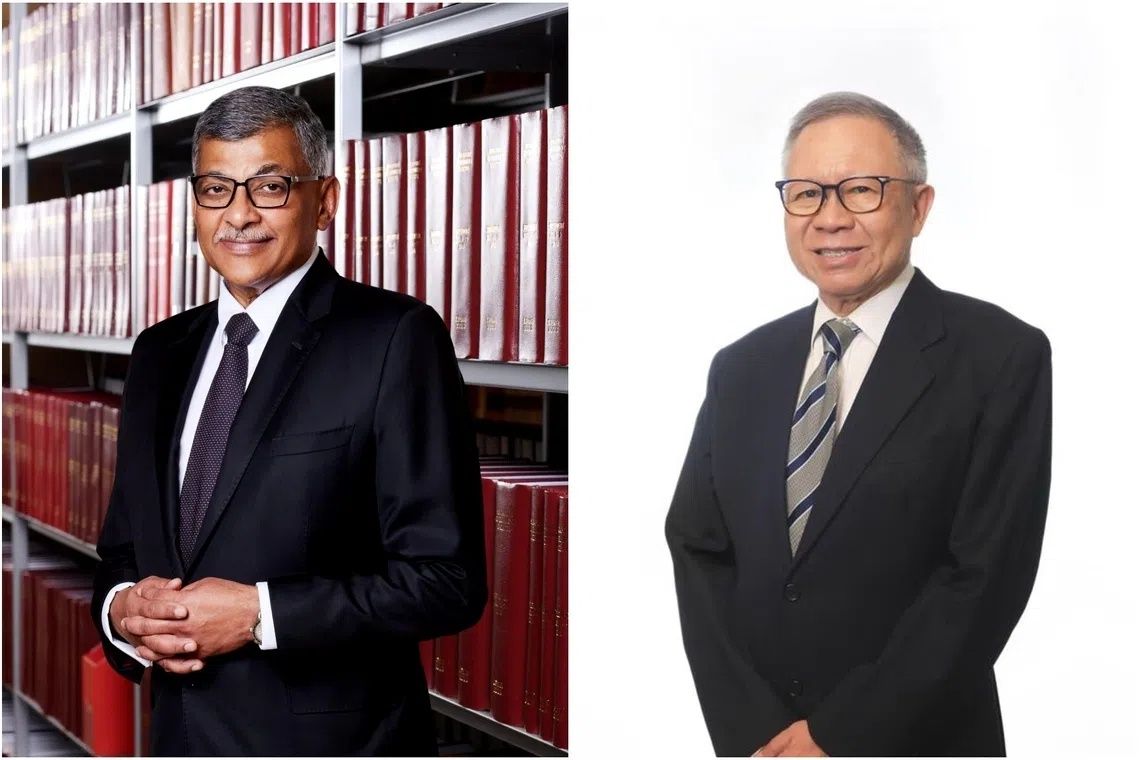
Singapore's most senior judicial officer and one of its longest-serving public administrators have been recognised with the Republic's highest civilian honour at the 2026 National Day Awards. Chief Justice Sundaresh Menon and Eddie Teo, the former chairman of the Council of Presidential Advisers, will both receive the Order of Temasek (With Distinction), placing them among an elite cohort of recipients honouring exceptional national service. The awards underscore the enduring importance Singapore places on institutional excellence and continuity in its governance structures, even as both men transition from their respective leadership positions.
Menon's recognition caps a 14-year tenure leading Singapore's judiciary that has reshaped how the legal system operates and how citizens perceive the courts. Since taking office in November 2012, the 62-year-old has stewarded the judicial branch through a period of profound modernisation, introducing technological systems that fundamentally altered court administration and case management. Under his stewardship, the judiciary has undergone transformations that extend far beyond mere procedural updates. The establishment of the Appellate Division of the High Court reorganised the appellate structure, while the creation of the Singapore International Commercial Court positioned the nation as a destination for international dispute resolution, generating economic benefits and enhancing Singapore's standing in global legal circles.
Beyond structural reforms, Menon has championed shifts in judicial philosophy that reflect contemporary understanding of justice. The introduction of therapeutic justice approaches in the Family Justice Courts and Youth Courts represents a departure from purely punitive models, instead seeking to address underlying issues that lead individuals into legal conflict. This reorientation has demonstrated measurable improvements in recidivism rates and family outcomes. Menon's establishment of the Singapore Judicial College reflects his belief that judicial excellence depends on continuous learning and professional development, creating an institutional home for advancing judicial competence across the bench. These initiatives collectively suggest a judiciary that is not merely competent at administering law but genuinely committed to serving the broader social good.
In his public remarks on receiving the honour, Menon positioned his award within Singapore's broader legal heritage, noting that the recognition coincides meaningfully with the bicentennial of Singapore's legal and judicial system. His framing reflects awareness that individual achievement in public office derives not from personal heroics but from participation in institutional legacies and collaboration with countless others. By emphasising that the award honours not himself alone but all judges, court officers and legal professionals who sustain the justice system, Menon articulated a vision of government service rooted in collective commitment to institutional integrity. This approach resonates throughout Singapore's administrative culture and provides a useful model for other regional governments struggling with questions of institutional autonomy and public service excellence.
Menon will formally step down as Chief Justice on February 26, 2027, after more than a decade of leading an institution that has become a stabilising force in Singapore's governance architecture. His departure will likely prompt reflection on how Singapore's legal system might evolve in the coming years. The next chief justice will inherit a judiciary that has been substantially strengthened institutionally and positioned to meet emerging challenges in areas such as cybercrime, financial crimes and international commercial disputes. Whether that successor can maintain the momentum of institutional reform while navigating the political pressures that inevitably accompany judicial leadership will be closely watched not only in Singapore but throughout Southeast Asia, where Singapore's legal system serves as a reference point for judicial independence and competence.
Eddie Teo's recognition acknowledges a career spanning nearly six decades, a duration of public service that exceeds most contemporary officials and reflects an earlier era when individuals might spend entire professional lives in government. Teo's appointment in 1970 to the Ministry of Defence's Security and Intelligence Division marked the beginning of a career that would eventually encompass some of Singapore's most sensitive and strategic portfolios. His rise to director of his initial agency at the remarkably young age of 31 demonstrated early recognition of his capabilities and willingness to assume significant responsibility. His subsequent roles as permanent secretary for defence and later as permanent secretary in the Prime Minister's Office placed him at the heart of Singapore's strategic decision-making during critical periods of national development.
Teo's tenure as chairman of the Public Service Commission from 2008 to 2018 saw him deliberately expand the commission's composition beyond the traditional civil service profile. His efforts to recruit members from academia, law and social work brought diverse perspectives to an institution responsible for stewarding meritocratic principles across the entire government apparatus. This diversification reflects recognition that public service excellence depends on engaging with knowledge communities beyond traditional bureaucratic circles. After stepping down from the PSC in 2018, Teo assumed the chairmanship of the Council of Presidential Advisers, a role that placed him at the intersection of executive government and constitutional safeguards. This position took on particular significance during the COVID-19 pandemic, when his counsel and that of fellow advisers would prove crucial to decisions of historic economic consequence.
The pandemic decisions that Teo highlighted in his remarks on receiving the award illustrate how institutional checks function during periods of acute national stress. Singapore's withdrawal of approximately S$40 billion from its accumulated past reserves represented an unprecedented scale of fiscal intervention, one that required thorough deliberation by both the executive and the Council of Presidential Advisers before proceeding. The decision to activate such substantial reserves rather than incur significant public debt reflected Singapore's long-standing fiscal conservatism and its concern about debt sustainability. Teo's role in ensuring that those decisions received adequate scrutiny and that constitutional protections remained intact demonstrates how institutional actors can support responsible governance during moments when rapid action and careful deliberation must somehow be reconciled.
Teo used his public statement upon receiving the honour to make an implicit appeal for sustained commitment to public service values. By describing his own career as worthwhile and interesting despite not generating private-sector wealth, he sought to present government service as a meaningful life path worthy of talented individuals' consideration. This messaging matters particularly in an era when competitive pressures push many capable people toward commercial careers offering greater financial rewards. Singapore's historical success has depended partly on its ability to recruit and retain exceptional talent into its civil service, and statements like Teo's attempt to sustain that cultural commitment even as economic opportunities expand in the private sector.
The broader cohort of 7,491 individuals receiving National Day honours this year demonstrates that Singapore's recognition system encompasses far more than the highest civilian awards. Other recipients at ceremonies will receive the Distinguished Service Order, granted to five individuals for contributions spanning public transport, aviation, the arts, community cohesion and labour relations. Land Transport Authority chairman Alan Chan was recognised for his stewardship of improvements in rail reliability, measured by the mean kilometres between failures, which improved dramatically from 393,000 kilometres in 2017 to two million in 2026. This technical metric reflects genuine improvements in service quality that millions of Singaporeans experience daily. Edmund Cheng, former Civil Aviation Authority chairman, received honours for contributions to aviation, rehabilitation of former offenders and the arts, exemplifying how public leaders might span multiple domains of social contribution.
For Malaysian readers and other Southeast Asian observers, Singapore's National Day Honours system offers insights into how a regional government institutionalises recognition of distinguished service and leadership. The process reflects Singapore's broader commitment to meritocratic principles and transparent assessment of achievement. The decision to honour both a serving chief justice and a recently retired senior civil servant suggests continuity in valuing institutional stability and the individuals who build durable organisations. These principles extend beyond Singapore's borders, as other regional governments similarly grapple with sustaining public service excellence and maintaining institutional integrity across political transitions. The recognition of Menon and Teo, therefore, carries resonance for governance practitioners throughout Southeast Asia seeking to reinforce cultures of public service excellence and institutional respect within their own contexts.

