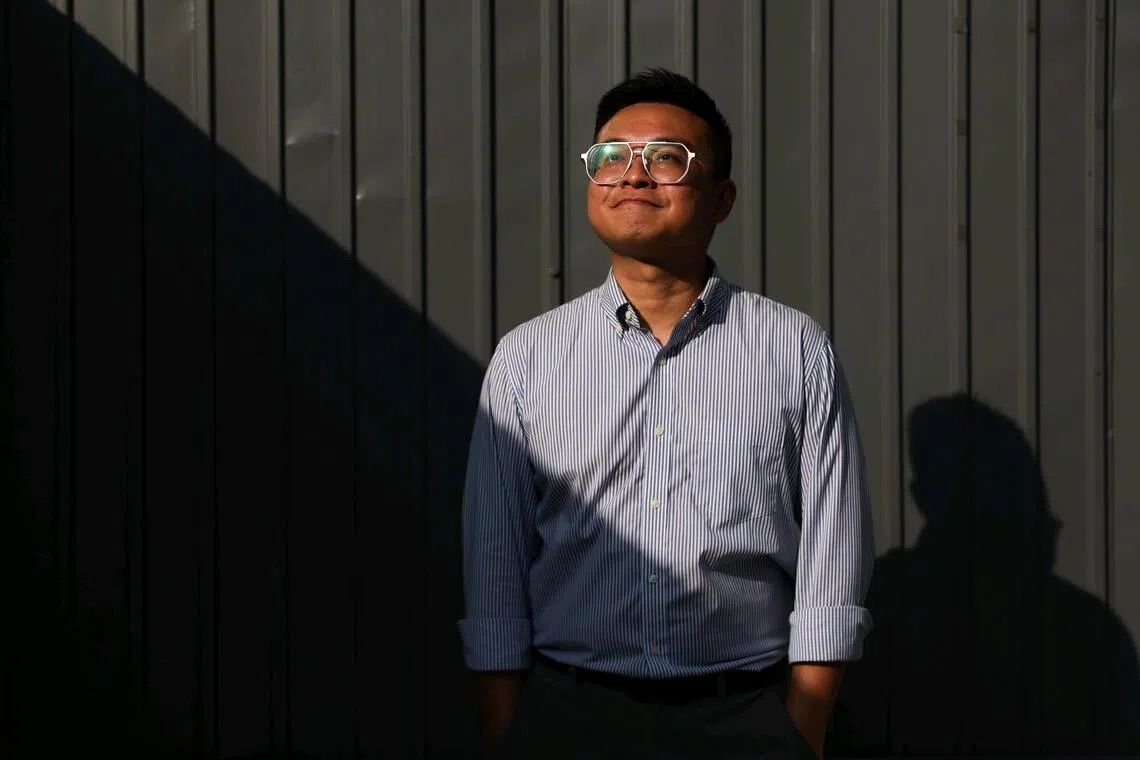
The carefully curated life of Cornelyus Tan, a successful marketing professional with credentials that would impress any employer, concealed a devastating secret: a years-long dependency on methamphetamine that ultimately led to his arrest and six-month detention at Singapore's Changi Prison Drug Rehabilitation Centre in 2022. His case represents far more than one man's struggle with addiction; it exemplifies an increasingly visible phenomenon across Singapore's professional classes, where educational attainment and career success offer no immunity against substance abuse. The moment his double existence unravelled marked a turning point in how society must reckon with addiction as a problem transcending the stereotypical boundaries of poverty, unemployment, and social disadvantage.
Within the walls of the detention facility, Tan discovered he was not alone in his predicament. Surrounding him were teachers, practising lawyers, investment bankers, and other white-collar professionals who had similarly battled addiction while maintaining outwardly respectable positions. The experience proved transformative, prompting him to break his silence publicly for the first time and share a perspective that many in Singapore's educated elite prefer to keep hidden. "On paper, we look well. We are all very successful. But at the core of it, we had a common problem – the heart," he reflected, capturing in those words the profound disconnect between external achievement and internal struggle that characterises addiction among this demographic.
The statistics paint an unmistakable picture of accelerating change. According to Singapore Prison Service records, the number of inmates in drug rehabilitation centres possessing tertiary education or advanced qualifications rose sharply from 204 in 2021 to 293 by 2025, representing a 44 per cent increase in just four years. This cohort now accounts for approximately one in every ten newly admitted inmates, up from 8.8 per cent in 2021. The educational backgrounds among these individuals span the full spectrum, from polytechnic diploma holders through to doctorate recipients, indicating that substance abuse penetrates every tier of Singapore's professional hierarchy. While the Central Narcotics Bureau notes that tertiary-educated individuals remain proportionally under-represented relative to their share of the general population—which has grown from 42.9 per cent to 54.5 per cent of residents aged 25 and above over the past decade—the upward trajectory of their presence in rehabilitation facilities is nonetheless striking and worthy of serious examination.
The explanation for this phenomenon extends well beyond simple correlation with population education levels. Drugs have become substantially more accessible than in previous decades, a transformation driven primarily by technological advancement and the expanding global narcotics supply chain. Whereas individuals seeking illicit substances historically depended on personal networks—connections through family members, neighbourhood dealers, or friends already embedded in drug cultures—the contemporary landscape operates on fundamentally different principles. Social media platforms and encrypted messaging applications like Telegram have obliterated the need for such intermediaries. Individuals from any background, professional standing, or geographic location can now encounter drug suppliers with minimal friction, often through algorithmically-driven content recommendations or targeted advertisements that appear innocuously alongside legitimate material. This democratisation of access has level the playing field in the most destructive sense, making drug acquisition as frictionless for a university-educated banker as it might be for someone struggling with unemployment.
Multiple factors compound the accessibility advantage that technology provides. The global drug market has expanded dramatically, introducing synthetic substances like methamphetamine that offer particular appeal to high-performing professionals seeking productivity gains or stress relief. Peer influence within professional circles, often magnified through social media connections spanning international networks, normalises drug experimentation among people accustomed to success. Simultaneously, entertainment and popular culture frequently glamorise recreational drug use or minimise its consequences, particularly through content that reaches educated audiences who consider themselves sophisticated consumers of information. Additionally, many well-educated Singaporeans maintain exposure to more permissive drug cultures through overseas education, international work assignments, or travel, familiarising them with environments where substance use carries less social stigma.
What makes educated professionals particularly vulnerable is the sophisticated rationalisation they employ to justify initial use. Unlike individuals from disadvantaged backgrounds who may view drugs primarily through the lens of escapism, well-educated users frequently convince themselves that substance use serves functional purposes. They frame drug consumption as a performance enhancement tool, a means to manage workplace stress more effectively, or a social lubricant facilitating professional networking. Tan's introduction to methamphetamine exemplifies this pattern: attending a house party in 2014 as a young arts college student and aspiring fashion photographer, he discovered that the substance produced what he termed a "Superman effect"—an intense adrenaline rush that sharpened his creativity, bolstered his professional reputation, and delivered tangible career benefits. The positive feedback he received for his work seemed causally connected to his drug use, creating powerful reinforcement that justified continued consumption. By 2015, his meteoric rise as a photographer had attracted media coverage profiling him as a promising talent, validating the narrative he had constructed about drug-enabled success.
This functional framing creates a distinctive psychological barrier to recognising addiction. Educated professionals often possess genuine confidence in their ability to exercise self-control, a trait historically rewarded throughout their educational and career trajectories. They believe their intelligence and discipline will insulate them from addiction's more destructive consequences, enabling them to use drugs recreationally while compartmentalising use within manageable parameters. This misplaced confidence can paradoxically delay intervention, as users devise increasingly elaborate strategies to maintain the appearance of functionality. Tan managed precisely such a formula: he would use methamphetamine intensively, then abstain for several weeks once he recognised physical deterioration—weight loss and excessive perspiration—to reset and repeat the cycle. This oscillating pattern allowed him to interpret himself as someone in control of drug use, rather than controlled by it. The strategy proved effective until 2020, when stress from his position as a regional marketing manager at an e-commerce firm shattered his equilibrium, reigniting the psychological voice offering chemical relief and restarting the descent into full-blown addiction.
Professionals battling addiction also face distinctive barriers to seeking help. Mental health experts working in addiction services observe that well-educated individuals frequently experience profound shame about substance abuse, a condition perceived as fundamentally inconsistent with their professional identity and life trajectory. Admitting addiction feels equivalent to admitting failure—a violation of the self-image constructed through decades of achievement. John, a former junior college teacher, exemplifies this dynamic. Introduced to methamphetamine at a social gathering in 2015 in circumstances designed to facilitate bonding, he initially viewed occasional use as a social activity rather than a dangerous descent. His professional responsibilities provided powerful motivation to hide escalating consumption, and he developed believable excuses when his colleagues observed early signs of deterioration—missed classes and performance lapses attributable to the drug and an abusive relationship simultaneously destabilising his life. The dual pressures of maintaining professional appearances while battling internal demons proved unsustainable, yet seeking help required overcoming the cognitive dissonance between his professional identity and the reality of addiction.
Samuel Chua, principal counsellor at the Institute of Mental Health's National Addictions Management Service, emphasises that well-educated professionals experience identical psychological drives as all individuals struggling with substance dependence: the overwhelming need to escape pain, distress, and emotional dysregulation. Education and professional accomplishment do not immunise against depression, anxiety, trauma, or the fundamental human vulnerability to seeking relief through chemical means. The surprise that Singapore society registers when discovering that a medical doctor, lawyer, or senior executive has developed drug problems reflects deep-seated assumptions about the relationship between education and resilience—assumptions that neuroscience and addiction medicine increasingly suggest are unfounded. Addiction operates according to biological and psychological principles that respect no educational credentials, professional status, or socioeconomic advantage.
For Malaysia and the broader Southeast Asian region, Singapore's experience carries sobering implications. As education levels rise across the region and technology penetration accelerates, countries throughout Southeast Asia are likely to encounter similar patterns of drug use among professional classes. The problem is not confined to Singapore's particular context but represents a broader vulnerability affecting increasingly educated, affluent populations across the region. Malaysian professionals in major cities, Indonesian middle-class workers in Jakarta and Surabaya, and Bangkok's educated elite face identical accessibility to drugs through technology, comparable peer influence dynamics, and similar rationalisation processes that frame drug use as functional rather than destructive. Understanding Singapore's emerging challenge provides an early warning system for neighbouring countries, suggesting that conventional assumptions linking education to protection against addiction may require fundamental reassessment. The challenge demands comprehensive prevention strategies targeting professionals specifically, destigmatising treatment-seeking among high-achieving individuals, and fundamentally reshaping cultural narratives that position drug use as incompatible with professional success.

