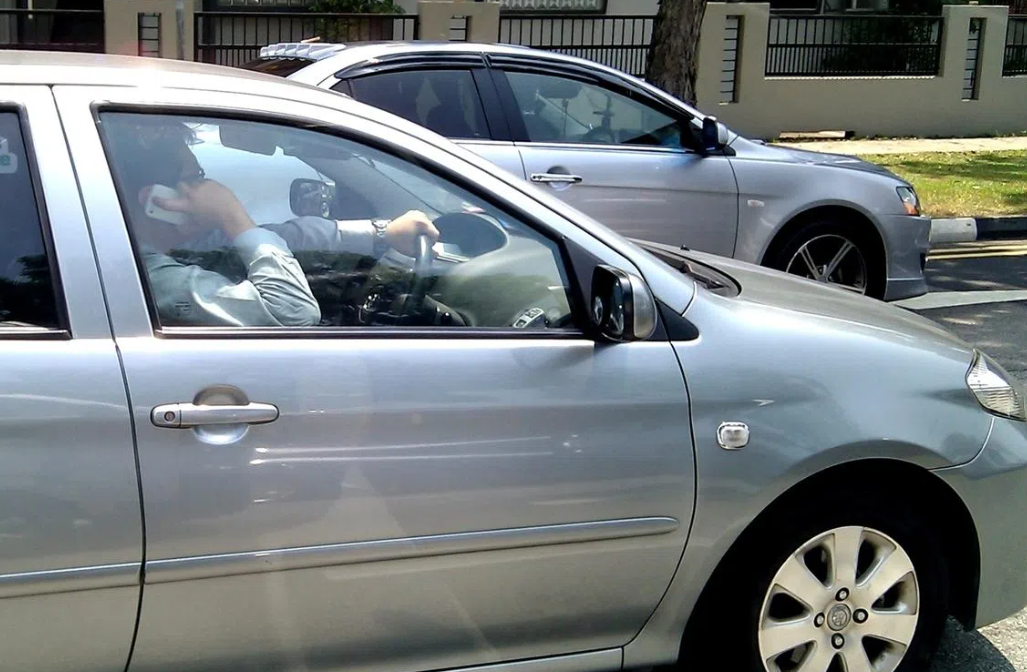
Singapore is preparing to crack down on distracted driving through a comprehensive overhaul of road safety legislation, targeting the simple act of holding a mobile phone at the wheel regardless of whether the device is actually being used. The Ministry of Home Affairs tabled the Road Traffic (Miscellaneous Amendments) Bill on Tuesday, July 7, marking a significant escalation in enforcement against what authorities view as increasingly reckless driving behaviour that has claimed hundreds of lives in recent years.
The urgency of this legislative intervention reflects alarming trends in Singapore's road safety statistics. Between 2021 and 2025, traffic fatality rates climbed by approximately 24 per cent, while traffic violations surged by roughly 38 per cent—indicating a troubling deterioration in driver behaviour despite existing penalties. Last year saw 149 deaths on Singapore roads, the highest toll recorded in a decade, compared with 141 deaths in 2016 and 142 in 2024. Injury numbers painted an equally concerning picture, rising from 9,342 incidents in 2024 to 9,955 in 2025, placing substantial burdens on emergency services and healthcare systems across the island nation.
Currently, Singapore's traffic laws already prohibit texting or calling while holding a phone during driving, but enforcement has proven cumbersome. Drivers caught in violation typically receive 12 demerit points and fines ranging from $400 to $500. Serious cases may proceed to court, where first-time offenders risk up to six months' imprisonment and $1,000 in fines, while repeat offenders face up to one year in jail and $2,000 in penalties. However, this approach requires authorities to document actual phone usage—proving the device was being actively operated—which demands direct observation and manual verification by traffic police. The evidentiary threshold has effectively limited enforcement effectiveness.
The proposed Bill fundamentally restructures this approach by shifting the legal focus from device usage to device possession. Simply holding a smartphone while the vehicle is in motion would become an offence under the new framework, eliminating the need to prove the phone was being actively used. The justification centers on the psychological reality that holding a device naturally diverts driver attention from the road, creating inherent danger regardless of active engagement with the phone's functions. This legislative shift would empower the Traffic Police to deploy technological solutions, including fixed cameras and crowd-sourced photographic evidence submitted by the public, significantly expanding enforcement capacity beyond what manual observation permits.
Importantly, the legislation preserves allowances for hands-free and mounted devices, recognizing that properly installed systems pose minimal distraction. Drivers may also hold phones when their vehicles are stationary, ensuring the law targets only conduct occurring during actual movement. For Malaysian readers, this represents a potential policy template worth monitoring, as Malaysia's own road safety challenges—with some of Southeast Asia's highest traffic fatality rates—might benefit from similarly strict provisions if public support and implementation capacity align.
Beyond phone-related offences, the Bill addresses a darker dimension of dangerous driving: deliberate vehicular assault. The Ministry of Home Affairs acknowledged that vehicles can become lethal weapons when wielded intentionally, yet existing laws struggle to capture the culpability involved. Murder and culpable homicide convictions require proving intent to kill or knowledge that death would result—an evidentiary burden that rarely succeeds in driving cases. Consequently, perpetrators have been prosecuted for dangerous driving causing death, which carries a maximum eight-year sentence. The case of Jarrett Tee Lee Kiat, who showed complete indifference after killing an 18-year-old during a reckless expressway race, exemplified this gap: he received five years and eight months despite behaviour many considered morally equivalent to murder.
The Bill introduces a novel offence termed "purposeful endangerment using a vehicle causing death or grievous hurt," establishing substantially graver consequences. Convicted offenders face imprisonment up to 15 years, financial penalties, caning, and lifetime driving disqualification or minimum 10-year bans in exceptional circumstances. This represents a quantum leap in sentencing severity, sending unmistakable signals that such behaviour will face proportionate accountability. The provision drew implicit support from judicial commentary in the Yoong Kok Kai case, where a High Court judge voiced concern that maximum sentences for worst-case scenarios might prove inadequate, noting this matter properly rested with the legislature.
Yoong's case itself illustrated why enhanced penalties became necessary. Driving home intoxicated following three consecutive drinking sessions, Yoong lost vehicle control at Tuas Checkpoint, inflicting injuries so severe that an auxiliary police officer entered a vegetative state. His jail term was increased from three and one-half years to five years on December 5, 2025, yet even this escalation fell short of what many stakeholders felt appropriate for causing permanent disability. The judge explicitly rejected any excuse for those consuming substantial alcohol before driving, highlighting the intersection of drug impairment and vehicular violence as particularly culpable conduct.
The Bill also recalibrates penalties for dangerous driving causing grievous hurt, raising maximum jail terms from five to seven years for first-time offenders and from 10 to 13 years for repeat offenders. Additional penalties triggered by aggravating factors—particularly when dangerous driving coincides with drink driving—climb from the current one-year maximum to 18 months. These incremental yet meaningful increases reflect legislative determination to match penalty severity with harm severity, particularly when driver impairment compounds reckless conduct.
The comprehensive nature of this legislative package—addressing phone distraction, deliberate vehicular violence, and drug-impaired driving simultaneously—reveals Singapore's systematic approach to escalating road safety threats. Rather than isolated amendments, the Bill represents integrated policy thinking that recognises multiple pathways to tragedy and tailors enforcement mechanisms accordingly. For Southeast Asian policymakers watching these developments, Singapore's willingness to challenge enforcement paradigms through technology and prosecutorial innovation offers instructive lessons. The shift from proving usage to prohibiting possession essentially removes a practical loophole that drivers and their advocates previously exploited; similarly, introducing purposeful endangerment offences acknowledges that existing legal categories inadequately capture morally culpable conduct.
Implementation will test Singapore's Traffic Police capacity and court systems, particularly regarding the volume of phone-holding offences likely to emerge from camera-based and public-submitted evidence. The city-state's sophisticated technological infrastructure and relatively small population render enforcement feasible, yet the principle—that modern transportation governance requires adapting legal frameworks to technological and behavioural realities—extends far beyond Singapore. Malaysia, with over 30 million people and annual traffic deaths exceeding 3,000, faces magnified versions of Singapore's challenges; whether Malaysian authorities will embrace similarly aggressive legislative and enforcement strategies remains an open question that could substantially influence regional road safety trajectories.

