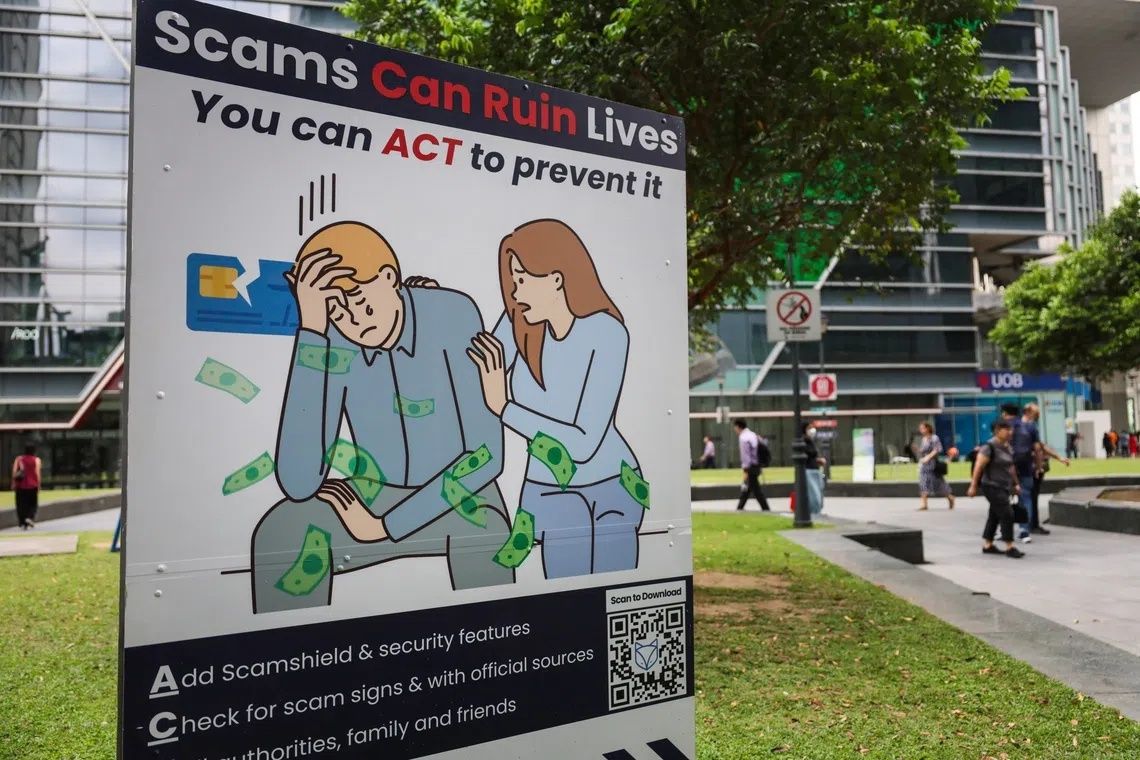
Singapore is moving aggressively to close a critical gap in its anti-scam armoury. Legislation introduced in Parliament this week targets a largely unchecked category of criminals—those who rent out or sell online accounts across Facebook, Instagram, TikTok, Telegram, WhatsApp and Carousell to facilitate scams. While authorities have long possessed tools to pursue money mules and SIM card suppliers, the digital marketplace for compromised social media accounts has operated largely in the shadows, enabling fraudsters to reach victims at scale with minimal friction.
The Scams (Countermeasures) and Other Matters Bill represents a significant escalation in Singapore's battle against an increasingly sophisticated ecosystem of scam-enabling services. If enacted, the legislation will criminalise not only the supply and acquisition of online accounts for fraudulent purposes, but also the provision of personal information needed to create them in the first place. Those convicted face penalties of up to S$10,000 in fines, three years imprisonment and corporal punishment of 12 strokes of the cane. The severity of these measures underscores official recognition that account mules occupy a critical link in the scam supply chain.
The timing reflects deepening urgency. Scams now account for three out of five police reports filed in Singapore, with losses totalling S$913.1 million in 2025 alone. Since 2019, cumulative losses exceed S$4 billion. A particularly troubling trend is the explosion in government official impersonation scams, which more than doubled from 1,504 cases in 2024 to 3,363 cases in 2025, making it the fifth most common scam category. This sharp rise indicates that fraudsters have successfully weaponised the trust Singaporeans place in official channels, exploiting both credibility and the urgency that official-sounding communications create.
For Malaysian readers, Singapore's regulatory innovations offer a cautionary lesson about digital crime trends that often precede similar problems in the region. Account mule networks are notoriously borderless—fraudsters in one country routinely exploit vulnerable individuals in neighbouring economies to supply accounts and financial access. The targeting of specific platforms like Carousell and TikTok suggests that these marketplaces, whether intentionally or through insufficiently robust security, have become havens for account trafficking. Malaysia's own platforms and populations could face mounting pressure from syndicates operating across the Straits if preventive action is delayed.
Simultaneously, Singapore is raising the financial stakes for non-compliant platforms. The maximum fine for service providers breaching codes of practice and implementation directives has jumped from S$1 million to S$10 million. Daily fines for continuing violations have tripled from S$100,000 to S$300,000. These penalties follow implementation directives issued to Meta in September 2025 and January 2026 requiring concrete anti-scam measures. Police data suggests these directives have already reduced impersonation scams on Facebook, demonstrating that financial and regulatory pressure can translate into measurable compliance.
A parallel innovation addresses the operational challenge of scale. Scammers now generate vast numbers of fraudulent accounts, websites and advertisements within compressed timeframes, overwhelming manual review processes. The Bill authorises police to issue anti-scam directions through automated computer programmes, including those powered by artificial intelligence. This pivot toward algorithmic enforcement reflects an acknowledgment that traditional reactive methods cannot keep pace with the velocity and volume of modern scam operations. Police have indicated that safeguards will ensure algorithmic systems remain accurate and equitable, though the mechanics of these protections remain to be detailed.
The legislation also introduces three new enforcement instruments. A disclosure order compels service providers to furnish information about specific accounts and scam-related activities. An account disabling order permits authorities to suspend accounts for up to 60 days (30 days plus a potential extension). These tools feed into a National Scams List—a real-time information-sharing system designed to enable automatic coordination between government agencies and the private sector. Banks, for example, could identify compromised accounts and intercept funds before they are transferred, and suspend accounts flagged as probable scam vehicles even before fraud occurs.
The third tool, a service limitation order, allows police to restrict service access—financial, telecommunications and Singpass—for up to three years. This broadens an existing facility restriction framework that has already ensnared 1,423 money mules, 1,439 SIM card mules and 53 corporate mules since its October 2025 rollout. The expansion of this power to service providers is significant because it transforms the framework from a voluntary or sector-specific arrangement into a binding, government-directed sanction mechanism.
Singapore's multi-layered approach—criminalising the supply side, raising penalties on platforms, automating detection through AI, mandating disclosure and real-time information sharing, and expanding personal restrictions—reflects the complexity of contemporary scam operations. Individual syndicates now orchestrate transnational networks involving account mules, money mules, SIM card suppliers, cryptocurrency converters and money couriers. No single lever is sufficient; instead, authorities must simultaneously tighten legal definitions, increase enforcement capacity through technology, and deepen coordination between government and private gatekeepers.
For Southeast Asia more broadly, Singapore's legislation signals the regulatory direction that other jurisdictions are likely to follow. Malaysia, Thailand, Indonesia and other regional economies face similar scam epidemics, often amplified by lower-cost labour markets that make mule recruitment easier. The cross-border nature of account mule networks means that criminal ecosystems operating in one jurisdiction directly support operations elsewhere. As Singapore hardens its defences, scammers may seek to route more activity through less-regulated jurisdictions, making it imperative for neighbouring countries to anticipate and preempt these shifts.
The Bill also demonstrates how governments are leveraging regulations on service providers as a force multiplier. Rather than placing the entire investigative and enforcement burden on police, authorities can compel platforms themselves to implement technological and procedural safeguards and to share data in real-time. This model distributes responsibility across the digital economy and creates mutual accountability. However, it also raises questions about due process, data protection and the appropriate scope of government power over private platforms—tensions that will likely emerge during implementation and, potentially, subsequent legal challenges.

