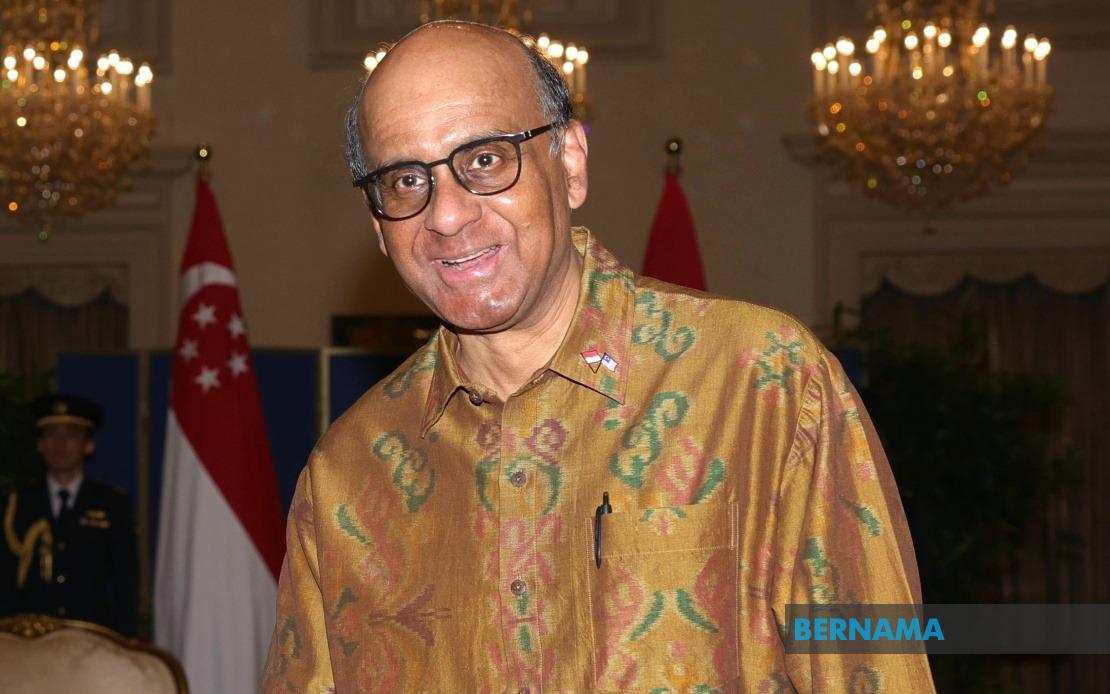
Singapore's ninth President, Tharman Shanmugaratnam, will arrive in Malaysia for a three-day state visit beginning July 13, marking a significant diplomatic milestone and reinforcing the bilateral relationship between the two neighbouring nations. The visit represents a reciprocal gesture following His Majesty Sultan Ibrahim's state visit to Singapore in early May 2024, demonstrating the cyclical nature of high-level diplomatic engagements between Malaysia and Singapore that serve to strengthen institutional ties and signal mutual respect at the highest levels of government.
Tharman's forthcoming journey to Kuala Lumpur will constitute his inaugural state visit to Malaysia since he assumed the presidency on September 14, 2023. The Foreign Ministry has emphasised that the visit underscores the durability and resilience of the bilateral partnership, particularly as both nations navigate an increasingly complex regional landscape. By formalising this high-level engagement early in Tharman's presidency, Malaysia and Singapore are signalling their commitment to maintaining the diplomatic momentum that has characterised their relationship across multiple administrations and institutional changes.
The President will travel with his spouse, Jane Ittogi Shanmugaratnam, alongside a delegation comprising several ministers and senior government officials. This composition reflects the significance Malaysia places on the visit, as the inclusion of high-ranking ministerial figures signals that substantive discussions on matters of bilateral importance will feature prominently in the itinerary. The accompanying delegation typically facilitates deeper engagement between corresponding government agencies and sectoral representatives from both nations.
During his stay, Tharman will be received with full ceremonial honours befitting his office. The schedule includes a State Welcoming Ceremony followed by a formal audience with His Majesty Sultan Ibrahim at Istana Negara, the national palace. A State Banquet in his honour will provide an opportunity for formal remarks and private discussions among senior leadership. Additionally, the Singapore President will receive a courtesy call from Prime Minister Datuk Seri Anwar Ibrahim, allowing for bilateral dialogue on matters of mutual concern and strategic importance.
The timing and formality of this visit carry particular significance for Southeast Asia, as Singapore and Malaysia serve as anchor economies within the ASEAN framework. Their bilateral relationship encompasses not merely diplomatic courtesy but encompasses substantial economic interdependence and shared security interests. The renewal of high-level state visits reflects both nations' recognition that their relationship requires constant nurturing and reaffirmation at the highest political levels.
Economic ties between Malaysia and Singapore represent one of the most robust trading relationships in Southeast Asia. Singapore currently ranks as Malaysia's second-largest trading partner globally and constitutes Malaysia's most significant trading partner among all ASEAN member states. This commercial prominence underscores why political-level engagement remains critical for ensuring that disputes or misunderstandings do not threaten the underlying economic partnership.
Bilateral trade statistics demonstrate the substantial volume of commerce flowing between the two countries. In 2025, total bilateral trade reached RM402.35 billion, equivalent to approximately US$93.97 billion, reflecting a modest increase of 1.5 percent compared with the previous year. More encouragingly, the preliminary data for the first five months of 2026 indicates accelerating growth, with bilateral trade expanding by 14.5 percent to reach RM189.90 billion, approximately US$47.87 billion, when compared against the same period in 2025 when trade stood at RM165.93 billion or US$37.65 billion.
This upward trajectory in trade volumes suggests that economic fundamentals supporting the bilateral relationship remain solid despite potential headwinds from broader regional and global economic conditions. The sustained growth in commerce provides a positive backdrop for political engagement, as both nations benefit from the prosperity generated through trade and investment flows. For Malaysian policymakers, maintaining strong political relationships with Singapore helps ensure stable market access and predictable business environments for Malaysian exporters and investors operating in the Singapore economy.
The state visit also carries implications for ASEAN cohesion and regional stability. As two of ASEAN's most developed economies with sophisticated governance structures, Malaysia and Singapore often set the tone for institutional practices and diplomatic protocols within the regional organisation. By maintaining visible, ceremonial high-level exchanges, they reinforce norms of peaceful cooperation and institutionalised dialogue that benefit the entire region.
Moreover, the visit provides an opportunity to address any bilateral issues that may have accumulated since the previous state visit. While Malaysia-Singapore relations have generally remained stable, both countries face occasional challenges ranging from maritime boundary matters to labour migration issues and environmental concerns. State visits create formal settings where such matters can be discussed through appropriate channels, potentially preventing smaller disputes from escalating into more serious diplomatic friction.
For Malaysia's government under Prime Minister Anwar Ibrahim, hosting President Tharman demonstrates Malaysia's continued engagement with its immediate neighbours and Malaysia's role as a responsible partner within the ASEAN community. The formal recognition of Singapore's leadership through full state visit protocols reinforces Malaysia's commitment to multilateralism and institutional cooperation, values that have underpinned Malaysian foreign policy across successive governments.
Looking forward, this state visit serves as a foundation for deepening bilateral cooperation in emerging areas such as digital economy collaboration, green technology development, and addressing transnational challenges including climate change and pandemic preparedness. The presence of ministerial delegations creates space for sectoral officials to explore expanded cooperation frameworks that might yield tangible benefits for both populations.
The July visit represents more than ceremonial diplomacy; it embodies the substantive reality that Malaysia and Singapore remain deeply interconnected through trade, investment, shared histories, and geographic proximity. By maintaining regular high-level exchanges and investing in diplomatic protocols, both nations safeguard the foundations of their bilateral partnership and ensure that their relationship remains productive and mutually beneficial for years to come.

