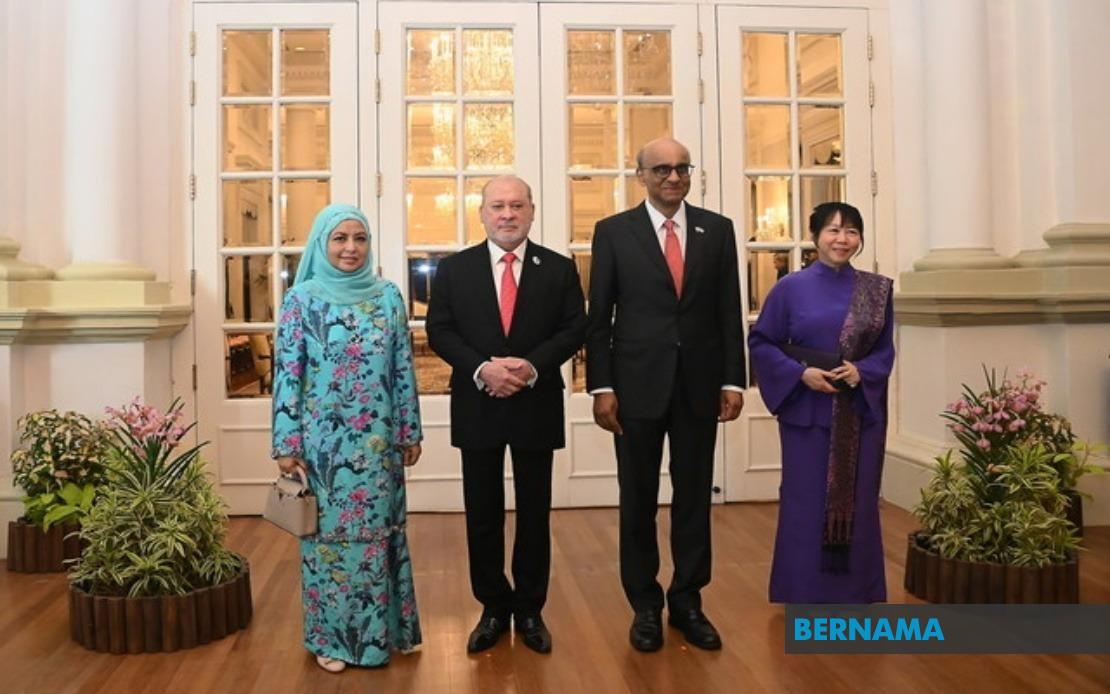
Singapore President Tharman Shanmugaratnam is undertaking a three-day State Visit to Malaysia at the invitation of His Majesty Sultan Ibrahim, King of Malaysia, reinforcing the enduring commitment both nations place on strengthening their bilateral relationship. Speaking ahead of his arrival on July 13, 2026, President Tharman characterised the Malaysia-Singapore connection as one rooted in centuries of shared heritage, cultural traditions, and integrated economies, yet also grounded in the pragmatic ability to navigate disagreements through mutual respect and dialogue.
The relationship between Kuala Lumpur and Singapore extends far beyond transactional arrangements or periodic ministerial meetings. President Tharman stressed that the accumulated trust built over six decades provides the essential foundation for deepening cooperation across virtually every sector imaginable. This foundation becomes increasingly valuable precisely because the world is experiencing greater turbulence, with fracturing multilateral trade systems and intensifying strategic competition between major powers reshaping the global landscape. For two neighbouring economies as tightly bound as Malaysia and Singapore, this moment demands even greater regional integration and coordination to maintain stability and create new opportunities for their citizens.
Cultural recognition has become a tangible expression of this shared identity. Both nations have successfully pursued joint UNESCO inscriptions, most notably the kebaya garment alongside Brunei, Indonesia, and Thailand, celebrating a distinctive Southeast Asian heritage. Currently, Singapore and Malaysia are collaborating to secure UNESCO recognition for Chingay, the vibrant street procession that brings their multicultural communities together and demonstrates how traditions continue to evolve across borders. These initiatives serve a deeper purpose beyond symbolic recognition: they constitute active efforts to pass cultural knowledge to younger generations, ensuring that the threads connecting both societies remain visible and meaningful even as societies modernise.
The economic dimension of the relationship remains remarkably robust. The Johor-Singapore Causeway functions as the world's busiest land border crossing, facilitating the movement of hundreds of thousands of people daily between the two countries. Yet infrastructure projects currently under development promise to deepen this integration considerably. The Johor-Singapore Special Economic Zone represents an innovative framework for win-win cooperation, combining each nation's distinctive strengths to generate mutual prosperity. Simultaneously, the Rapid Transit System Link will transform commuting patterns for the workforce crossing between the two territories, reducing travel times and friction while strengthening labour market integration.
President Tharman identified energy transition and climate resilience as critical areas for expanded partnership. As tropical nations, Singapore and Malaysia confront an overlapping set of climate challenges and have each announced substantial sustainability and energy transition targets. Collaboration in renewable energy development and carbon credit markets offers concrete pathways for both countries to advance their environmental commitments whilst generating new economic opportunities. The digital economy presents another frontier for integration. ASEAN recently concluded negotiations on the Digital Economy Framework Agreement, scheduled for signature at the 49th ASEAN Summit in Manila in November 2026. Current projections suggest the regional digital economy will reach approximately US$1 trillion by 2030 on its existing trajectory; however, a high-quality implementation of DEFA could potentially double this figure to US$2 trillion, creating substantial wealth creation across the entire region.
Managing bilateral differences represents perhaps the most sophisticated dimension of the Malaysia-Singapore relationship. President Tharman candidly acknowledged that as close neighbours sharing a complex history, disagreements inevitably arise. Rather than allowing such disputes to fester or dominate the relationship, successive governments on both sides have adopted a disciplined approach: addressing differences squarely through calm dialogue, mutual respect, and adherence to international law. This restraint and commitment to rules-based resolution has become increasingly important as a regional example, particularly given the geopolitical turbulence affecting Southeast Asia. The willingness of Singapore and Malaysia to manage sensitive issues responsibly demonstrates that regional stability emerges not from the absence of disputes but from the institutional capacity and political will to resolve them constructively.
People-to-people connections form the ultimate guarantee of relationship resilience, yet President Tharman recognised that what once occurred naturally between neighbouring societies now requires deliberate nurturing. Younger Malaysians and Singaporeans have fewer organic opportunities to develop the deep personal and professional networks that characterised earlier generations. Consequently, both governments should actively facilitate bilateral exchange programmes, joint internships, youth leadership forums, and collaborative community initiatives. These structured engagements create spaces where emerging leaders develop personal relationships and mutual understanding that will sustain the bilateral partnership during their own tenures in positions of responsibility.
Within the broader ASEAN context, Singapore and Malaysia carry special responsibility as founding members of the association. Malaysia's successful Chairmanship in 2025 under Prime Minister Datuk Seri Anwar Ibrahim demonstrated the bloc's continued relevance despite significant geopolitical challenges. Malaysia shepherded several major achievements during its year of leadership, including Timor-Leste's accession as ASEAN's 11th member state, advancement of the ASEAN Trade in Goods Agreement upgrade, and substantial conclusion of negotiations on the digital economy framework. These accomplishments underscore ASEAN's capacity to adapt and remain central to regional governance architecture.
As Singapore prepares to assume the ASEAN Chairmanship in 2027, the timing creates an opportunity for Manila and Singapore to work in tandem, maintaining the momentum Malaysia established. Both nations share an interest in preserving ASEAN's unity and centrality whilst ensuring the bloc remains an open, rules-based organization capable of engaging effectively with major powers without surrendering its autonomy. By coordinating closely, Singapore and Malaysia can demonstrate to the broader region that ASEAN's value proposition depends fundamentally on the ability of its member states to set aside narrow interests when necessary and act as a coherent, reliable partner.
The metaphorical language President Tharman employed—inviting hearts to shake hands—captures the essence of what both nations must cultivate going forward. Beyond institutional arrangements, trade agreements, and infrastructure projects lies a fundamental human connection rooted in shared geography, common cultural inheritance, and parallel developmental aspirations. This connection remains fragile, requiring continuous reinvestment through dialogue, cultural exchange, and genuine engagement across all levels of society. The State Visit itself represents a renewal of this commitment, a formal acknowledgment that both nations recognise their shared destiny and the mutual benefits flowing from sustained cooperation, even amid occasional friction.

