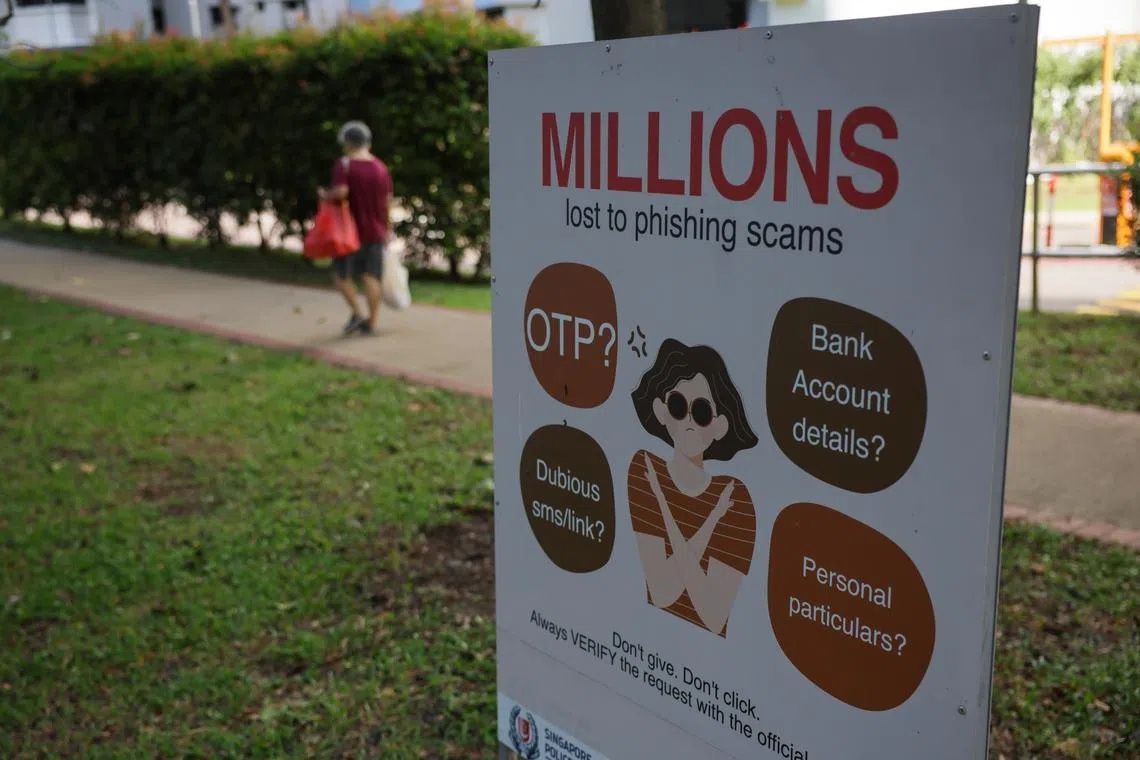
Singapore's police force has intensified its assault on organised fraud following a two-week crackdown that snared 230 suspects implicated in a sprawling network of scams that claimed S$9 million in losses. The operation, conducted jointly by the Commercial Affairs Department and seven police land divisions between mid-June and early July, represents a significant law enforcement response to the persistent challenge of financial crime that continues to plague the island nation.
The scale of the investigation underscores the breadth of scam operations currently active across Singapore. Among the 159 men and 71 women detained, ages span from a 16-year-old minor to a 77-year-old, indicating how scam syndicates deliberately recruit individuals across generational lines to exploit different vulnerabilities within society. The suspects face investigation for involvement in more than 713 separate fraud cases, a figure that highlights how individual perpetrators typically orchestrate multiple schemes rather than operating in isolation.
The typology of scams uncovered reflects the sophistication and diversity of modern fraud tactics targeting Singapore residents. E-commerce deception schemes sit alongside friend impersonation rackets, where criminals pose as acquaintances seeking urgent financial assistance. Job recruitment scams exploit employment seekers' aspirations, while government official impersonation frauds weaponise citizens' natural deference to authority. Investment scams lure victims with promises of returns, and rental schemes prey on those searching for housing in Singapore's competitive property market. This portfolio approach enables syndicates to maximise their reach across different demographic segments.
The criminological structure of these networks reveals a sophisticated division of labour. Authorities distinguish between core scammers who orchestrate the fraud and money mules who facilitate the laundering of illicit proceeds. This distinction carries significant legal consequences. Scammers and syndicate recruiters face mandatory caning of six to 24 strokes upon conviction, alongside potential imprisonment of up to 10 years and substantial fines. The sentencing framework acknowledges that money mules, though complicit, occupy a different tier of culpability, facing potential caning of up to 12 strokes and other restrictions aimed at severing their ability to participate in future schemes.
The legislative weaponry available to prosecutors extends beyond traditional criminal penalties. Individuals convicted of money laundering face up to 10 years imprisonment, fines reaching S$500,000, or both. Those operating payment services without proper licensing—a common tactic for moving illicit funds—confront fines up to S$125,000 and three years imprisonment. Singapore's approach reflects a recognition that comprehensive asset seizure and banking restrictions prove as disruptive as custodial sentences in preventing recidivism.
Recent statistics suggest these enforcement efforts are yielding measurable results. Scam cases declined from over 50,000 in 2024 to 37,308 in 2025, representing a significant reduction in incident frequency. The aggregate financial losses similarly contracted, falling from S$1.1 billion to S$913.1 million across the same period. These improvements, though meaningful, indicate that scamming remains an entrenched problem requiring sustained operational focus and community vigilance.
E-commerce fraud emerged as the primary concern within Singapore's scam landscape during 2025, accounting for 6,703 reported cases and S$16.7 million in losses. The prevalence of e-commerce deception reflects how scammers have adapted to Singapore's highly digital and online-dependent economy, targeting transactions where physical verification and trust-building mechanisms are absent. For Malaysian and Southeast Asian readers, this pattern carries direct relevance, as cross-border e-commerce fraud increasingly victimises consumers throughout the region.
The investigation's inclusion of a 16-year-old suspect raises troubling questions about youth recruitment into scam enterprises. Criminal syndicates deliberately target minors, exploiting their limited legal culpability, their susceptibility to peer pressure and financial incentives, and their perceived dispensability within the organisational hierarchy. This trend, documented across Southeast Asia, suggests that conventional enforcement alone proves insufficient without parallel intervention strategies addressing youth vulnerability and economic marginalisation.
Singapore's enforcement infrastructure incorporates both punitive and preventative mechanisms. Banking service restrictions and mobile line subscription bans imposed on convicted mules aim to disrupt the operational infrastructure these individuals would otherwise provide to future schemes. This preventative approach recognises that access to financial and telecommunications systems constitutes the essential prerequisite for scam operations, and that denying such access creates tangible operational friction.
Public engagement represents another pillar of Singapore's anti-scam strategy. The government maintains dedicated resources including the ScamShield helpline at 1799, an online reporting portal at www.scamshield.gov.sg, and a police hotline at 1800-255-0000 for information submission. These mechanisms reflect an understanding that law enforcement effectiveness depends substantially on community reporting and cooperation, particularly given the global and transnational character of modern scam operations.
The two-week operation's productivity demonstrates that sustained, coordinated enforcement across multiple police divisions can generate significant disruptions to scam networks. However, the ongoing volume of fraud cases indicates that law enforcement constitutes merely one component of a comprehensive response. Education initiatives addressing fraud recognition, digital literacy programmes, and financial system safeguards require parallel strengthening. For Malaysian authorities and consumers, Singapore's experience offers both cautionary lessons and tactical precedents applicable within the Malaysian context, where scam victimisation has similarly escalated despite increased enforcement attention.

