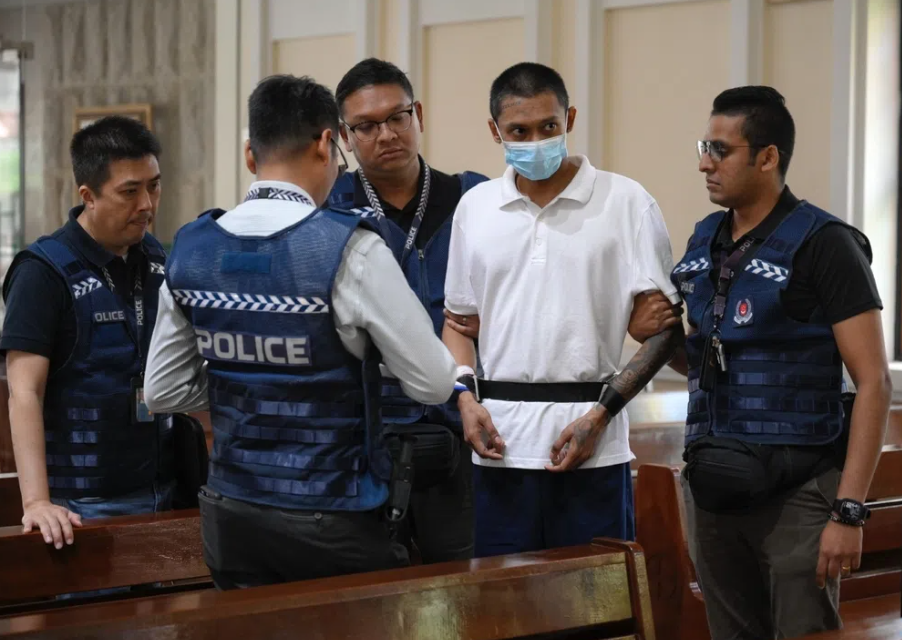
A 38-year-old man appeared in a Singapore court on Friday to receive his sentence for a shocking act of violence inside a Catholic church last year. Basnayake Keith Spencer pleaded guilty to causing grievous hurt using a dangerous weapon and to possessing an illegal blade, receiving a custodial term of four years and three months alongside nine strokes of the cane. The sentence concludes a case that sent shockwaves through Singapore's faith communities and raised serious questions about security within places of worship during religious gatherings.
The incident unfolded during evening mass at St Joseph's Church on November 9, 2024, when approximately 900 worshippers had gathered to participate in a children's service. Basnayake arrived alone at the church around 5.30pm and took his place in a pew. As the service progressed, he consumed medication—first two pills to enhance his concentration, then three additional tablets as he attempted to manage anxiety triggered by the realization that children would be present. His actions suggest a degree of premeditation, despite claims of psychological disturbance during the incident.
During the communion portion of the service, two priests stood positioned to distribute the sacrament to parishioners. Basnayake initially queued behind one priest but deliberately repositioned himself to approach Reverend Christopher Lee's line. When he reached the front, he abruptly produced a 23-centimeter foldable knife featuring a 10-centimeter blade and plunged it directly into the priest's mouth. The attack was sudden and violent, designed to cause maximum injury to a person engaged in administering what Catholics regard as their most sacred ritual. Father Lee, then 57 years old, immediately stepped backward as blood streamed from the wound.
Despite his own severe injuries, the priest demonstrated remarkable presence of mind. Recognizing the threat that Basnayake posed to the congregation around him, Father Lee deliberately grabbed the attacker's rear pocket to restrict his movement and prevent further violence against other worshippers. This courageous action likely prevented a tragedy of far greater magnitude. An off-duty police officer in the congregation, along with other parishioners, quickly restrained Basnayake and contacted authorities. He remained at the scene and was arrested immediately.
The physical damage inflicted on the priest proved substantial. Father Lee sustained an 8-centimeter laceration across his tongue, a 3-centimeter wound on his upper left lip, and a 4-centimeter injury at the corner of his mouth. He was transported to hospital where blood had pooled in his oral cavity, creating a medical emergency. Though discharged six days later on November 15, the priest required 40 days of medical leave and subsequently underwent speech therapy to address complications from the trauma. The wounds were not merely cosmetic; they threatened his basic ability to speak and eat, functions central to his priestly duties and daily life.
A subsequent search of Basnayake revealed an arsenal of weapons on his person, indicating a troubling pattern of violent preparation. Police discovered a 14.5-centimeter penknife, a flip knife, and a fishing gaff—a pole equipped with a sharp hook designed to pierce fish. The presence of multiple weapons suggests this individual posed a significant ongoing danger to public safety. Courts were later justified in denying him bail in December 2024, with prosecutors describing him as a high-risk individual with substantial potential to reoffend.
Barking additional context to his criminal profile, Basnayake's history revealed a prior conviction from 2019 for voluntarily causing hurt with a dangerous weapon. In that case, he had stabbed his then-girlfriend in the buttocks using a kitchen knife while under the influence of methamphetamine. This pattern demonstrates that violence, weapons, and substance abuse had long featured in his behavioral profile. The prosecution successfully argued that his prior conviction should substantially influence sentencing calculations, presenting him as someone whose dangerous impulses had resurged despite previous legal consequences.
During the sentencing hearing, prosecutors maintained that despite Basnayake's intoxication and claims of drug-induced psychosis at the moment of the attack, he retained sufficient awareness of his actions and their consequences. Toxicology and psychological factors did not completely eliminate his culpability; rather, they complicated the clinical picture while leaving his fundamental guilt intact. The prosecution had sought a sentence ranging from four years and three months to four years and 11 months, with the additional punishment of nine strokes of the cane—a corporeal punishment still utilized in Singapore's criminal justice system for serious violent offences.
The defence counsel, Ashwin Ganapathy from the Public Defender's Office, attempted to secure leniency by emphasizing Basnayake's remorse and requesting a sentence below four years. His submissions acknowledged the severity of the crime while positioning the defendant as genuinely regretful and ashamed. However, the court ultimately rejected these entreaties in favor of the prosecution's recommended range, signaling judicial determination that the circumstances warranted maximum consequences within that bracket.
District Judge Shaiffudin Saruwan's sentencing remarks underscored the gravity of the offence, describing the assault as entirely unprovoked and inflicting severe injury upon a defenseless victim. The judge emphasized a crucial aggravating factor: Basnayake had struck the priest precisely during the administration of communion, a moment of profound religious significance when the priest was most vulnerable and least capable of defending himself. This timing created substantial risk of mass panic among the 900 worshippers present, potentially triggering a stampede or secondary injuries. The judge's language reflected conviction that the punishment must proportionately reflect both the brutality of the act and its context within a sacred religious space.
For Malaysian observers, this case carries particular resonance given regional concerns about safety within houses of worship. Southeast Asia has experienced several incidents of violence targeting religious sites and clergy in recent years, prompting discussions about security measures and mental health intervention in faith communities. Singapore's response—swift arrest, substantial sentencing, and clear judicial messaging about the seriousness of such crimes—provides a model for regional consideration. The sentence also illustrates how Singapore's courts weigh drug intoxication and psychological factors without permitting them to override culpability entirely, a judicial philosophy increasingly relevant across the region as substance abuse intersects with violent crime.
Barking has now spent more than a year and nine months in remand custody awaiting trial and sentencing. With his sentence finalized, he faces the remainder of his four-year-plus jail term followed by the additional physical punishment. Upon release, he will likely face ongoing probation and potentially commitment to rehabilitation programs. The case closes one chapter in Singapore's criminal justice system while raising broader questions about threat assessment, mental health support systems, and the safety of public and religious gatherings that resonate throughout the broader Southeast Asian region and beyond.

