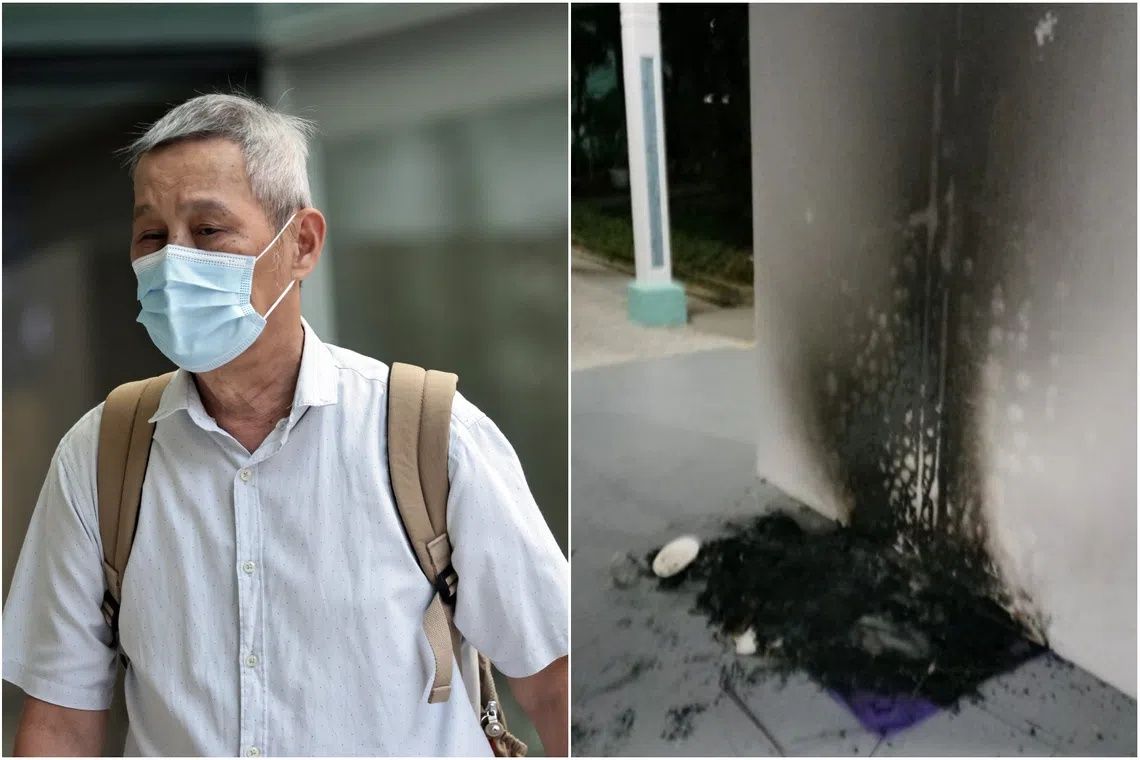
A Singapore court has handed down a three-month prison sentence to Koh Teng Boo, a 68-year-old retiree from Bukit Batok East Avenue 4, after he pleaded guilty to committing mischief by fire. The case centred on cardboard structures erected to shelter community stray cats, which the man repeatedly set alight in late 2025, citing concerns about hygiene and pest attraction. The incidents resulted in damage exceeding S$900 to the void deck and surrounding walls, costs that the offender has since fully repaid to the Jurong-Clementi-Bukit Batok Town Council.
The conflict began when Koh first encountered the cat shelters in September 2025. The structures, positioned around a pavilion and void deck area immediately adjacent to his residence, were stocked with provisions such as food and water to support the stray cat population in the neighbourhood. According to Deputy Public Prosecutor Stephen Yeo's account during sentencing, Koh became increasingly agitated by the presence of these shelters, believing they created conditions conducive to attracting unwanted pests and birds. Rather than accepting the arrangement as a community welfare initiative, he decided to escalate his concerns by approaching his Member of Parliament with formal grievances about the installation.
Koh's initial intervention through official channels proved ineffective in his eyes. When no visible action materialised following his parliamentary appeal, he took matters into his own hands in October 2025 by seizing three of the cardboard cat houses and tossing them into a nearby incense burner bin, where he subsequently ignited them. The DPP noted that Koh justified this destructive action on the grounds that his earlier plea to his MP had gone unheeded. However, the removal of these structures proved temporary, as additional cat houses appeared within days around his block, presumably installed by residents or animal welfare advocates determined to maintain shelter provision for the strays.
Rather than accept this outcome, Koh persisted with his campaign against the shelters. On November 17, approximately one month after his first act of arson, he revisited his MP's office to lodge a second formal complaint. During this interaction, he emphasised that his objections were not rooted in animosity toward cats themselves, but rather centred on what he characterised as unhygienic practices associated with maintaining the shelters. He further alleged that residents were depositing rubbish directly into the cat houses, compounding his concerns about sanitation and neighbourhood quality.
These protests and direct engagement with political representatives still failed to achieve the desired result. Faced with continued inaction and the persistence of the cat shelters, Koh abandoned his attempts at persuasion and escalated to further acts of destruction. In the early hours of November 19, at approximately 1.30am, Koh returned home after consuming alcohol. Upon reaching the void deck area, he removed a lighter and deliberately ignited a cat house before departing the scene without ensuring the fire was properly extinguished. The circumstances surrounding how the flames were eventually brought under control remain unclear from investigation records.
The following day, emboldened perhaps by the lack of visible consequences from his nocturnal action, Koh struck again. He set fire to another cat shelter in broad daylight. This time, his departure proved more consequential, as two passers-by happened to observe the burning structure and took it upon themselves to extinguish the flames before significant spread could occur. This second incident triggered a police investigation that ultimately led to Koh's apprehension later that same day.
From a legal perspective, the severity of potential penalties for mischief by fire underscores the seriousness with which Singapore courts treat deliberate property destruction, particularly when fire is employed. Offenders convicted of such offences face custodial sentences extending up to seven years imprisonment and monetary fines, reflecting the inherent danger and unpredictability associated with fire-based vandalism. Koh's three-month sentence, while substantially below the statutory maximum, represents a meaningful consequence for his persistent pattern of behaviour and the deliberate nature of his actions.
The case illustrates broader tensions that characterise urban living in densely populated housing estates throughout Southeast Asia. Community initiatives to provide welfare services for stray animals—increasingly common as animal welfare consciousness spreads across the region—can create friction with residents who prioritise other concerns. Koh's complaints regarding pest attraction and hygiene, whilst perhaps reflecting legitimate concerns that others might share, do not represent views universally held within his community. The parallel existence of residents willing to maintain and resupply cat shelters despite his opposition suggests the presence of differing value systems regarding animal welfare and community responsibility.
Furthermore, the incident raises questions about the adequacy of formal complaint mechanisms when residents experience dissatisfaction with community arrangements. Koh followed procedural norms by approaching his MP twice before resorting to property destruction, yet this engagement failed to generate either policy change or meaningful resolution. Whether the issue rested with parliamentary responsiveness, town council policies, or legitimate disagreement within the community about appropriate animal welfare practices remains somewhat unclear from the available account.
Koh's full restitution of the S$913 damage costs demonstrates that financial compensation has been resolved, though the underlying community management issues remain unaddressed. The sentence itself serves a dual purpose: accountability for deliberate destruction and a deterrent against similar vigilante action by other residents frustrated with community decisions they oppose. For residents across Malaysia and Singapore, the case serves as a cautionary reminder that regardless of the perceived legitimacy of one's complaints, resorting to fire-based destruction of community property carries serious criminal consequences.

