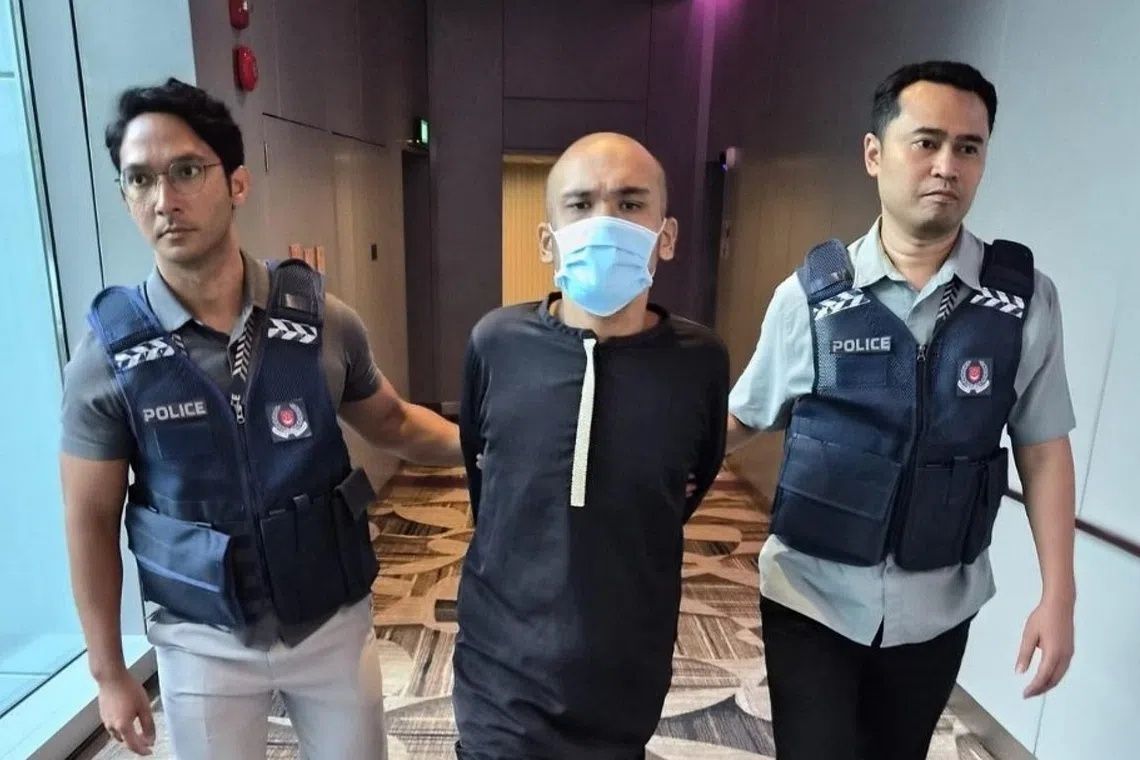
A 27-year-old man is set to face legal proceedings in Singapore on Friday, August 7, after uploading videos containing insulting and profane remarks directed at the Muslim community. The case highlights growing concerns across Southeast Asia about inflammatory content on social media platforms and underscores authorities' determination to enforce laws protecting religious sensitivities in increasingly diverse societies.
Singapore police received complaints about the man's offensive social media content on March 1, 2026, but discovered he had already departed Singapore by the time the report was filed. Working in coordination with the Royal Malaysia Police, officers tracked him down in Malaysia and secured his deportation back to Singapore on August 6. He was arrested immediately upon arrival and placed in custody pending his court appearance.
The gravity of the charges reflects Singapore's strict approach to protecting religious harmony. If convicted, the defendant faces a custodial sentence of up to five years, substantial financial penalties, or a combination of both. Such penalties demonstrate the city-state's zero-tolerance stance toward speech or conduct deemed to undermine community cohesion between different religious groups. For Malaysian observers, this contrast with local legal frameworks is noteworthy, as Singapore maintains particularly stringent legislation governing religious discourse.
Complications in the investigation emerged when authorities discovered the man is also connected to another inflammatory incident currently under police review. A separate video circulating online depicts an individual stepping on a Quran, Islam's holiest text. Police investigations have revealed that the person shown in this video is the same 27-year-old man now facing charges. The footage is believed to have been recorded on a public bus in Singapore, representing a particularly brazen act of religious desecration in a shared public space.
This dual violation—combining insulting remarks with a physical act of religious disrespect—significantly aggravates the nature of the offense. The targeting of a Quran specifically carries profound symbolic weight within the Muslim faith, and the public nature of the alleged desecration amplifies the potential harm to community relations. For Southeast Asian nations grappling with similar challenges around religious sensitivity and public order, the case underscores how single individuals can rapidly inflame tensions across entire communities through amplified social media distribution.
Meta, the parent company of Facebook and Instagram, received formal directives from Singapore police on March 7 requiring the removal of the offensive content from platforms accessible to Singapore users. The tech giant disabled access to the videos domestically, demonstrating the authorities' capacity to work with international platforms to limit the spread of religiously inflammatory material. This intervention reflects a broader regional trend, seen also in Malaysia and other Southeast Asian countries, whereby governments increasingly leverage their regulatory authority to compel social media companies to enforce community standards.
Singapore's police force issued a strongly-worded statement on August 6 emphasizing their institutional commitment to safeguarding religious and racial harmony. The statement declared that authorities view such violations as serious threats to social stability and pledged swift and stringent enforcement. The language used—referencing acts capable of generating "enmity, hatred, ill-will or hostility between different racial or religious groups"—directly mirrors provisions in Singapore's Maintenance of Religious Harmony Act and related statutes that criminalize speech or conduct designed to provoke sectarian division.
For Malaysian readers, the Singapore case offers important context regarding neighboring approaches to religious offense and public order. Malaysia likewise maintains laws criminalizing insults to Islam through the Penal Code and various state-level enactments, though enforcement mechanisms and penalties differ. The coordination between Malaysian and Singaporean police on this matter demonstrates how cross-border cooperation has become essential in an era where social media enables rapid distribution of inflammatory content across jurisdictions and permits offenders to evade immediate accountability by fleeing to neighboring countries.
The timelag between the initial March 1 report and August arrest also reveals vulnerabilities in detecting and apprehending those who attempt to evade consequences through rapid relocation. The man's successful departure from Singapore and temporary refuge in Malaysia before deportation illustrates how digital misconduct can easily transcend physical borders. This reality has spurred governments throughout Southeast Asia to enhance intelligence-sharing protocols and formalize mechanisms for mutual deportation of individuals suspected of religiously inflammatory offenses.
The case reflects broader anxieties across multicultural Southeast Asian societies about social media's role in amplifying divisive rhetoric and its potential to destabilize delicate intercommunal relationships. Malaysia, with its own complex history of religious tensions and majoritarian Muslim demographics, faces analogous challenges in policing online speech. The Singapore precedent—combining aggressive prosecution with platform intervention—offers a model that policymakers in the region continue to reference as they develop or refine their own regulatory frameworks.
Looking forward, this prosecution may influence how social media platforms police religious content across the region and how enforcement agencies cooperate on cross-border cases. The visibility of the case also sends a clear deterrent message to individuals considering whether uploading inflammatory religious content carries meaningful legal risk. However, civil liberties advocates have raised questions about the balance between protecting religious sensitivities and preserving space for legitimate criticism and satire, tensions that remain unresolved across Southeast Asian jurisdictions as they navigate competing commitments to free expression and social stability.

