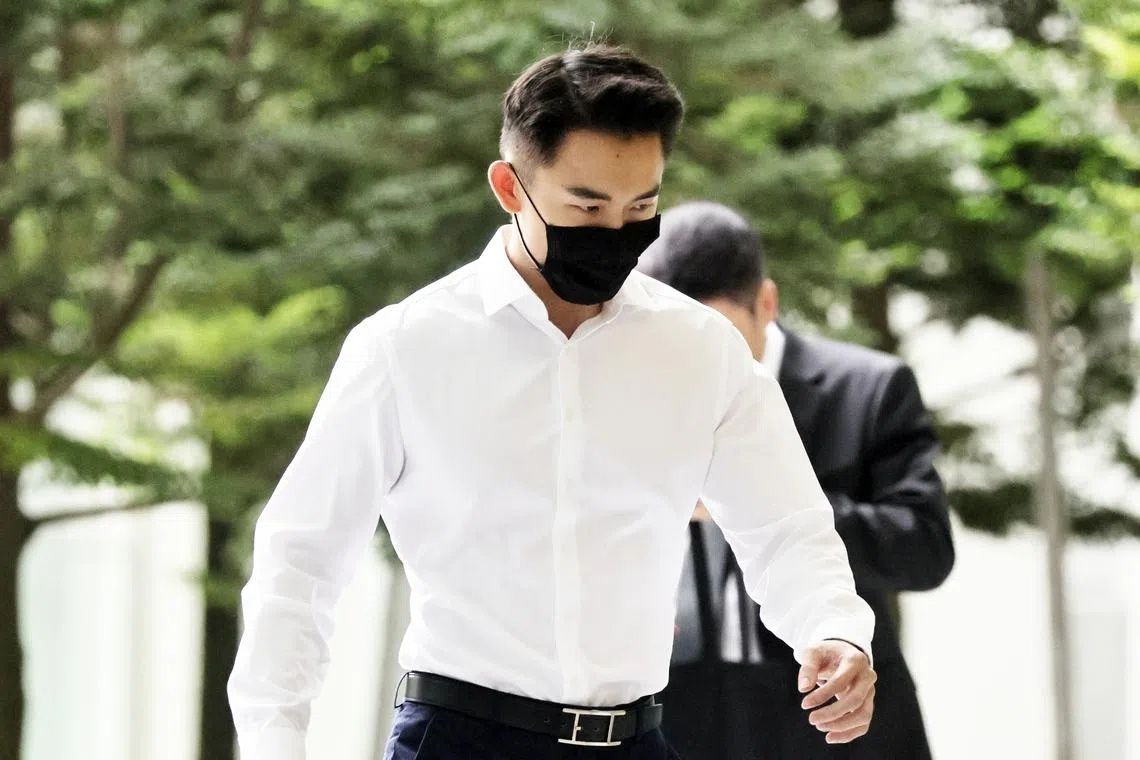
A 36-year-old medical professional in Singapore has been found guilty of drug consumption after authorities discovered him at a gathering held in a luxury hotel villa during a major police operation in 2023. Rayson Lee Rui Sheng was among 49 men arrested when law enforcement conducted an early morning raid at a private function at the Sofitel Singapore Sentosa following intelligence received about suspected drug activity. The conviction, handed down this week alongside that of his acquaintance, underscores Singapore's uncompromising stance on drug offences and the judicial system's rigorous approach to evidence even when defendants raise alternative explanations for incriminating test results.
The incident unfolded on the morning of August 9, 2023, when police acting on a tip conducted checks at the Sentosa resort shortly after 5.30am. Officers discovered substances believed to be controlled drugs at a villa hosting what was ostensibly a private celebration, prompting the Central Narcotics Bureau to assume control of the operation. The comprehensive search yielded multiple items of concern, including quantities of ecstasy and ketamine along with equipment typically associated with drug preparation and consumption. The scale of the enforcement action, involving nearly 50 individuals, reflected the seriousness with which the authorities treated the matter and their commitment to dismantling drug networks operating within the island's hospitality sector.
Both Lee and his co-defendant Tan Li Ming, aged 29, tested positive for MDMA through laboratory analysis conducted by the Health Sciences Authority. Beyond the immediate urine samples taken at the time of arrest, hair analysis provided compelling evidence that the men had engaged in drug consumption not merely at this single occasion but on multiple prior instances. This forensic dimension proved particularly damaging to their credibility during trial, as the court could establish a pattern of behaviour rather than treating the incident as an isolated aberration. District Judge A Sangeetha, in delivering the guilty verdicts, emphasized that neither defendant could claim ignorance of controlled substances or present themselves as naive victims unaware of what they were consuming.
The pair's central defence strategy hinged on asserting that unknown individuals had deliberately contaminated their beverages without their knowledge or consent. They maintained they had consumed drinks provided by strangers at the villa party and only later discovered evidence suggesting illicit substances had been mixed into their glasses. Tan alleged he had witnessed individuals drawing liquid from a bottle using a syringe and injecting the mixture into plastic cups, and claimed that after drinking from one such cup he observed white residue. When questioned about the substance allegedly being dispensed, he stated someone had told him it was "G-water" intended to produce a drunken sensation.
The prosecution mounted a comprehensive counter-argument that methodically dismantled the defendants' narrative. Prosecutors Jocelyn Teo and Dhiraj G Chainani highlighted a fundamental logical flaw in the pair's account: despite claiming their drinks had been spiked without their knowledge, they demonstrated a casual pattern of accepting beverages from complete strangers throughout the evening. Lee himself admitted consuming three separate drinks offered by unfamiliar individuals, raising the question of why someone genuinely concerned about being drugged would engage in such risky behaviour. The prosecutors characterized the defence as reliant on hypothetical scenarios and speculative possibilities rather than concrete evidence, noting that the defendants had failed to provide identifying details about the alleged perpetrators.
The court found the defendants' accounts fundamentally unconvincing. Judge Sangeetha noted that despite their claims about spiked drinks, both men had continued accepting and consuming additional beverages as the gathering progressed, behaviour inconsistent with individuals who genuinely suspected foul play. The judge further observed that hair samples demonstrated both defendants possessed established patterns of drug use rather than being occasional victims of circumstantial contamination. This historical evidence of prior consumption undermined their portrayal as unwitting recipients of illicitly-prepared drinks and suggested instead a familiarity with and acceptance of drug use in social settings.
One technical aspect of the defence involved assertions that police had failed to seize certain plastic cups from the villa that might have contained drug residue capable of corroborating the defendants' account. However, prosecutors effectively rebutted this argument by noting that even if such cups had tested positive for controlled substances, this would only demonstrate that drug-laced beverages existed at the venue, not that consumption of such beverages had been unwitting or non-consensual. The defendants' reliance on this hypothetical line of reasoning exemplified what the prosecution characterized as a strategy of distraction and misdirection rather than direct refutation of the charges.
Lee's own trial testimony complicated his defence further. He acknowledged that during a visit to Thailand in June 2023, roughly two months before the Sentosa incident, he had consumed a tablet given to him by a stranger on two separate occasions. This admission established a demonstrated willingness to ingest unknown substances from unfamiliar sources and contradicted any portrayal of him as someone cautious about drug exposure. The prosecution seized on this revelation as evidence of a clear pattern of behaviour inconsistent with the careful, health-conscious profile that his defence team had attempted to establish.
For Malaysia and Southeast Asia more broadly, the Singapore case demonstrates the consistent application of drug laws across the region's wealthier jurisdictions and the sophistication of forensic techniques employed by law enforcement authorities. Hair analysis technology has become a game-changing investigative tool, revealing consumption patterns that urine tests alone cannot establish and effectively closing evidentiary loopholes that defendants might otherwise exploit. The rigorous approach to credibility assessment applied by Singapore's courts—particularly the emphasis on identifying specific perpetrators and rejecting vague claims about unidentified actors—establishes a high bar for alternative explanations to incriminating laboratory evidence.
The incident also highlights ongoing challenges related to controlled substance use within hospitality venues across Southeast Asia. The Sentosa location, as a premium resort destination, underscores that drug activity is not confined to marginal environments but penetrates high-end establishments where clientele may possess greater resources and networks to facilitate such gatherings. Tourism-dependent economies throughout the region grapple with balancing hospitality industry interests against enforcement priorities, and this case illustrates the authorities' willingness to conduct high-visibility operations when intelligence suggests substantial drug activity.
Lee's conviction carries broader implications for understanding drug use patterns and prosecution approaches in Singapore's affluent professional circles. Medical professionals occupy positions of particular public trust, and the conviction of a doctor serves as a cautionary reminder that such professional standing provides no insulation from drug law enforcement. The case also demonstrates that defendants in Singapore's judicial system cannot effectively rely on credibility gaps in their accounts or vague references to unidentifiable third parties when forensic evidence and established patterns of behaviour contradict their testimony.

