Singapore has moved against two citizens radicalised by the ongoing Israeli-Palestinian conflict, bringing to eight the total number of individuals detained or restricted under the Internal Security Act whose extremism stems from events following Hamas' October 2023 assault on Israel. A 19-year-old student named Cyrus Dzulqarnain Al-Shahriar received a restriction order on Wednesday, June 24, while Tarmizi Mohd Taha, a 30-year-old customer service officer, was placed under detention after confessing willingness to conduct attacks within Singapore at Hamas' behest. The cases represent escalating concern among authorities about how overseas conflicts, amplified through social media, can catalyse violent ideological adoption among young people in the city-state.
Cyrus' case demonstrates the sophistication of modern online radicalisation pathways. His journey into extremism began innocuously in 2022 when he joined religious study groups to deepen his Islamic knowledge. Yet within these digital spaces, he encountered progressively darker material—anti-Western propaganda, virulent anti-LGBTQ rhetoric, and eventually pro-Hamas narratives that framed civilian deaths as justified religious warfare. By 2023, he had begun creating content that explicitly supported Hamas' actions, conceptualising mass killing as a legitimate expression of jihad. The trajectory reveals how algorithmic amplification and echo chambers can transform a young person's initial spiritual curiosity into something radically different.
What distinguishes Cyrus' case is the phenomenon authorities term Composite Violent Extremism, colloquially known as a "salad bar" of ideologies. Rather than adhering to a single coherent extremist framework, Cyrus synthesised elements from disparate movements—jihadist ideology, violent accelerationism, and incel subculture—into a personalised worldview justifying violence. In early 2024, he contemplated travelling to Gaza to fight alongside Hamas but abandoned the plan due to financial constraints and fear. Instead, he gravitated toward an obscure online Islamist extremist faction that espoused violent accelerationism, the belief that chaos and destruction could precipitate societal collapse and the emergence of an Islamic-dominated global order.
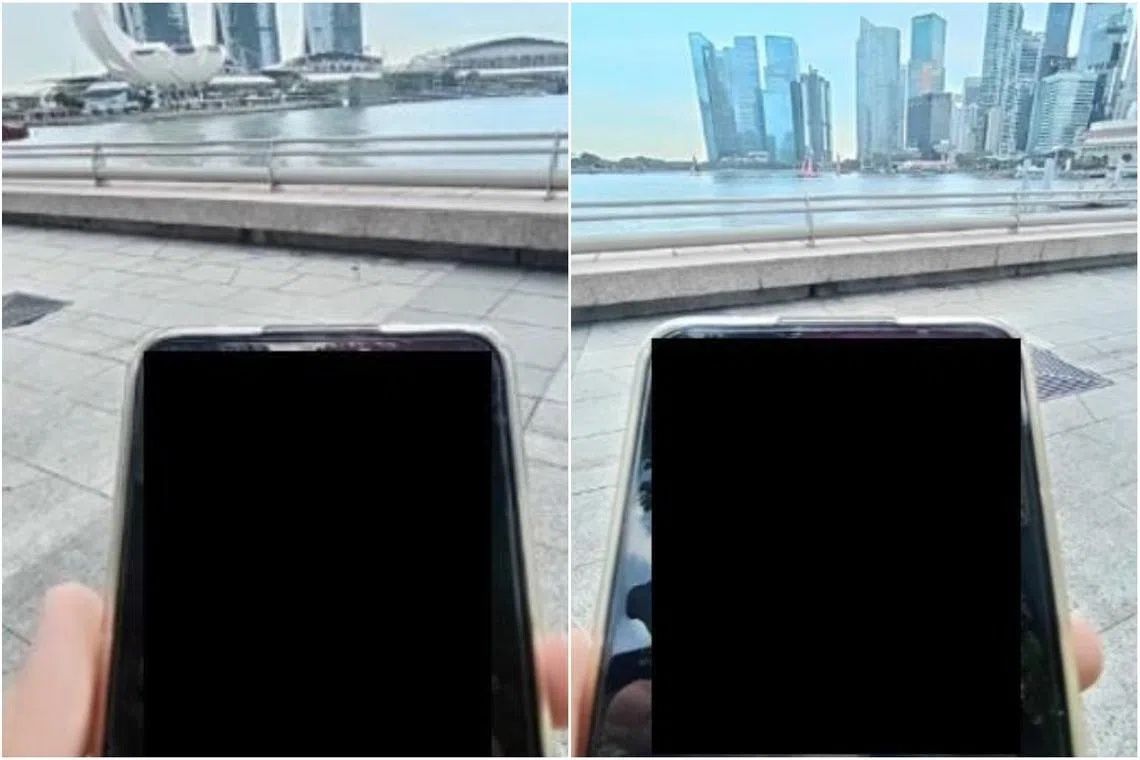
The student's activities escalated in 2025 when he joined the group's encrypted chat channel. He began romanticising historical terrorist attacks, including al-Qaeda's 2001 assault on the United States and the 2002 Bali bombings. Members requested he photograph their e-publication at Marina Bay Sands, Singapore's iconic waterfront, establishing a symbolic connection between the group and the nation itself. Cyrus complied and publicised these images on his social media in November 2025, effectively pledging loyalty to the faction. He positioned himself as an active participant in the group's "digital jihad," which entailed coordinated harassment of users perceived as anti-Islam, fabrication of defamatory content, and incitement to violence.
Particularly concerning to investigators was Cyrus' growing fascination with incel ideology, a male-dominated online subculture centred on perceived sexual rejection and deep misogyny. After encountering content about mass shooter Elliot Rodger, who killed six people near the University of California, Santa Barbara, in May 2014 in an attack motivated by romantic rejection and social alienation, Cyrus self-identified as an incel. He subsequently posted threats of murder and rape against women, adopting dehumanising language such as "foid," short for "female humanoid." He fantasised about committing violence at schools against LGBTQ individuals and romantic couples. These ideations, while never acted upon or shared with family or peers, revealed the confluence of religious extremism and misogynistic violence in his worldview.
Tarmizi's case presents a different but equally alarming scenario. The 30-year-old, employed as a customer service officer, explicitly stated his preparedness to execute attacks within Singapore under Hamas' direction. His background included service as a logistics assistant during mandatory military service with the Singapore Police Force, experience he believed could be weaponised to support Hamas' operations. Unlike Cyrus, whose violent ideations remained theoretical, Tarmizi represented a more tangible operational threat—someone with relevant skills, demonstrated access to logistics networks, and stated willingness to translate ideology into action. His detention without a restriction order reflects authorities' assessment of immediate danger.
The Internal Security Department emphasised that while the two cases operated independently, both individuals' radicalisation trajectories traced directly to the October 2023 Hamas-Israel escalation. The conflict's reverberations have reached Southeast Asia's most developed economy, triggering ideological shifts among citizens with no direct connection to the Middle East. This pattern reflects broader regional concerns about how geopolitical crises, particularly those involving religious dimensions, can mobilise diaspora communities and sympathetic audiences far beyond conflict zones. For Malaysia and the broader region, the Singapore cases underscore vulnerabilities in monitoring cross-border digital influence and the challenge of detecting incremental radicalisation among youth with sophisticated online operational security.
The emergence of Composite Violent Extremism presents novel challenges for counterterrorism authorities. Traditional deradicalisation programmes often target individuals anchored to specific ideological structures—whether jihadist organisations, nationalist movements, or sectarian groups. These frameworks offer coherent narratives and identifiable doctrines that can be systematically countered through theological debate, historical contextualisation, and alternative meaning-making. Individuals like Cyrus, however, construct idiosyncratic belief systems by cherry-picking from multiple traditions, rendering conventional ideological counter-narratives less effective. A person simultaneously subscribing to violent jihad, accelerationism, and incel misogyny resists easy categorisation or targeted intervention.
Cyrus' case also illuminates the particular vulnerability of adolescents and young adults navigating identity formation during an era of algorithmic curation and identity fragmentation. At 19, he was establishing his relationship to religion, sexuality, and social belonging—developmental tasks that typically involve some experimentation and ideological questioning. Rather than encountering diverse perspectives in balanced contexts, he was algorithmically funnelled into increasingly radical content ecosystems where extremism appeared intellectually coherent and emotionally satisfying. Social media platforms' business models, which optimise for engagement through controversy and emotional intensity, inadvertently create perfect conditions for radicalisation of isolated youth.
The fact that Cyrus never progressed from ideation to preparation or action proved significant to authorities' graduated response. He received a restriction order rather than detention, suggesting the Internal Security Department assessed that intervention, rehabilitation, and monitoring could address his threat profile. Yet the case highlights how intent and capability can diverge; Cyrus lacked operational resources and demonstrated some hesitation about physical violence, yet possessed technological sophistication, online influence within extremist networks, and demonstrated ability to mobilise others through digital platforms. His "digital jihad" activities—harassment campaigns and disinformation—represent genuine security threats even absent conventional weapons.
For Malaysia and Singapore, these cases carry implications extending beyond individual security concerns. Both nations host significant Muslim populations and serve as regional technology hubs where online radicalisation pathways operate across borders with minimal friction. Malaysia, with its larger Muslim demographic and ongoing internal security challenges, must examine how similar constellation of ideologies—jihadism, accelerationism, incel resentment—might coalesce among vulnerable segments of its youth. The cases suggest that traditional approaches separating religious extremism from other forms of violent ideology may miss the hybrid threats now emerging among digitally native generations.
The rehabilitation regime authorities intend for Cyrus represents a crucial next phase. Standard programmes addressing jihadist ideology may prove insufficient for individuals whose extremism incorporates incel misogyny and violent accelerationism. Effective intervention would require multidisciplinary approaches addressing not only theological grievances but also social isolation, sexual rejection anxiety, perceived historical injustices, and the appeal of online communities offering identity and purpose. Whether Singapore's rehabilitation infrastructure can adapt to these emerging hybrid threats remains uncertain, yet success in Cyrus' case could generate insights valuable across the region.
Both cases underscore a sobering reality: the October 2023 Gaza escalation has catalysed ideological shifts among individuals with no connection to the conflict beyond online exposure. The seventh and eighth Singapore citizens detained or restricted for Gaza-related radicalisation represent a significant portion of the city-state's small population, suggesting concentrated vulnerability among particular demographic cohorts. As conflicts metastasise globally, their ideological aftereffects increasingly manifest thousands of kilometres away, among youth who might never travel to conflict zones yet adopt its violent narratives as personal missions. For Southeast Asia's security establishments, this phenomenon demands urgent recalibration of both surveillance and intervention strategies.