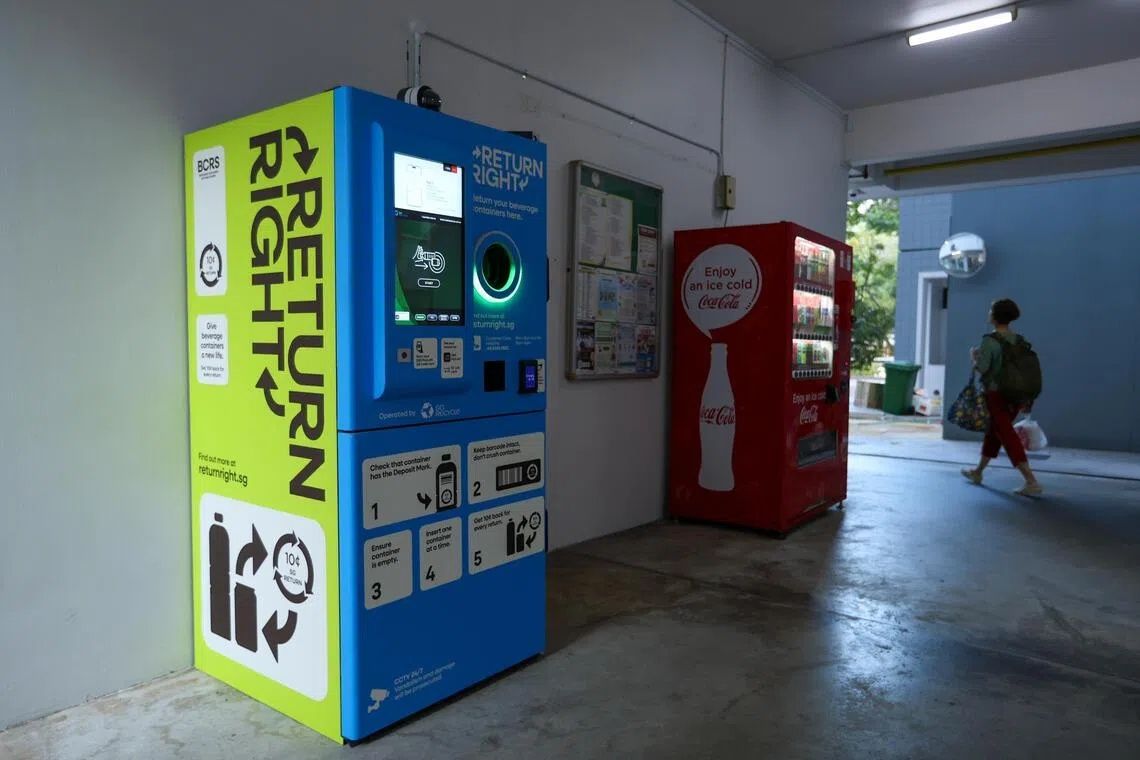
Singapore's National Environment Agency moved swiftly on August 15 to dismiss allegations of financial mishandling and corruption surrounding its month-old beverage container deposit scheme, characterizing the accusations as stemming from public misunderstanding of how the system operates. The agency released a Facebook statement addressing mounting online speculation about whether refunds tied to the Beverage Container Return Scheme were being appropriately distributed to participating consumers. The clarification came after comments from Senior Minister of State for Sustainability and the Environment Janil Puthucheary in Parliament on August 5 sparked confusion among some observers about the relationship between the number of containers deposited and the number of refund transactions processed.
The source of the confusion lay in how Puthucheary presented the scheme's early performance data. Between April and July, more than one million refund transactions had been successfully completed for 5.5 million used bottles and cans deposited into reverse vending machines across Singapore. Some online commenters interpreted this statement to mean that only one million containers out of the 5.5 million received refunds—a reading that would suggest funds had gone missing. This misinterpretation snowballed into accusations that the scheme operator was misappropriating consumer deposits, an allegation that struck at the heart of public trust in a programme designed to incentivize environmental responsibility.
The NEA's response highlighted a critical feature of how the reverse vending machines function in practice. Consumers are not limited to returning a single container per transaction; instead, they can insert multiple bottles and cans simultaneously and receive their combined refunds in one operation. This mechanism explains the numerical discrepancy that had alarmed observers. With an average of 5.5 containers being returned per transaction, the mathematics align perfectly: 1.05 million transactions multiplied by 5.5 containers equals approximately 5.5 million containers. The agency emphasized that characterizing this as evidence of corruption or theft was fundamentally misplaced and reflected a failure to understand the scheme's operational design.
Singapore's beverage deposit system, which launched on April 1, requires consumers to pay an additional 10 cents per canned or bottled drink at purchase, with the option to recover this money by returning the empty container to a reverse vending machine. This mechanism, common in many developed economies including Germany and parts of Australia, aims to reduce littering and boost recycling rates by creating financial incentives for proper container disposal. The NEA calculated that approximately S$550,000 (US$429,822) in deposits had been returned to consumers during the four-month period under review, a figure consistent with the volume of containers processed and the deposit amount per unit.
The scheme's early months were not entirely friction-free, and the agency's acknowledgment of these challenges may have inadvertently fueled public concerns about its competence. Some users reported experiencing technical malfunctions with the machines that delayed or prevented refund processing, requiring them to contact the scheme operator directly via email to recover their deposits. Others found their returns rejected by the automated systems for reasons ranging from container damage to authentication failures. These isolated problems, while affecting only a handful of transactions relative to the overall volume processed, had generated enough negative word-of-mouth to create an opening for more serious accusations to gain traction online.
Janil had sought to reassure Parliament that such issues were being managed effectively, noting that the scheme operator and machine manufacturers had responded swiftly to rectify problems as they emerged. He characterized the vast majority of transactions as successful, framing the technical difficulties as inevitable growing pains rather than systemic failures. However, this public messaging may have created a credibility gap for some observers, particularly when the subsequent parliamentary data appeared to show a significant discrepancy between containers deposited and refunds issued—a gap that existed only in interpretation rather than reality.
The incident reveals how easily technical information can be misunderstood in the social media age, particularly when schemes involve financial transactions and public resources. The speed with which accusations of corruption gain traction online, even without factual foundation, underscores the importance of clear, accessible communication from government agencies implementing new programmes. For Malaysia and other Southeast Asian nations considering similar deposit return schemes to boost recycling and reduce environmental waste, Singapore's experience offers a cautionary lesson about the need for proactive public education and transparent data presentation from the outset.
Moving forward, Singapore's beverage scheme operates under a regulatory framework requiring the operator, BCRS, to submit annual financial reports and accounts to the NEA, providing an additional layer of accountability and transparency. This oversight mechanism is designed to prevent precisely the kind of financial impropriety that had been alleged online. The agency's willingness to publicly rebut the accusations, rather than dismissing them in silence, demonstrates recognition that maintaining public confidence in such schemes depends on addressing misunderstandings promptly and comprehensively. As deposit return schemes become more common across Asia-Pacific as a tool for circular economy development, establishing clear communication protocols and transparent accounting practices will be essential for their success and public acceptance.

