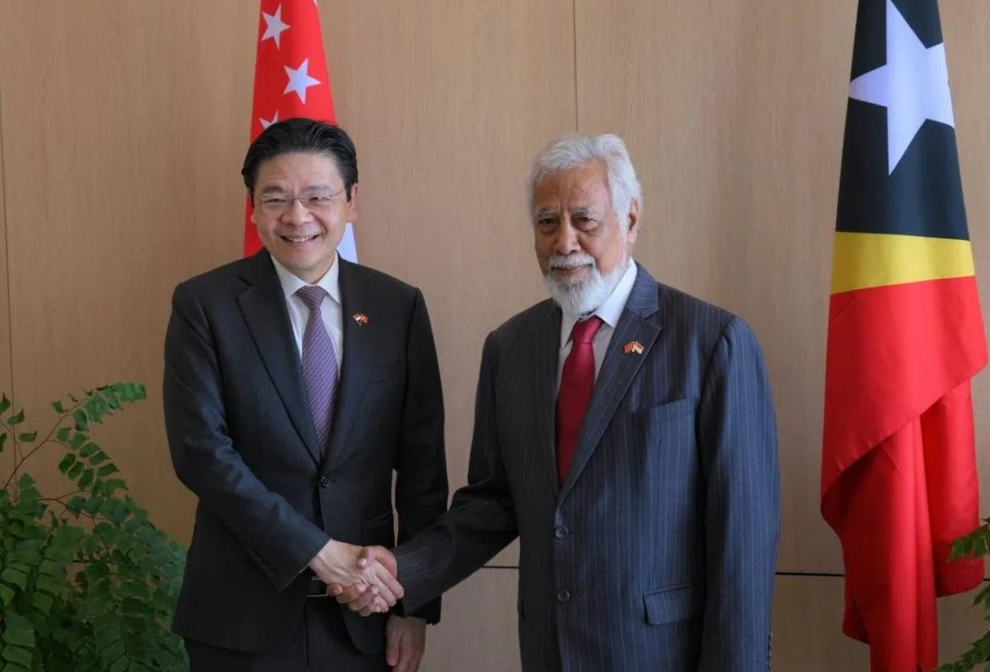
Prime Minister Lawrence Wong has concluded a watershed visit to Timor-Leste, the first by any Singapore premier since the Southeast Asian nation's independence. During the two-day engagement in Dili, Singapore and Timor-Leste formalised their expanding relationship through a comprehensive cooperation pact signed on July 3, marking a symbolic moment in bilateral ties as both nations chart a course of mutual development in an increasingly integrated regional architecture.
The agreement, witnessed at the Government Palace and finalised through a formal exchange between Wong and Timor-Leste Prime Minister Xanana Gusmao, establishes machinery for sustained high-level dialogue. The mechanism mandates that foreign ministries from both capitals conduct regular consultations spanning bilateral matters alongside broader regional and strategic questions. This structured approach reflects the recognition that smaller nations, despite geographical constraints and limited population bases, can exercise disproportionate influence through deliberate partnerships and institutional cooperation.
Wong's characterisation of the partnership as one rooted in shared conviction—that national size need not limit aspirations or achievements—resonates deeply in the Southeast Asian context. Both societies have demonstrated capacity to punch above their weight through strategic positioning and human capital investment. Singapore's existing investment profile in Timor-Leste, spanning wholesale commerce, renewable energy development, and allied sectors, signals confidence in the nation's economic trajectory following decades of post-conflict reconstruction and institutional consolidation.
The labour mobility dimension introduced during this visit represents perhaps the most immediate tangible benefit for ordinary Timorese. Beginning in the latter half of 2027, Singapore will designate Timor-Leste as an approved non-traditional source for work permit holders in construction, marine shipyard operations, and related labour-intensive sectors. Singapore's Ministry of Manpower has already detected preliminary employer interest, particularly within construction firms seeking to diversify their workforce pools and access fresh talent pipelines. This phased approach, commencing after the two-year interval, allows both nations to establish regulatory pathways and employment frameworks without disruption.
Healthcare cooperation emerged as a secondary but substantive pillar of the partnership. The National University Hospital in Singapore and Timor-Leste's health ministry intend to execute a five-year collaborative agreement before July concludes, establishing frameworks for workforce capacity-building, training system enhancement, and systemic health infrastructure strengthening. The partnership targets domains that Timor-Leste's health authorities have prioritised: emergency and prehospital care, paediatric services, eye care, maternity services, and foundational supportive care. This knowledge transfer model reflects Singapore's proven capability in establishing world-class medical systems and its willingness to disseminate institutional expertise across the region.
Educational development constitutes the third major cooperation stream. Singapore has committed to supporting Timor-Leste's national teacher training and education professional development institutions, with focus on cultivating school leadership capacity essential for shaping future generations. This emphasis on pedagogical and administrative excellence reflects recognition that sustainable development fundamentally depends on human capital formation and educational institutional quality.
Timor-Leste's recent accession to the Association of Southeast Asian Nations on October 26, 2025, forms the strategic backdrop for much of this enhanced cooperation. Wong emphasised Singapore's ongoing commitment to supporting the nascent member's integration into regional structures and preparing it for the significant responsibility of chairing ASEAN in 2029. The Singapore-Timor-Leste Asean Readiness Support package, originally launched in December 2022 to equip officials with practical skills for ASEAN participation, has been progressively enhanced. The July announcement signals further expansion to include tailored workshops on chairmanship protocols and institutional arrangements.
Singapore's readiness to host Timorese officials as attachments to its own ASEAN chairmanship team in 2027 provides hands-on exposure to the operational complexities of regional leadership. This mentoring approach acknowledges the steep learning curve inherent in ASEAN coordination and offers practical apprenticeship rather than purely theoretical instruction. Gusmao framed Timor-Leste's ASEAN membership as the culmination of national aspirations, emphasising the psychological and diplomatic significance of formal Southeast Asian integration.
The honours bestowed on Wong during the visit—specifically the Order of Timor-Leste (Grand Collar) presented by President Jose Ramos-Horta—reflect Timorese gratitude for Singapore's sustained capacity-building efforts. Wong's gracious acceptance, attributing the recognition to generations of Singaporean professionals who have conducted training, transferred expertise, and laboured alongside Timorese counterparts in nation-building endeavours, underscores the personal dimension underlying state-to-state relations. Such gestures, while ceremonial, reinforce the human foundations of diplomatic partnerships.
The timing and substance of Wong's visit carry implications extending beyond bilateral corridors. For Malaysia and other Southeast Asian observers, the Singapore-Timor-Leste partnership trajectory demonstrates how established regional economies can leverage comparative advantages in institutional development, healthcare systems, and professional training to support newer members' integration and capacity maturation. The labour mobility framework, similarly, provides a potential template for managed worker flows that benefit both source and destination economies whilst respecting sovereignty and employment regulation.
Timor-Leste's transition from ASEAN candidate to full participant to future chair within a compressed timeframe underscores the organisation's adaptive capacity and willingness to embrace development partners at varying stages of institutional maturity. Singapore's instrumental role in this progression—through technical support packages, policy consultation, and now expanded economic linkages—positions the city-state as an indispensable facilitator of regional consolidation. For Timor-Leste, the expanding partnership offers pathways toward economic diversification, healthcare system modernisation, and educational advancement whilst navigating the complex demands of ASEAN membership obligations.

