Singapore is escalating its tourism push through a partnership with ride-hailing platform Grab, offering visitors strategically designed travel incentives intended to deepen engagement with the city-state's diverse neighbourhoods. The campaign, running from August through October, introduces two fresh bonus vouchers for tourists who activate a Singapore Grab Travel Pass—a bundled discount package spanning transport, dining, and activities. This coordinated initiative reflects Singapore's ambition to consolidate its position as Southeast Asia's premier tourism destination while capitalising on a robust rebound in international visitor numbers.
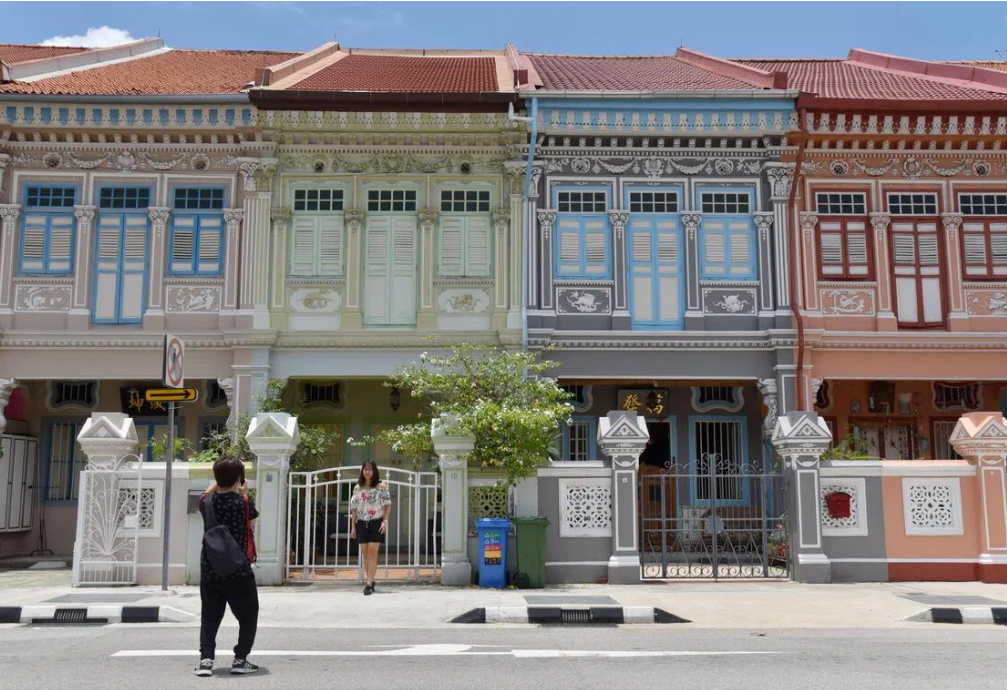
The first voucher grants a 20 per cent discount on trips serving four strategically identified neighbourhoods: Katong-Joo Chiat, Tiong Baru, Mandai and Sentosa, each capped at two redemptions per customer. These precincts represent a deliberate mix of cultural, heritage, nature, and leisure-focused destinations, signalling Singapore's strategy to distribute tourist spending across diverse zones rather than concentrate activity in central business districts. The second voucher targets evening and night-time exploration, offering a one-time 20 per cent reduction on Grab journeys to and from four after-dark destinations—Holland Village, Clarke Quay, Boat Quay and Robertson Quay—available exclusively between 7pm and 4am. This temporal specificity seeks to stimulate demand during traditionally quieter hours and position Singapore as a 24-hour entertainment hub.
The timing of this three-month campaign intersects deliberately with two major tourism drawcards. The Singapore Grand Prix, scheduled for October 2-11, typically attracts international racing enthusiasts and corporate visitors with elevated spending capacity. Simultaneously, the Singapore River Festival, running September 11-20, celebrates the island's cultural and historical significance along its symbolic waterway. By aligning transport incentives with these events, Singapore's Tourism Board maximises the probability of visitor conversions and extended stays.
Grab Singapore's managing director Alejandro Osorio emphasised the neighbourhood-discovery angle, noting that exploration of distinct precincts—from heritage zones to nature reserves to evening entertainment districts—constitutes an optimal means of experiencing Singapore's multifaceted character. This positioning departs from traditional approaches centring solely on iconic landmarks, instead encouraging spatial dispersal that benefits distributed hospitality and retail ecosystems. The Singapore Tourism Board's executive director for South-East Asia, Terrence Voon, highlighted the partnership's regional reach, underscoring Grab's penetration across Southeast Asian markets as a distribution advantage. Digital campaigns will target prospective travellers in key source markets including China, Indonesia, Thailand and Vietnam, leveraging the platform's existing user bases and behavioural data.
This initiative builds upon the Tourism Board's broader "We don't wait for fun" campaign launched in February, which explicitly targets younger international visitors aged 25 to 39—a demographic increasingly amenable to experiential, neighbourhood-focused travel over conventional sight-seeing. The earlier campaign, already deployed across nine markets, spotlights lesser-known precincts such as New Bahru and Joo Chiat alongside mainstream attractions, a repositioning intended to attract digitally native travellers seeking authentic, off-beaten-path experiences. The continuity of messaging across campaigns suggests a coherent strategic narrative rather than ad-hoc promotions.
Singapore's tourism sector has demonstrated remarkable momentum entering 2026. The island attracted 16.9 million international visitors during 2025, surpassing 2024's 16.5 million arrivals, while tourism receipts reached an all-time high of $32.8 billion. These figures validate the strategic focus on visitor volume and yield simultaneously. The Tourism Board projects further acceleration, forecasting international arrivals between 17 and 18 million in 2026 alongside tourism spending of $31 billion to $32.5 billion—targets that would consolidate Singapore's position atop Southeast Asia's tourism hierarchy and substantially exceed pre-pandemic performance levels.
Governmental commitment to tourism infrastructure and marketing underpins these projections. In May, Grace Fu, Minister-in-charge of Trade Relations and Minister for Sustainability and the Environment, announced a $740 million investment injection over five years specifically for tourism projects. This substantial allocation signals political prioritisation of the sector as both an economic engine and a soft-power instrument, diversifying Singapore's economy beyond finance and trade. The expenditure encompasses infrastructure development, destination marketing, and experience design—elements that support sustained competitive advantage.
The Grab partnership exemplifies Singapore's pragmatic approach to tourism development: leveraging private sector platforms and user networks rather than relying solely on government-directed channels. Grab's dominance across Southeast Asia means that Singaporean tourism messaging reaches millions of daily users in regional source markets through their native transport application, reducing acquisition costs while improving contextual relevance. The travel pass itself operates as a customer retention mechanism, encouraging users to explore multiple precincts sequentially and extend stay duration—a metric directly correlating with tourism spending.
For Malaysian travellers specifically, these incentives carry relevance given the geographic proximity and Malaysia's position as one of Singapore's largest visitor sources. The emphasis on precinct-based discovery and after-dark activities appeals to weekend leisure visitors and corporate travellers alike, while the targeted discounts reduce friction for unplanned visits. The Grab platform's ubiquity across Malaysia means Malaysian users encounter these promotions natively within their primary transport application, lowering awareness barriers.
The campaign's emphasis on seasonal visitation during August-October reflects broader tourism demand patterns in the region, where school holidays and corporate travel peaks concentrate in these months. By deploying incentives precisely during high-demand windows, Singapore maximises conversion probability without deploying perpetual discounts that might erode margins. The precinct-specific approach also enables the Tourism Board to gather granular data on visitor movement patterns, informing future destination positioning and infrastructure investment decisions.
Singapore's integrated approach—combining global and regional marketing campaigns, private-sector platform partnerships, targeted demand-generation during peak seasons, and substantial infrastructure investment—demonstrates how mature tourism economies maintain competitive advantage amid intensifying regional competition. The strategy treats tourism not as a standalone industry but as an ecosystem requiring coordinated public-private effort, technological leverage, and sustained capitalization.
As Southeast Asian middle-class expansion accelerates travel demand, Singapore's capacity to design and execute sophisticated visitor-targeting campaigns provides competitive differentiation. The Grab partnership specifically positions the island to compete effectively for the regional leisure market, converting casual visitors into repeat users of the tourism ecosystem through neighbourhood discovery and value proposition design that extends beyond conventional beach-and-culture offerings.

