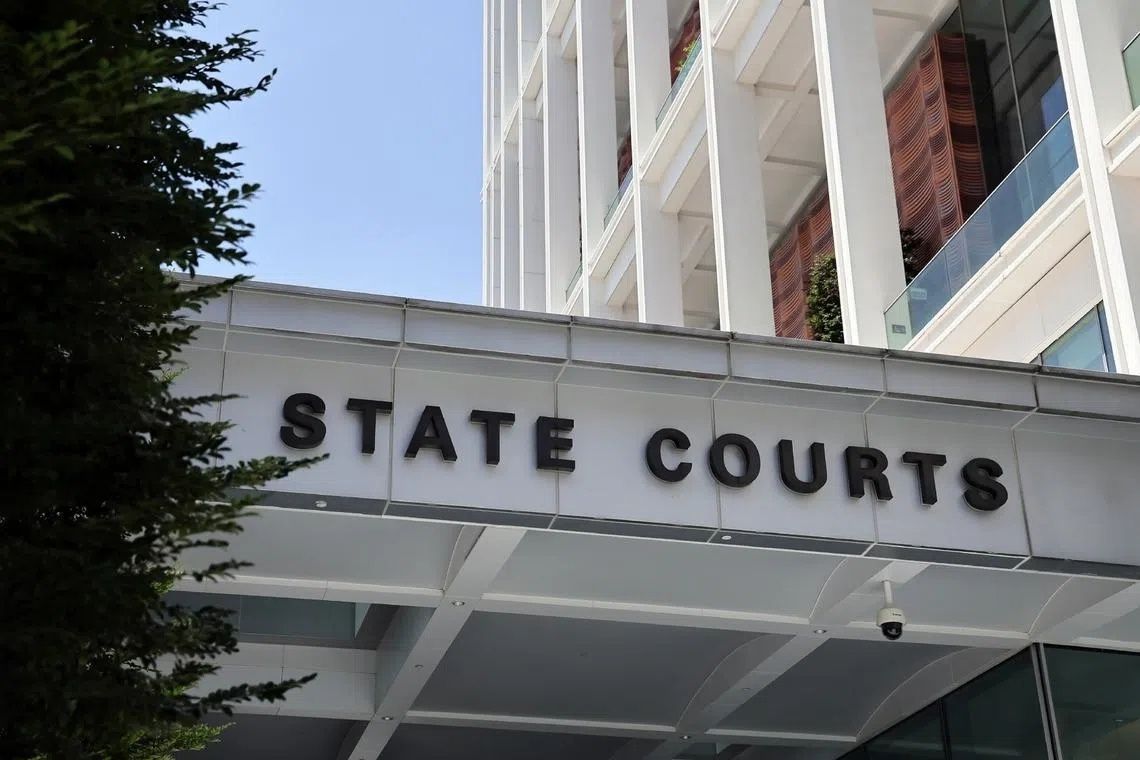
Singapore's courts have intensified their crackdown on drunk driving, with 41 motorists facing charges in a coordinated enforcement operation on a single day last month. The mass prosecutions underscore escalating concerns about alcohol-impaired driving across the island nation and signal the severity with which courts now treat such offences. Among those prosecuted were three men who allegedly succumbed to sleep while at the wheel, their vehicles left abandoned in dangerous roadside positions—a particularly alarming scenario that highlights the hazards posed by intoxicated drivers.
Tho Yu Wei Ronald, a 34-year-old driver, allegedly parked his vehicle at the entrance of a multi-storey carpark at Block 176 Hougang Street 13 just after 11 pm on April 30. Subsequent breath testing revealed his alcohol content reached at least 51 micrograms per 100 millilitres, a significant 46 percent above the legal threshold of 35 micrograms per 100 millilitres. Similarly, Zhong Pengzhi, aged 38, was accused of abandoning his car along the second lane of Clementi Avenue 5 around 1.40 am on May 9, with breath readings indicating 48 micrograms of alcohol per 100 millilitres. The third case involved Dharuman Killivalavan, a 29-year-old foreign national operating a lorry along Loyang Avenue on June 15, who registered an exceptionally high reading of 87 micrograms per 100 millilitres—nearly two and a half times the permitted limit.
All three men were brought before a district court on Thursday, June 25, and charged with drink driving alongside a secondary charge of leaving a vehicle in a position causing undue inconvenience to others. The inclusion of this additional charge reflects judicial concern about the cascading risks created when impaired drivers leave their vehicles unattended in traffic corridors or parking infrastructure. Such actions obstruct emergency services, create hazards for other motorists, and demonstrate a complete disregard for public safety obligations that extend beyond the initial decision to drive while intoxicated.
Dharuman's case concluded swiftly that same day. He pleaded guilty to the charges, resulting in a fine of $7,100 and a complete disqualification from driving for 36 months—effectively a three-year ban that will severely restrict his personal mobility and employment prospects as a professional driver. The court's decision reflects the judiciary's determination to impose meaningful consequences that extend beyond financial penalties, recognizing that licence suspension represents a significant deterrent and protective measure against future offences.
The operation revealed a troubling pattern: among the 41 charged motorists, at least two were repeat offenders with prior convictions for identical offences. Cheng Woon Siong, 44, pleaded guilty to his second drink-driving conviction on June 25. He had been apprehended during a routine traffic stop with 52 micrograms of alcohol in his breath—exceeding the legal limit by nearly 49 percent. Given his previous conviction in December 2019, the court sentenced him to one month's imprisonment coupled with a $5,500 fine and a five-year disqualification period commencing upon his release from prison. The escalated penalty structure clearly indicates judicial impatience with repeat offenders and a shift toward custodial sentences rather than fines alone.
Koh Choon Lye, aged 48, represented the second recidivist case. Stopped along Tyrwhitt Road on April 16 for routine checks, he recorded 51 micrograms of alcohol per 100 millilitres of breath. His previous conviction for drink driving dated to 2018, meaning he had reoffended despite already experiencing the criminal justice system's response to such conduct. The cases of Cheng and Koh demonstrate that existing enforcement and sentencing frameworks have thus far failed to deter a minority of motorists from habitually returning to drunk driving, suggesting that either penalties require further elevation or that alternative interventions—such as rehabilitation programmes or vehicle immobilization systems—merit consideration.
The breadth of the enforcement operation is striking. The 41 drivers charged ranged in age from 25 to 68 years old, indicating that impaired driving spans generational boundaries and affects people across varying life stages and presumably different socioeconomic backgrounds. This demographic diversity suggests that drink-driving prevention campaigns must be tailored to reach multiple audience segments rather than targeting single demographic cohorts.
Statistical context provided by Singapore's Traffic Police illustrates the ongoing scale of the problem. During 2025, authorities arrested 1,716 individuals for drink driving—an average of nearly five people daily—and recorded 12 fatal accidents directly attributable to alcohol-impaired driving. The human cost of such collisions extends beyond those directly involved to grieving families, emergency responders, and communities affected by preventable tragedies. Each fatality represents not merely a regulatory failure but a profound human loss that alternative transport choices could have prevented.
Singapore's law enforcement agencies have responded to these persistent dangers through explicit public messaging emphasizing personal responsibility. Police statements uniformly characterize driving under alcohol's influence as "extremely dangerous and irresponsible," language reflecting both the physical risks and the moral dimension of choosing to operate a vehicle while impaired. Authorities have actively promoted alternative transport modes including licensed taxis and private-hire vehicles as readily accessible substitutes that eliminate both the legal risks and the genuine danger to oneself and others.
For Malaysian readers accustomed to differing legal frameworks and enforcement approaches, Singapore's coordinated mass prosecutions and escalating sentences offer a comparative perspective on regional approaches to road safety governance. While Malaysia and other Southeast Asian nations have implemented their own drink-driving legislation and campaigns, the consistency and severity of Singapore's court responses may suggest directions toward which other jurisdictions might move. The implications extend beyond legal penalties to questions about transportation infrastructure, the availability and accessibility of alternatives to private vehicle operation, and societal attitudes toward personal accountability for risk creation.
The broader context of these prosecutions reveals sustained institutional commitment to reducing alcohol-related road casualties through deterrence. By publicly highlighting cases involving falling asleep at the wheel and repeat offenders, prosecutors and courts communicate clearly that individual judgment failures carry measurable consequences while simultaneously educating the public about the realistic hazards of impaired driving—hazards extending beyond legal jeopardy to encompass genuine threats to human life and physical safety.

