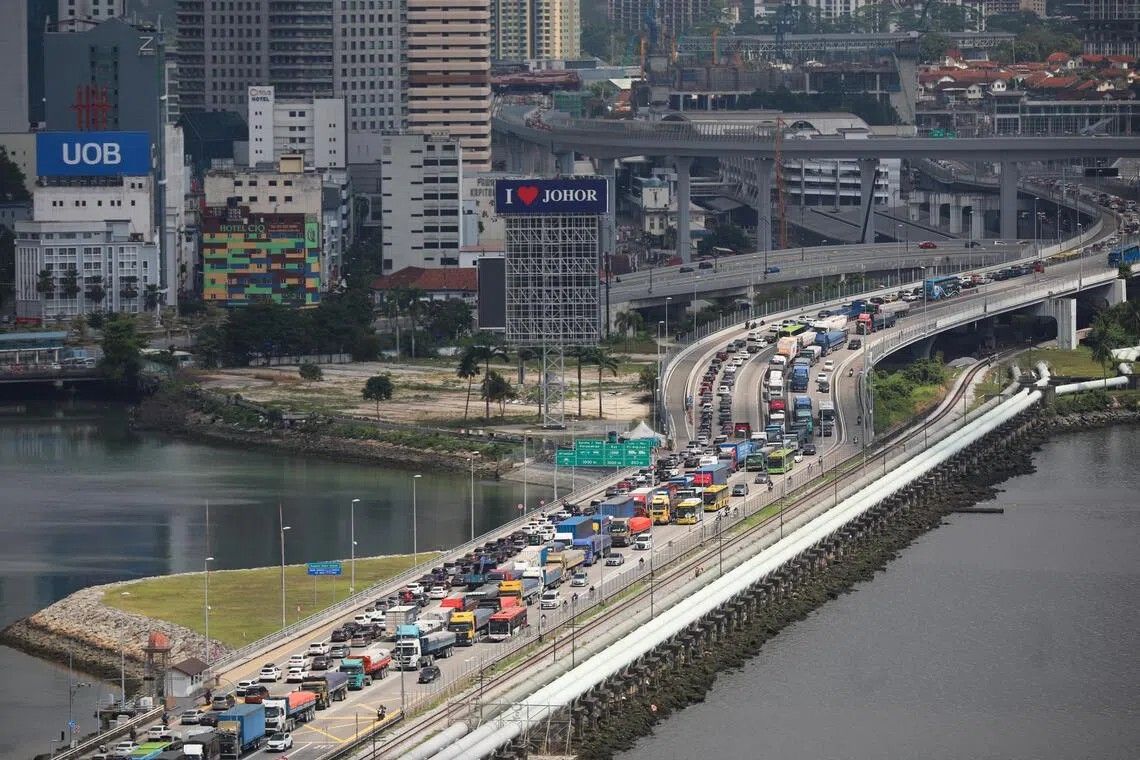
Singapore's land border crossings at Woodlands and Tuas are expected to experience severe traffic congestion over the National Day long weekend spanning August 7 to 10, prompting authorities to advise travellers to reconsider their timing and prepare accordingly. The Immigration and Checkpoints Authority issued the alert on August 3, signalling that both checkpoints serving the critical Singapore-Malaysia corridor will face unprecedented strain during this period.
For Malaysian and other regional commuters whose work or family commitments require frequent crossings, the warning carries particular weight. The scale of potential disruption becomes apparent when examining recent usage patterns. Between late May and the end of June, encompassing Hari Raya Haji, Vesak Day and the school holiday period, more than 18 million people transited through these two facilities, underscoring the extraordinary volume the checkpoints must process during peak seasons.
The most striking metric came on June 19, when daily traffic exceeded 598,000 travellers—a record that obliterated the previous benchmark of 589,000 set on December 19, 2025. This surge reflects the intensifying cross-border movement characteristic of Southeast Asia's highly integrated economy, where thousands of workers, business people and families routinely traverse national boundaries. For Malaysian workers employed in Singapore or Singaporean residents with regular commitments across the Causeway, such figures underscore why planning has become essential.
During congested periods, the delays can prove prohibitive. Immigration officials noted that during peak hours, vehicle occupants waited up to three hours merely to clear immigration checkpoints, with additional time consumed by traffic backlogs extending into Malaysian territory. This multiplier effect—where Malaysian-side congestion compounds delays at the checkpoint itself—means that commuters leaving during conventional morning rush hours face exponentially longer total journey times than off-peak travellers.
To mitigate these bottlenecks, the authority has implemented several technological solutions aimed at accelerating clearance procedures. The MyICA mobile application generates QR codes that enable faster processing, allowing travellers to pre-register and streamline their passage through immigration. Additionally, motorcycle riders and pillion passengers can now utilise facial recognition technology under the New Clearance Concept initiative, which has demonstrably improved throughput by over 35 percent—equivalent to an additional 7,600 travellers per hour during peak departure periods compared with pre-pandemic performance in 2019.
Beyond technological measures, enhanced security protocols now form part of the checkpoint experience. Since February 28, all checkpoints have implemented heightened security screening procedures, reflecting broader concerns about regional stability following geopolitical developments in the Middle East. While essential for safeguarding cross-border movement, these additional checks inevitably extend processing times during high-traffic periods.
The authority has urged travellers to adopt several practical strategies to navigate the anticipated congestion. Early morning departures and late evening crossings experience significantly lighter traffic than conventional business hours, offering a viable option for flexible commuters. Checking real-time traffic conditions before departing via available digital platforms allows individuals to make informed decisions about timing. Motorcyclists particularly benefit from the accelerated facial recognition option, which can substantially reduce waiting periods compared with traditional vehicle lanes.
Behavioural compliance represents another critical factor affecting overall checkpoint efficiency. Queue-cutting, a persistent problem during peak periods, disrupts traffic flow and cascades delays throughout the system, affecting all users. During the recent Hari Raya Haji, Vesak Day and school holiday period, 52 motorists were penalised for traffic violations and dangerous road conduct. Enforcement measures include prosecution by traffic authorities, forced repositioning to the rear of queues, and in serious cases, temporary entry bans into Singapore.
For Malaysian commuters and businesses dependent on regular Singapore access, this enforcement approach signals that checkpoint operations have moved beyond mere congestion management into active discipline of traffic behaviour. The message is unambiguous: cooperation with officers, consistent lane discipline and strict adherence to traffic rules directly benefit everyone using the facilities, whereas violation tactics that some might view as time-saving actually compound delays for the travelling public.
The August 7-10 period coincides with Singapore's National Day celebrations, historically a time when both local leisure travel and cross-border movement intensify as residents and visitors exercise their movements around public holidays. Malaysians working in Singapore often extend such periods to spend time with family, while Singaporeans may visit Malaysian destinations. This confluence of motivations creates a predictable surge in checkpoint usage that authorities and travellers have encountered repeatedly but which remains challenging to manage without careful planning.
For Malaysian readers particularly, the practical takeaway involves treating this long weekend not as an opportunity for spontaneous travel but rather as a period requiring deliberate schedule adjustment. Regional economic integration means Singapore's border congestion directly affects Malaysian livelihoods and family connections, making the authority's advisory not merely a convenience suggestion but genuinely valuable guidance for anyone regularly traversing this vital corridor.

