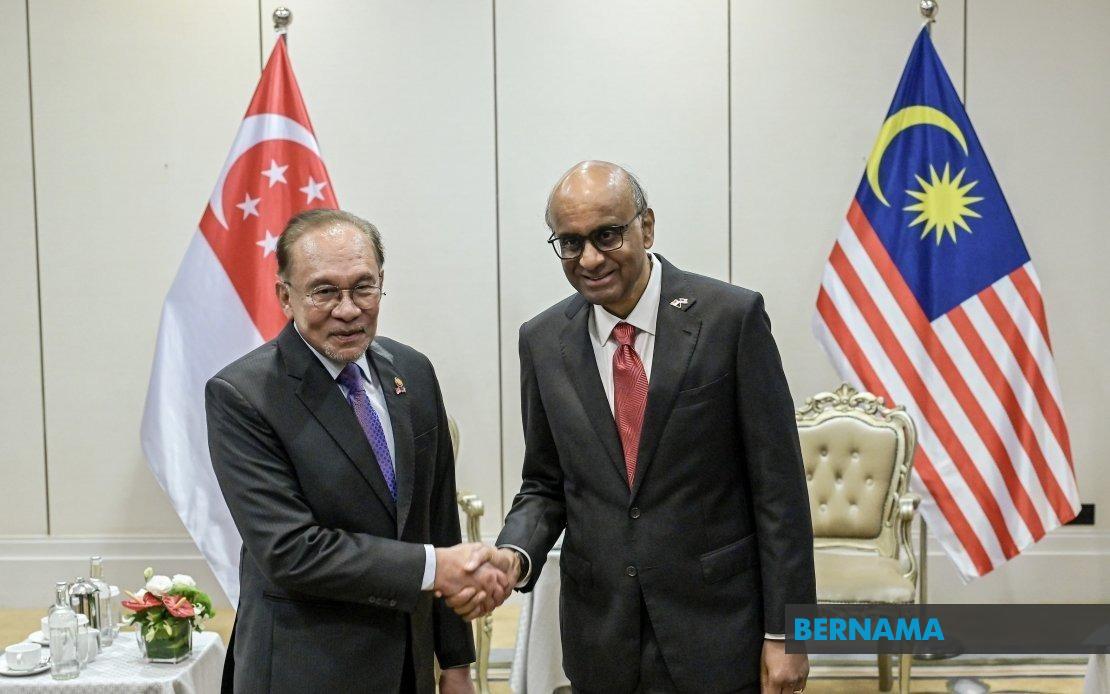
Singapore and Malaysia have reaffirmed their commitment to broadening bilateral engagement across several strategic domains during President Tharman Shanmugaratnam's inaugural state visit to Malaysia, signalling renewed momentum in the relationship between the two neighbouring nations. The pledge to intensify cooperation was formalized during a courtesy meeting between the president and Prime Minister Datuk Seri Anwar Ibrahim on Monday at Istana Negara, where the two leaders identified food security and energy as priority areas warranting deeper collaboration.
The visit, which runs through July 15, carries considerable symbolic weight as Tharman's first state trip abroad since assuming the presidency. His choice to prioritize Malaysia underscores Singapore's strategic orientation towards its immediate region and reflects the historical and contemporary significance of the bilateral relationship. The formal state welcoming ceremony, which included an audience with His Majesty Sultan Ibrahim, King of Malaysia, and Her Majesty Raja Zarith Sofiah, Queen of Malaysia, underscored the ceremonial importance attached to the engagement by both governments.
Beyond the headline commitments on food and energy, the two sides have identified an expanding portfolio of collaborative opportunities that speak to shared challenges facing both nations. Climate adaptation and flood mitigation emerged as substantive areas of potential cooperation, reflecting the growing urgency of climate resilience in Southeast Asia. Both Singapore and Malaysia face distinct but related environmental pressures—Singapore's vulnerability to sea-level rise and water security intersects with Malaysia's exposure to increasingly severe flooding events—making joint initiatives in this domain mutually beneficial and practically grounded.
Technical and vocational education represents another dimension of the emerging partnership framework. This focus is particularly relevant for Malaysia's ongoing efforts to develop skilled workforces capable of supporting economic diversification and industrial upgrading. Singapore's established reputation for vocational excellence and training infrastructure positions it as a credible partner for knowledge exchange and capacity building in this sector. Such collaboration could facilitate the mobility of skilled professionals between the two countries and enable the transfer of best practices in competency-based training models.
The growth of start-ups and technology entrepreneurship also featured prominently in discussions, reflecting both nations' ambitions to position themselves as regional innovation hubs. Singapore's maturity as a fintech and venture capital centre contrasts with Malaysia's emerging startup ecosystem, creating natural complementarities. Deeper linkages in this domain could accelerate the development of Malaysian tech enterprises while providing Singapore-based investors and incubators with access to fresh market opportunities within Southeast Asia.
President Tharman's engagements extended beyond federal-level meetings to include substantive discussions with Selangor's leadership. His audience with the Sultan of Selangor, Sultan Sharafuddin Idris Shah, and subsequent meeting with Selangor Menteri Besar Datuk Seri Amirudin Shari reflect a recognition that meaningful bilateral cooperation increasingly involves sub-national actors and state governments. This multi-level engagement represents a more sophisticated approach to regional partnership than purely top-down federal negotiations, acknowledging that states like Selangor possess significant economic weight and policy-making authority within Malaysia's federal structure.
Geopolitical considerations also framed the bilateral discussions. The two leaders exchanged perspectives on developments in West Asia, a region whose instability reverberates across global trade and energy markets with particular significance for maritime-dependent Southeast Asian economies. Both Singapore and Malaysia, as major shipping and energy transit hubs, maintain keen interest in maintaining stable energy supplies and ensuring secure sea lanes. The specific emphasis on upholding international law, particularly the United Nations Convention on the Law of the Sea (UNCLOS), and safeguarding freedom of navigation reflects shared concerns about preserving the rules-based maritime order in the region.
The invocation of UNCLOS carries particular resonance for Malaysia, which has long-standing maritime disputes in the South China Sea and the Spratlys. While Singapore operates with greater diplomatic flexibility in these matters, its explicit reaffirmation of commitment to international maritime law during discussions with Malaysia signals alignment on the fundamental principle of respecting established international frameworks. This messaging, delivered at presidential and prime ministerial levels, carries weight in the regional discourse surrounding maritime disputes and freedom of navigation.
The timing of this state visit also merits consideration within Malaysia's domestic political context. Prime Minister Anwar Ibrahim has sought to position Malaysia as a forward-looking nation capable of sophisticated regional diplomacy while addressing domestic development priorities. Hosting Singapore's president during this period allows the Malaysian government to demonstrate its competence in managing high-level international relations and securing tangible commitments from a developed neighbouring state on issues ranging from technical education to climate adaptation.
For Singapore, the visit represents an opportunity to deepen ties with its largest neighbour at a moment when regional stability assumes heightened importance. The specific focus on food security and energy reflects Singapore's structural vulnerabilities as a city-state dependent on external supplies for both commodities. Enhanced cooperation with Malaysia on these fronts—whether through joint infrastructure development, supply chain agreements, or coordinated energy policies—directly advances Singapore's national interests in ensuring resource resilience.
The emphasis on expanding people-to-people exchanges and institutional collaborations, particularly in education and technology sectors, points towards a bilateral relationship increasingly characterized by substantive interdependence beyond traditional diplomatic formalities. These initiatives create constituencies within both societies invested in maintaining cooperative relations and generate momentum that can sustain engagement even during periods of diplomatic strain.

