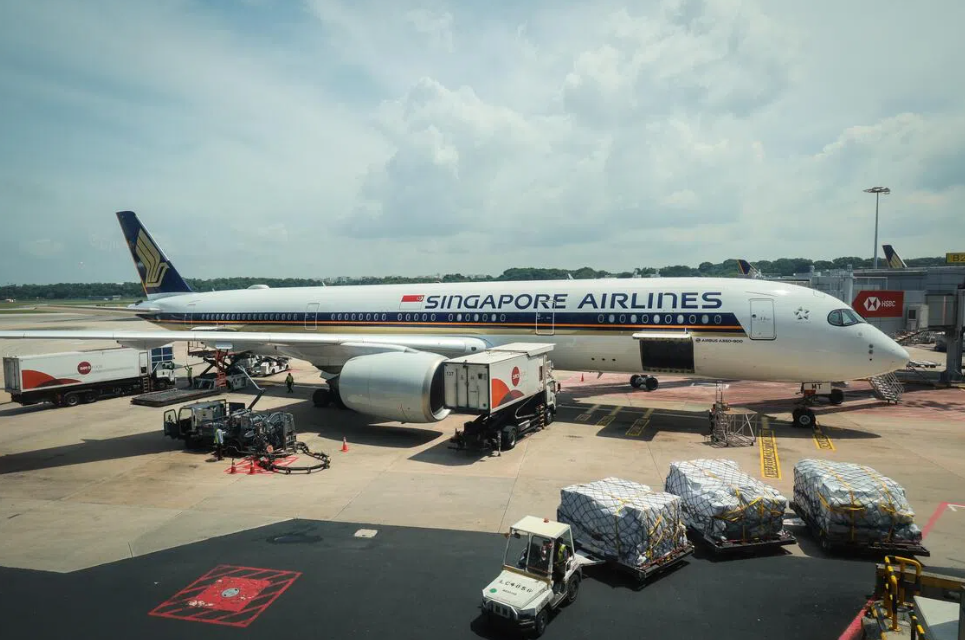
A Singapore Airlines service to New York had to cut short its journey and divert back to Singapore in the early hours of August 13 after encountering a technical problem shortly after leaving Changi Airport. Flight SQ22, which had taken off on the evening of August 12 bound for Newark with 133 passengers and 17 crew members aboard, touched down again at Singapore's main aviation hub at 3.06am the following morning. The airline declined to elaborate on the precise nature of the mechanical issue that prompted the unscheduled return, citing only that a technical malfunction necessitated the decision.
The aircraft involved in the incident was an Airbus A350-900, a modern wide-body jet engineered specifically for ultra-long-range operations. SQ22 represents one of the most ambitious commercial aviation routes globally, spanning approximately 16,700 kilometres and typically requiring more than 18 hours of continuous flight time. The route has become a flagship service for Singapore Airlines, symbolising both technological advancement and the city-state's position as a major aviation hub connecting Asia with North America. The inconvenience caused by the diversion thus had particular significance given the exceptional distance and duration involved.
Handling the immediate aftermath of the emergency landing required swift coordination between airport operations and airline staff. Because the aircraft required extensive examination and repair work, it had to be towed away to a remote parking bay rather than being positioned at a terminal gate. This separation from the main terminal created logistical challenges, prompting the airline to arrange bus transportation to shuttle all passengers and crew members from the parked aircraft back to the airport terminal building. The transfer process, while necessarily time-consuming given the volume of people involved, proceeded according to established contingency procedures for such situations.
While passengers waited for arrangements to proceed, the airline provided food vouchers to offset the extended delay and uncertainty. The original flight crew, having already been airborne and expended a significant portion of their allowable duty time, were unable to continue to New York because they would have exceeded the regulatory limitations governing pilot and cabin crew working hours. These international aviation regulations, established by bodies like the International Civil Aviation Organization, impose strict limits on flight time to ensure crew alertness and passenger safety during long-haul operations. Consequently, a fresh crew had to be assembled and the replacement aircraft prepared for departure.
The substitute aircraft, also an A350-900, eventually pushed back from Changi at 5.41am on August 13, substantially delayed from the original 11.35pm departure time on August 12. Despite the extended detour to Singapore, the replacement flight maintained sufficient speed across the Pacific to reach its destination in reasonable fashion, touching down at Newark Airport at 12.15pm local time on August 13. Passengers thus completed their journey with a delay of approximately 13 hours, a significant disruption that nonetheless could have been substantially worse had the aircraft not been able to return safely and had a replacement not been readily available.
Singapore Airlines made efforts to mitigate passenger distress through proactive communication and support mechanisms. Those affected were kept regularly informed about the developing situation and offered assistance with rebooking onto alternative connecting flights where their onward travel had been compromised by the delay. The airline's crisis management approach appeared to prioritise transparency and customer service, though the decision to withhold specific technical details proved a point of friction with at least some passengers.
One passenger who shared their experience on the social media platform Reddit offered qualified praise for how the airline navigated the emergency, describing SIA's handling as "incredibly well" executed from an operational standpoint. However, this same traveller expressed frustration at the lack of specificity regarding what had actually failed on the aircraft and why the towing procedure necessitated the temporary separation of baggage from passengers. The desire for greater transparency about technical matters reflects a common passenger expectation that detailed information about safety-related decisions enhances rather than diminishes confidence in an airline's judgment.
The incident underscores both the remarkable reliability of modern long-range aircraft and the robust contingency systems that support premium international air services. That a mechanical issue could be detected and addressed through a safe return to the departure airport, with a replacement aircraft quickly mobilised and a new crew assembled, demonstrates the operational maturity of major carriers serving ultra-long-haul routes. For passengers on such services, where journey times exceed 18 hours and routing options are limited, the existence of reliable backup procedures provides essential assurance.
From a Southeast Asian aviation perspective, the incident also reflects the critical infrastructure advantages that Singapore maintains as a regional hub. The presence of multiple A350-900 aircraft within the SIA fleet, modern maintenance facilities at Changi, and established crew scheduling protocols enabled the airline to recover from the disruption with reasonable speed. Other regional carriers operating long-haul services benefit from similar infrastructure investments, yet incidents like this one highlight how closely integrated operational resilience is with an airline's fleet size, maintenance capacity, and geographic positioning.
Singapore Airlines concluded its public statement regarding the incident with an apology for the inconvenience caused and a reaffirmation of its commitment to safety. The airline stated that "the safety of our customers and crew is always our top priority", a formulation that, while standard corporate messaging, in this instance was validated by the decision to return to Singapore rather than persevere toward the distant destination. For passengers who experienced the disruption, the successful outcome of a safe return, timely repair, and eventual arrival at the intended destination likely reinforced trust in the carrier's decision-making during the emergency.

