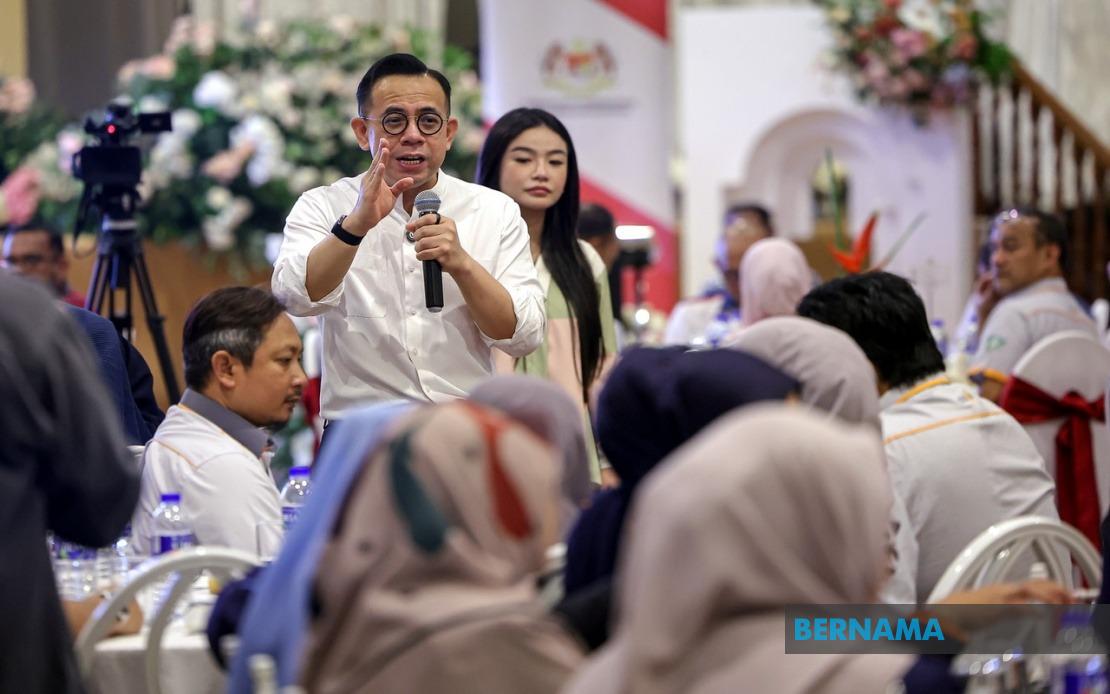
Pakatan Harapan's campaign pitch for the 16th Negeri Sembilan state election stands apart from typical political promises because it rests on a foundation of tangible accomplishments, according to Penang DAP chairman Steven Sim. Speaking in Seremban on July 21, Sim framed the coalition's manifesto—built around ten major commitments to voters—as fundamentally different from manifesto pledges made by parties without proven governance records. The coalition's governing experience in the state under Menteri Besar Datuk Seri Aminuddin Harun provides credibility that transcends mere rhetoric, he suggested.
The distinction Sim drew reflects growing voter scepticism towards campaign promises across Malaysia's political landscape. In state elections particularly, where incumbents face pressure to demonstrate concrete achievements, coalitions increasingly justify new initiatives by linking them to programmes already underway. Sim's assertion that PH's manifesto represents an "enhancement and continuation" of established policies acknowledges this dynamic. Rather than presenting entirely novel ideas, the coalition is essentially asking voters to endorse a deepening and refinement of existing approaches that have, in its view, yielded measurable results for Negeri Sembilan residents.
The credibility question takes on specific importance in Negeri Sembilan, a relatively prosperous state whose economic fundamentals have remained stable under PH's stewardship. Sim emphasised that the coalition's offer derives strength from "experience and proven achievements," underscoring that promises mean little without a track record of delivery. This framing attempts to shift the campaign narrative away from opposition claims or alternative visions toward a practical, results-oriented defence of continuity. For voters evaluating competing platforms, such a positioning potentially carries weight—particularly among middle-income and business communities concerned with economic stability.
Central to PH's manifesto is a commitment to establish a youth entrepreneurs fund (TUB), an initiative designed to support young business ventures across Negeri Sembilan. The programme falls within the portfolio of the federal Ministry of Entrepreneur Development and Cooperatives (KUSKOP), headed by Sim himself. This institutional alignment—where federal ministry priorities align with state-level manifesto promises—demonstrates how PH seeks to leverage control of both federal and state governments to maximise resource deployment. A PH victory in Negeri Sembilan would reinforce this synergy, ensuring that federal entrepreneurship initiatives and state-level support mechanisms operate without political friction.
The youth entrepreneurs fund represents a particularly strategic commitment given Malaysia's ongoing challenge of youth unemployment and underemployment. If successfully implemented, such a scheme could address perceptions that economic opportunities favour established businesses and connected individuals. Young Negeri Sembilan residents facing barriers to capital access and business networks might find genuine pathways into entrepreneurship, potentially strengthening the state's economic diversity and resilience. However, the actual impact depends entirely on fund size, accessibility criteria, and implementation rigour—factors that remain to be detailed as the campaign progresses.
Sim's broader assertion that PH's tangible achievements matter more than slogans reflects the coalition's defensive posture heading into the election. In incumbent positions, coalitions inevitably face opposition attacks on perceived shortcomings, delayed infrastructure projects, or unmet expectations. By emphasising proven results and incremental improvement rather than radical transformation, PH adopts a risk-averse campaign strategy aimed at reassuring existing supporters and swing voters who prioritise stability over dramatic change. This approach suits a reasonably prosperous state where voters may fear political upheaval more than they desire ambitious reform.
The timing of Sim's remarks—delivered at a Negeri Sembilan Ministry of Entrepreneur Development and Cooperatives staff assembly—illustrates how campaign messaging becomes woven into routine government activities. Senior federal officials visit state institutions to reinforce manifesto commitments and demonstrate inter-governmental alignment. Such events serve dual purposes: they allow federal ministers to claim credit for supporting state-level initiatives while simultaneously providing platforms for campaign messaging cloaked in administrative language. Malaysian voters have grown accustomed to this blending of governance and electioneering, though its effectiveness in swaying undecided voters remains debatable.
The Election Commission's scheduling of early voting for July 28 and polling day for August 1 compresses the campaign period considerably, limiting opportunities for complex policy debates to develop. In such compressed timelines, simple, resonant messaging about proven track records arguably gains disproportionate weight compared to detailed policy discussion. PH's manifesto framing—built on achievements and continuity—aligns well with this constraint, as it requires less elaborate explanation than would a comprehensive policy overhaul by an opposition party.
Negeri Sembilan's political significance extends beyond its individual state importance. As a relatively prosperous, diverse state, its voting patterns often signal broader trends in Malaysian politics. If PH retains control comfortably, it would suggest that voters in economically stable regions reward incumbency and proven competence, even if national approval ratings for the federal government remain mixed. Conversely, if opposition parties make unexpected gains, it might indicate that state-level economic performance no longer shields incumbents from national political currents. The election outcome could thus offer insights into how Malaysian voters weight local governance track records against wider political considerations.
For Southeast Asian observers, Negeri Sembilan's election also illustrates evolving patterns in regional political competition. Increasingly, even in Malaysia's competitive political environment, winning coalitions rely less on transformative rhetoric and more on competence signalling and incremental improvement narratives. This maturation of political discourse—away from ideological bombast toward pragmatic governance claims—reflects voter preferences for stability and demonstrable results over revolutionary promises. As regional democracies mature, such shifts toward performance-based politics may accelerate across Southeast Asia, reshaping how politicians campaign and voters decide.

