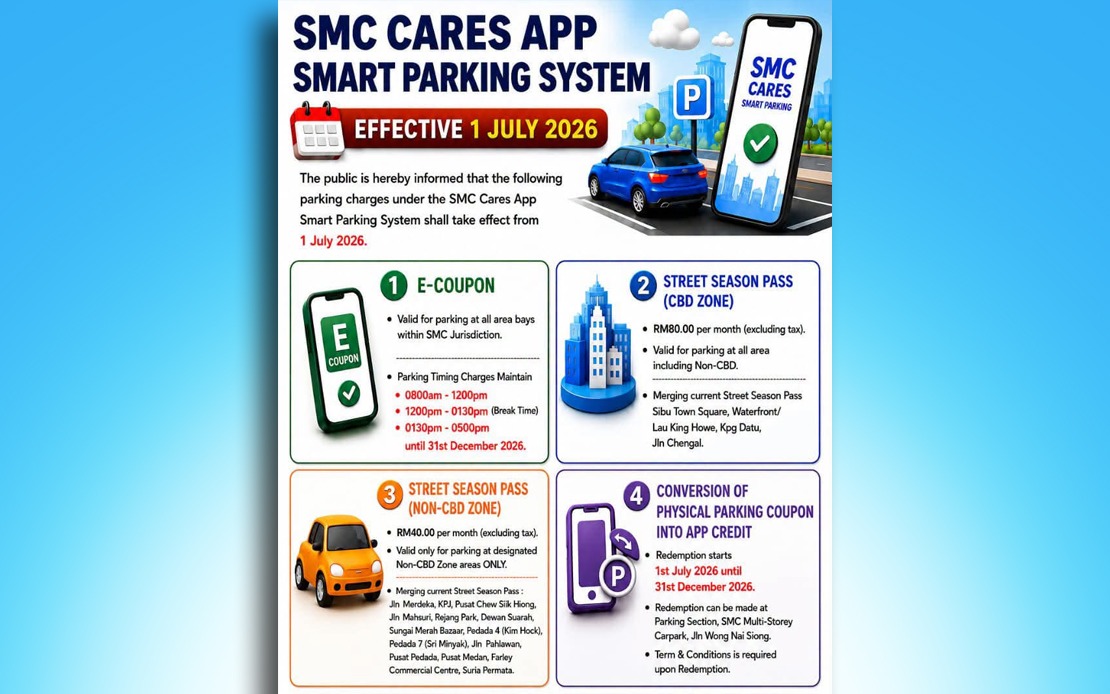
The Sibu Municipal Council has moved to address mounting public discontent with its smart parking system by introducing consumer-friendly measures aimed at improving user experience and reducing friction in the enforcement process. Beginning immediately, the council will grant motorists a five to ten-minute window before an Over Parking Notice is triggered, allowing drivers adequate time to park, exit their vehicles, and activate the payment application on their mobile phones. The decision follows sustained criticism on social media platforms, where users complained that compounds were being issued with insufficient time to complete the necessary digital transactions.
SMC Chairman Clarence Ting Ing Horh acknowledged during a media briefing that the council recognises the legitimate adjustment period users require when engaging with a digitised parking system. He emphasised that the local authority views the smart parking infrastructure as a convenience tool rather than a revenue enforcement mechanism, and that the grace period reflects this philosophy. The council has instructed the system provider, Primal Solution Sdn Bhd, to implement the grace window, signalling a deliberate recalibration of how aggressively the automated system will function. This adjustment represents a significant concession to user feedback and suggests the council is willing to prioritise public satisfaction over maximum penalty collection in the initial rollout phase.
Complementing the grace period initiative, SMC will launch a Senior Citizen Parking Pass programme from August, targeting motorists aged 60 and above. While Ting did not disclose specific terms or benefits associated with the pass, the decision reflects recognition that elderly drivers may face particular challenges navigating mobile applications and digital payment systems. This demographic consideration is particularly relevant across Southeast Asia, where senior populations often struggle with rapid technological transitions in public services. The programme's introduction suggests SMC is conscious of potential equity issues inherent in fully digital enforcement systems and is working to mitigate barriers facing less digitally literate user groups.
The council has also established mechanisms for motorists to challenge penalty notices they believe were issued in error. Ting clarified that appeals relating to registration number mistakes or other legitimate grounds can be submitted directly to SMC for review, and that each enforcement action is accompanied by photographic evidence retained within the system. This appeals process provides a crucial safeguard against automated system errors and offers recourse for drivers affected by data entry mistakes or technical malfunctions. The transparency regarding evidentiary documentation suggests the council recognises the importance of accountability when deploying enforcement technology that operates with limited human discretion.
A central source of frustration among users has been confusion regarding the role and authority of parking wardens. Ting was explicit that contractor-appointed wardens are authorised only to address paid parking violations, expired parking durations, and overstaying infractions. All enforcement action targeting illegal parking—including obstructions of traffic flow—remains the exclusive responsibility of SMC's enforcement division and state police. This clarification attempts to dispel allegations circulating on social media that parking wardens were issuing penalties for violations beyond their delegated scope. The council has also mandated that wardens remain unmasked except for medical reasons, intending to facilitate public identification and accountability.
The council is investing in customer support infrastructure to address the technical and operational barriers that have plagued the system since full implementation earlier in July. A dedicated SMC Cares counter has been established at the Sibu Public Library, staffed with personnel trained to guide users through registration and application functionality. This physical support channel is designed to assist residents struggling with the digital platform, particularly those unfamiliar with mobile payment systems. The provision of face-to-face assistance acknowledges that digital transitions in governance require sustained human support, especially in markets where smartphone literacy varies significantly across demographics.
Since its introduction, the SMC Cares system has accumulated more than 93,000 registered users, and the council projects registrations will surpass its target of 100,000 by year-end. Despite the substantial user base, complaints about system design and functionality have been pervasive. Users have reported complications during registration, particularly for seniors, unintuitive interface design, sluggish system performance, unexpected logouts, processing delays for payments, and the issuance of penalties before payment transactions could be completed. These technical deficiencies have undermined confidence in the system's reliability and fuelled criticism that the council rushed implementation without sufficient testing across diverse user scenarios.
Regarding concerns that Sibu's parking charges are the highest in Sarawak, Ting maintained that comparative analysis demonstrates the city's rates remain competitive with fees imposed by other local authorities throughout the state. He also clarified the financial arrangements underlying the system, noting that all parking revenue flows directly to SMC, while the contractor receives separate remuneration through a service contract structure. This distinction is important for public understanding, as it demonstrates that contractor incentives are not tied directly to penalty issuance volumes. However, the council's assertion regarding competitive pricing may require independent verification, as local authorities sometimes lack transparent mechanisms for publishing standardised rate comparisons.
The SMC's comprehensive response package reflects an understanding that smart parking system adoption requires careful calibration of enforcement intensity, user support, and public communication. The grace period, senior citizen programme, enhanced customer service, and appeals mechanism represent a more measured approach than aggressive penalty-driven implementation. Nonetheless, the timing and scope of these adjustments—coming only after significant social media backlash—suggest the council may have underestimated user experience challenges during the initial design and deployment phases. For Malaysian cities considering similar digital parking solutions, Sibu's experience demonstrates both the benefits of automated systems and the substantial implementation risks when technology deployment outpaces user readiness and institutional capacity to provide support.
Moving forward, the council faces the challenge of rebuilding public confidence in a system that generated considerable frustration during its launch period. Success will depend on whether the grace period, technical improvements, and support services are implemented effectively and consistently. The council's invitation for continued public feedback and its commitment to addressing valid complaints represent positive signals. However, sustained attention to system performance monitoring and user feedback integration will be essential to prevent recurrence of the technical and design problems that have characterised the initial rollout. For Malaysian readers considering similar municipal innovations, the Sibu experience underscores the importance of extensive user testing, phased implementation, and sustained customer support mechanisms when deploying technology that affects everyday public services.

