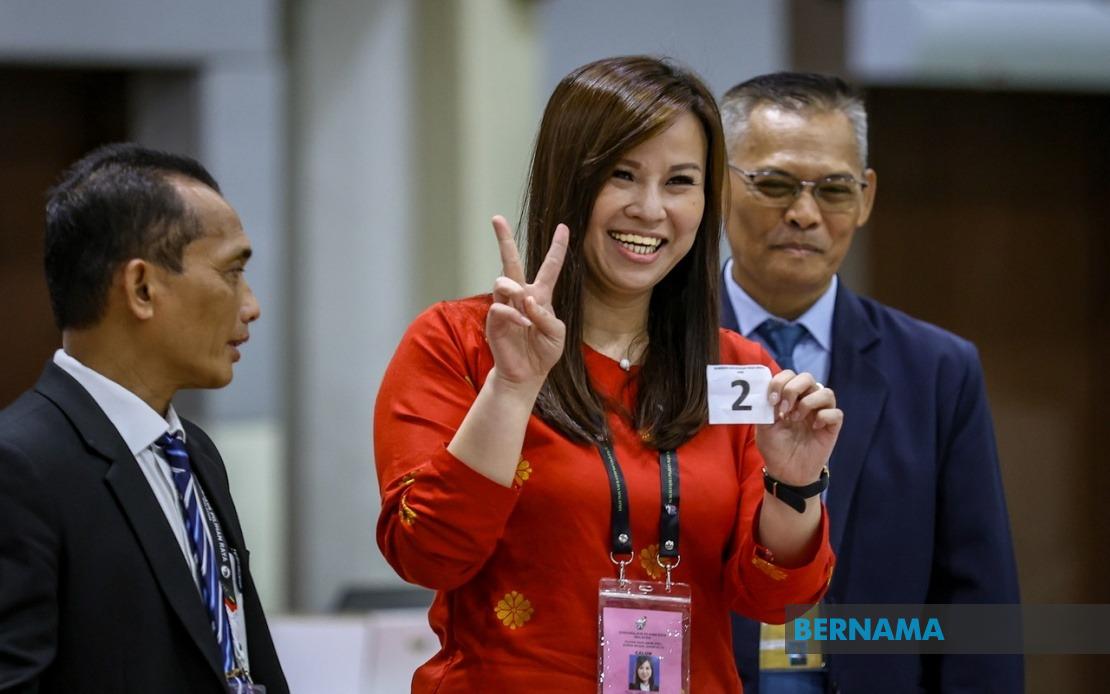
Sharon Teo, the Pakatan Harapan candidate contesting the Permas state seat, has centred her campaign on two fundamental demands from residents: upgrading deteriorating road infrastructure and strengthening public welfare programmes. Speaking after the nomination process at Dewan Muafakat in Taman Mawar, the Johor Amanah Women's Youth chief underscored road quality as a critical safety issue that deserves immediate attention if she wins the seat in the 16th Johor state election scheduled for July 11.
Teo's policy priorities emerge from extensive ground engagement across the constituency, where residents have repeatedly flagged these concerns during her door-to-door visits. Rather than offering generic pledges, her campaign appears anchored in specific grievances that have accumulated among voters in this semi-urban Johor district. This approach reflects a broader shift in Malaysian electoral politics, where local-level service delivery has become as consequential as national policy debates in determining voter behaviour.
A former aide in the Pulai parliamentary constituency under the late Amanah deputy president Salahuddin Ayub, Teo brings grassroots organising experience to her maiden electoral contest. Her background suggests a candidate steeped in community organising rather than administrative machinery, potentially offering voters a different style of representation compared to the sitting member. She indicated that a comprehensive manifesto detailing her vision and mission for Permas constituents would be released imminently, providing voters with a clearer policy roadmap before polling day.
The Permas seat presents a four-cornered contest that fragments the opposition vote. Alongside Teo's PH campaign, voters will also choose between incumbent Baharudin Mohamed Taib representing Barisan Nasional, T. Vela from Perikatan Nasional, and Dr Zamil Najwah representing Parti Bersama Malaysia. This crowded field advantages the incumbent, who typically benefits from voter familiarity and administrative machinery during multi-candidate races. For Teo and other challengers, converting enthusiasm into votes becomes exponentially harder when the anti-incumbent vote splits three ways.
Barahudin, who retained the seat for BN in the 2022 state election, acknowledges the competitive pressure while maintaining measured confidence. His statement that each opponent possesses distinct strengths reflects awareness that this election cannot be contested complacently. The incumbent's explicit assertion that "this is no easy task" suggests recognition that voter sentiment may have shifted since his previous victory, particularly on bread-and-butter issues like road maintenance and welfare support that Teo is emphasising.
Notably, Baharudin has opted against releasing a personal manifesto, instead tethering his campaign to the broader BN platform and national policy framework. This strategic choice differs markedly from Teo's constituency-focused approach and raises questions about whether the incumbent prioritises national-level governance narratives over hyperlocal service delivery concerns. In state elections, especially in smaller constituencies like Permas, such granular policy differentiation often resonates powerfully with voters juggling daily practical concerns.
Permas occupies a strategic position within the larger Pasir Gudang parliamentary constituency, an urban-adjacent area that has experienced rapid residential expansion over the past decade. With 113,963 eligible voters registered for this state election, the constituency encompasses sufficient population to decide Johor's final seat distribution. The electoral stakes extend beyond individual representation, as the composition of the 56-seat Johor state assembly will determine whether Pakatan Harapan can build on recent electoral gains or whether Barisan Nasional consolidates control.
The timing of the election, with early voting on July 7 and main polling on July 11, compresses the campaign window significantly. For a challenger like Teo operating without the machinery advantages of a long-incumbent government apparatus, every day of campaigning becomes precious. Her focus on concrete, locally-relevant issues rather than abstract political themes may prove strategically sound, as voters with limited exposure to her political record will likely assess her primarily on whether her promised priorities align with their immediate experience of poor roads and inadequate welfare provisions.
The electoral landscape in Johor has become increasingly volatile following the 2022 state election results, which saw unexpected gains for opposition parties in several constituencies. While Barisan Nasional ultimately retained state control, the results demonstrated that voter dissatisfaction could override traditional loyalty patterns, particularly in seats where specific local grievances went unaddressed by sitting representatives. Permas therefore becomes a bellwether for whether this volatility persists or whether BN has successfully consolidated support through improved delivery and voter reconnection efforts.
For Malaysian observers tracking state-level political shifts, the Permas contest offers insights into how electoral competition increasingly hinges on demonstrable service delivery rather than identity politics or national-level partisan narratives. Teo's emphasis on roads and welfare, if effectively communicated and believed by voters, could resonate precisely because these are measurable, verifiable commitments that constituents can evaluate against incumbent performance. Conversely, the four-way split among anti-BN voters may ultimately vindicate Baharudin's less explicit campaign strategy, as fragmented opposition allows the sitting member to win without necessarily offering detailed counter-proposals to challenger initiatives.

