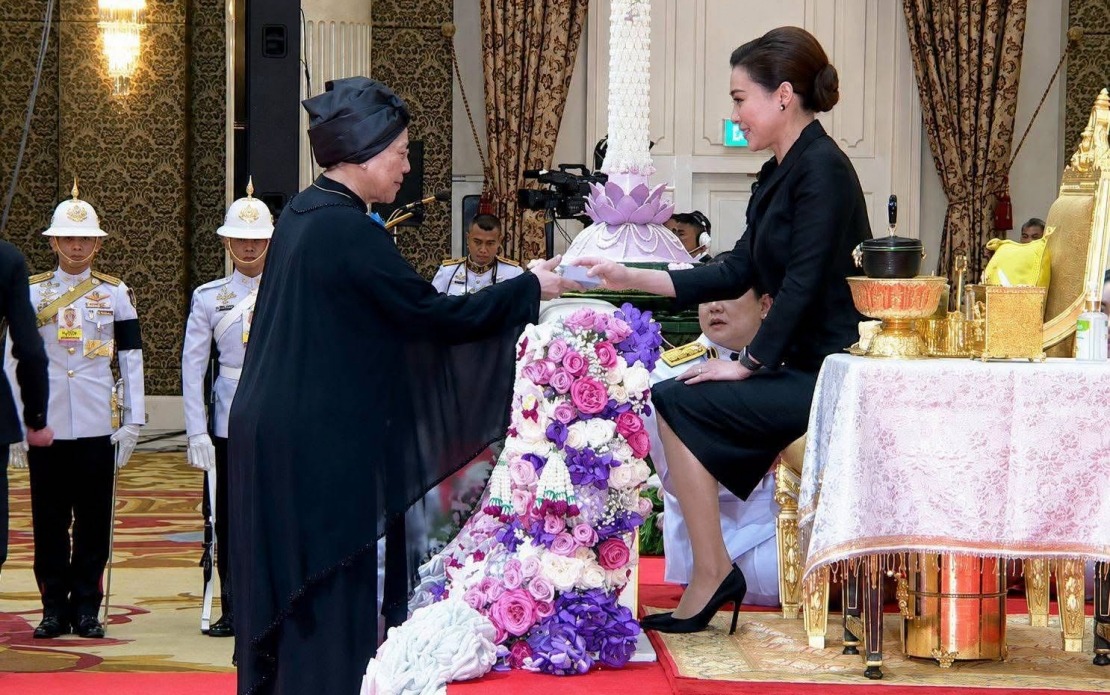
Prime Minister Datuk Seri Anwar Ibrahim and his wife Datuk Seri Dr Wan Azizah Wan Ismail extended their congratulations to Prof Emerita Tan Sri Datuk Seri Dr Sharifah Hapsah Syed Hasan Shahabudin on August 4 following her receipt of the Outstanding Woman Award for Social Development, an honour bestowed by Queen Suthida Bajrasudhabimalalakshana of Thailand. The recognition marks another significant milestone in the trajectory of accomplished Malaysian professionals gaining prominence across regional and international platforms.
According to Anwar's statement posted on X, the bestowal of this award transcends personal achievement and carries broader implications for Malaysia's international standing. The Prime Minister characterised the accolade as validation not merely of an individual's accomplishments but as evidence of the calibre, capability and substantial contributions that Malaysian women consistently demonstrate. By acknowledging the award within this wider context, Anwar positioned the recognition as part of a larger narrative of female-led excellence emanating from the nation.
The conferment by Thailand's reigning queen underscores the cross-border appreciation for outstanding contributions to social development within the Southeast Asian region. Such recognition from a neighbouring monarchy suggests that Malaysian women's work in this domain has resonated beyond domestic audiences, establishing networks of influence and expertise that extend throughout the region. This dimension holds particular relevance for a Malaysia increasingly focused on regional integration and soft power projection.
Anwar utilised the occasion to articulate the government's ideological commitment toward women's advancement, framing their participation as essential to national progress. He expressed his hope that Sharifah Hapsah's recognition would catalyse further engagement from women across Malaysian society, encouraging them to harness knowledge, leadership acumen and compassion as tools for societal transformation. The Prime Minister explicitly linked this aspiration to the government's signature Malaysia MADANI agenda, suggesting that women's contributions constitute a fundamental element of this broader developmental philosophy.
The statement further encapsulates the MADANI Government's stated priorities regarding gender inclusion and women's empowerment. Beyond rhetorical support, Anwar committed the administration to concrete actions including the preservation and elevation of women's institutional roles, the expansion of avenues for female participation spanning multiple economic and social sectors, and the systematic cultivation of talent among the female population. These commitments represent an engagement with international standards regarding gender equality and women's economic participation that increasingly characterises Malaysia's policy landscape.
The interconnection between individual achievement and national narrative remains significant when examining such recognition. When a Malaysian woman receives international commendation for contributions to social development, it reflects not only her personal dedication but also the ecosystem—educational institutions, mentorship networks, professional organisations and policy frameworks—that enabled her advancement. Anwar's public acknowledgment signals government endorsement of these enabling structures and commitment to their expansion.
Contextually, Malaysia's emphasis on women's participation in professional and developmental spheres has intensified amid regional competition for talent and demographic transitions affecting workforce composition. Several Southeast Asian nations have similarly prioritised female education and economic inclusion, recognising that untapped human capital represents a competitive disadvantage. Malaysia's positioning of women's achievement as central to national development strategy thus reflects both domestic necessity and regional alignment.
The Malaysia MADANI framework, referenced explicitly in Anwar's remarks, integrates several developmental priorities including prosperity, inclusivity and sustainability. Women's meaningful participation across sectors directly supports these pillars—female entrepreneurs and professionals contribute to economic growth, inclusive policymaking ensures broader representation in solution-finding, and women's leadership in environmental and social initiatives promotes sustainable development practices. By linking Sharifah Hapsah's award to this agenda, the Prime Minister illustrates how individual excellence serves systemic objectives.
For Malaysian women navigating professional advancement, such high-profile recognition and governmental support carry both symbolic and practical significance. The visibility of accomplished women receiving international acknowledgment alongside public government endorsement creates role models and validates career trajectories in fields like social development. Simultaneously, explicit government commitment to expanding opportunities signals structural change, though translating such statements into policy implementation remains the ongoing challenge for Malaysian institutions.
The award also reflects Thailand's own engagement with women's advancement within Southeast Asia, suggesting that regional discourse around female empowerment has matured beyond isolated national initiatives toward cross-border recognition and mutual reinforcement. Queen Suthida's presentation of the award embodies monarchical support for gender equality objectives, lending institutional weight to such aspirations across the region.
Looking forward, Anwar's positioning of this award within broader narratives of national development suggests that Malaysian policymakers increasingly view women's advancement not as peripheral equity concern but as central development strategy. Whether this rhetorical positioning translates into resource allocation, legislative reform and genuine institutional transformation across government and private sectors will determine the substantive impact of such statements. The coming years will reveal whether Malaysia's public commitment to women's advancement materialises in measurable outcomes across employment, leadership representation and policy influence.

