A Shanghai resident with a prior conviction for fraud has received a prison sentence of 10 years and three months after orchestrating an elaborate real estate swindle that exploited the goodwill and trust of a couple who had befriended and supported him for nearly three decades. The scheme, which unfolded over two years and cost the victims more than 700,000 yuan (approximately US$103,000), involved changing the lock on a vacant apartment in a resettlement housing estate and falsifying ownership documents to complete the deception. The case has drawn widespread condemnation across mainland Chinese social media and serves as a cautionary tale about the risks inherent in informal property transactions conducted outside official channels.
Sun, the perpetrator, is a Shanghai native whose prior business ventures—two retail shops—had both failed. His criminal history includes a previous prison term for fraud, from which he was released in 2017. Yet despite this troubled past, the couple in question, both migrant workers with limited financial resources, had extended him consistent material and emotional support throughout the years following his release. They provided him with regular meals, financial assistance during difficult periods, and steady companionship, gestures that appeared to move Sun sufficiently for him to pledge his future gratitude and assistance to them.
When the couple began seeking an affordable property where they could establish a permanent home in Shanghai, they naturally turned to Sun for guidance. He cultivated an image of financial stability and local influence, portraying himself as a well-connected Shanghai resident who owned retail properties and could leverage family connections within village administrative structures. These assertions, combined with his assurances that he could access discounted properties unavailable through conventional real estate channels, persuaded the couple to entrust him with their housing search and the substantial sums it would require.
Beginning in 2023, Sun extracted approximately 700,000 yuan from the couple under the pretext that these funds represented down payments and loan installments for their future property purchase, claiming such amounts would ultimately be deducted from the final sale price. When he announced in 2025 that he had secured them a relocation apartment, he demanded an additional 400,000 yuan (US$59,000) to complete the transaction. The couple, already emotionally invested in finally achieving homeownership after years of precarious life as migrant workers, prepared to provide this final sum.
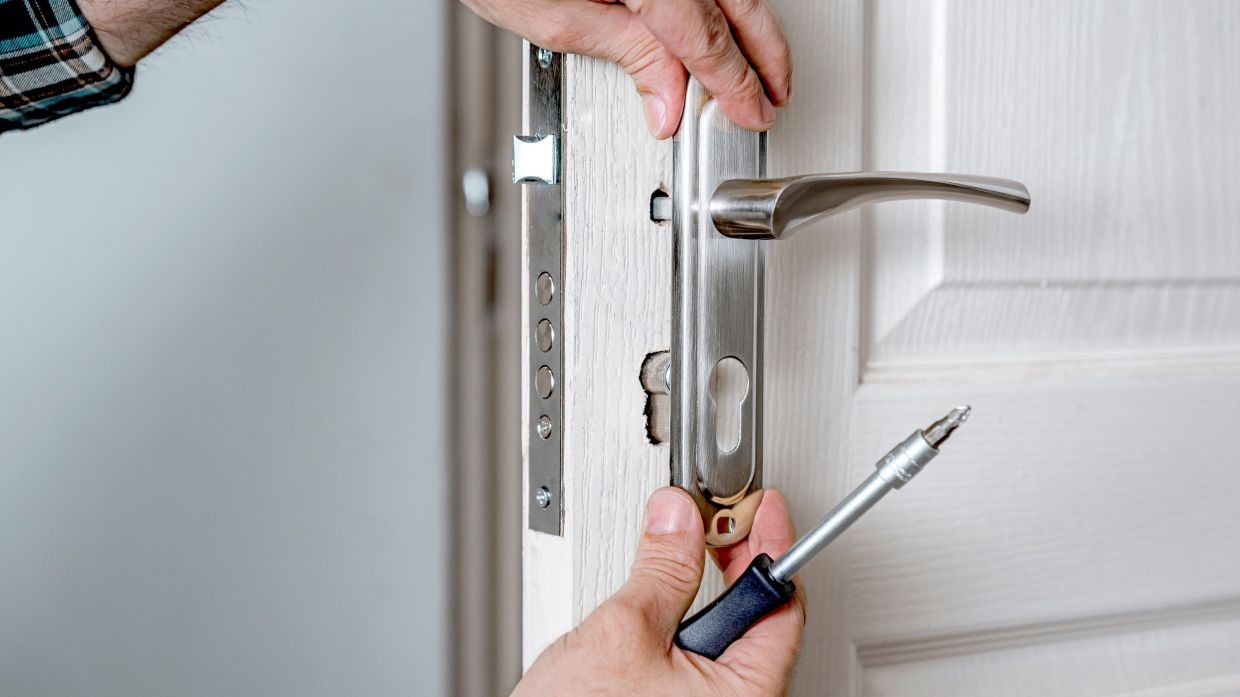
The apartment in question, however, belonged to neither Sun nor anyone authorized to sell it. Sun had identified a unit within a resettlement housing estate that had remained unoccupied for several months while the genuine owner, Wang, sought tenants through an agent. Exploiting this vacancy, Sun approached a locksmith, falsely claiming he had misplaced his keys to the property. The locksmith, apparently without requiring ownership verification, replaced the existing lock. Sun then invited the couple to inspect what he presented as their future home, handed them newly cut keys, and produced a fraudulent sales contract for their signature.
The deception persisted for several months before Wang, the legitimate owner, arrived at the property in May 2025 accompanied by a prospective tenant. Upon discovering that his key no longer functioned, Wang became suspicious and examined security footage, which clearly documented the unauthorized lock replacement. Wang immediately reported the incident to police, initiating a criminal investigation that rapidly led to Sun's arrest and confession.
Upon questioning, Sun admitted that the couple's money had been rapidly consumed by debt repayment obligations and routine living expenses, leaving no possibility of restitution. The couple had not yet paid the final 400,000 yuan demanded for the property transfer, but their cumulative loss still exceeded 700,000 yuan. Neither the couple nor their families have issued public statements regarding the incident, and the legal status of the locksmith who facilitated the fraud remains uncertain as of the publication date.
The sentencing and conviction have ignited extensive discussion across Chinese social media platforms, with commentators emphasizing the vulnerability of trust-based relationships in financial transactions. One observer noted that the couple's reliance on personal acquaintance and failure to independently verify ownership documentation created the conditions for exploitation. Another focused on Sun's apparent moral bankruptcy, suggesting his ingratitude and breach of friendship obligations warranted lifetime atonement rather than mere imprisonment. A third voice offered practical guidance, stressing that property acquisitions must always navigate formal institutional channels, require meticulous document verification, and should never depend on personal referrals or informal assurances from known contacts.
The case illustrates broader vulnerabilities within informal property markets across East Asia, where migrant workers and financially disadvantaged populations often lack the institutional knowledge and verification resources necessary to protect themselves from sophisticated deception. The relocation housing estates common throughout Chinese cities—intended to resettle displaced residents during urban development—are particularly susceptible to such schemes because they frequently contain vacant units whose ownership documentation may not be immediately accessible to casual observers. The case also raises questions about occupational responsibility; locksmiths who facilitate property access without verifying ownership claims may inadvertently enable fraud that subsequently damages innocent parties.
For Malaysian readers and property investors across Southeast Asia, the case underscores risks present in cross-border and informal regional property transactions, where verification procedures may be inconsistent or vulnerable to manipulation. The sophistication of Sun's approach—cultivating a false image of financial credibility through claims of local connections and access to exclusive opportunities—mirrors techniques occasionally employed by fraudsters operating in property markets across Southeast Asia. The emphasis placed by Chinese commentators on institutional verification and formal documentation channels reflects international best practices that Malaysian real estate professionals and buyers should similarly embrace.

