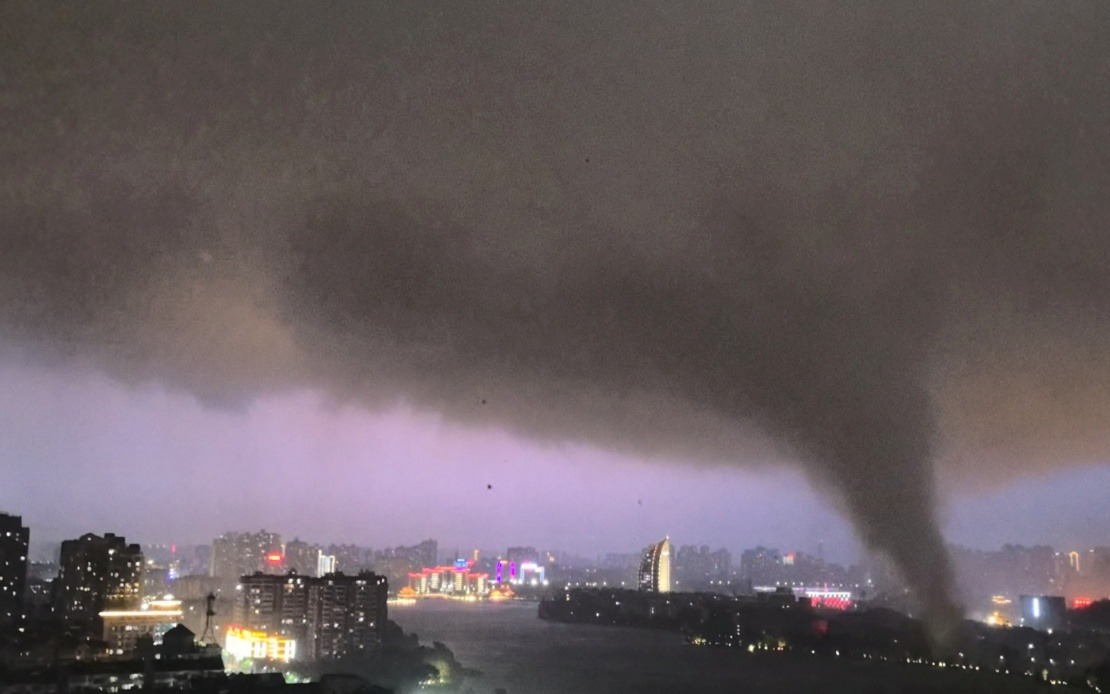
Severe convective weather triggered by powerful thunderstorms and destructive gales claimed 11 lives and left one person missing across eastern sections of Hubei Province in central China on Monday evening, provincial authorities confirmed through state media reports. The meteorological event, which unfolded across a concentrated four-hour window from 7 pm to 11 pm, created a trail of devastation through multiple urban centres in the region, forcing emergency response teams to mobilise comprehensive rescue operations across affected areas.
The extreme weather system battered four major cities in the eastern part of the province—Huangshi, Huanggang, Ezhou, and Xianning—with particular intensity in two townships where wind speeds reached level 13 on the Beaufort scale, indicating gales capable of causing significant structural damage. The rapid movement of the weather system prevented many residents from preparing adequate shelter, compounding the vulnerability of communities caught in its path. Meteorological data confirmed that some areas experienced tornadoes, a particularly dangerous manifestation of convective activity that develops vertically within thunderstorm systems, capable of creating concentrated zones of extreme damage along narrow corridors.
Infrastructure across the impact zone suffered extensive harm, with official tallies indicating that 22 buildings were completely destroyed or rendered uninhabitable by the weather event. An additional 4,855 structures sustained varying degrees of damage ranging from minor roof impacts to wall collapse and window breakage, affecting residential neighbourhoods, commercial districts, and public facilities. The architectural devastation reflected both the raw power of the wind forces and the randomness with which tornadoes and microbursts distribute their most destructive effects across urban landscapes.
Beyond the loss of life and property damage, the human toll extended across a broader population segment, with 331 residents sustaining injuries during the event. Emergency medical services faced significant operational challenges in responding to distributed injuries across multiple municipalities simultaneously, particularly given the compressed timeframe during which injuries occurred. Hospitals in Huangshi, Huanggang, Ezhou, and Xianning reported receiving casualties ranging from minor lacerations and fractures to more serious trauma requiring intensive intervention.
Provincial authorities in Hubei immediately activated comprehensive disaster response protocols, deploying rescue teams to search for the missing person and assist with recovery operations in the most heavily impacted zones. The rescue effort necessarily balanced immediate life-saving operations with systematic damage assessment required to guide resource allocation across competing priorities. Coordination between municipal governments, provincial emergency management agencies, and military units facilitated rapid deployment of personnel and equipment to areas where search and rescue operations proved most critical.
The disaster relief framework extended beyond immediate rescue activities to encompass secondary hazard prevention, recognising that severe weather events frequently generate cascading risks in their aftermath. Authorities prioritised the identification and stabilisation of damaged structures to prevent additional collapses, the restoration of utility services including electricity and water supply, and the clearing of debris from transportation routes to enable movement of emergency vehicles. This systematic approach reflected lessons learned from previous severe weather events across China, where secondary disasters have historically claimed additional casualties in the days following initial impact.
For Southeast Asian observers and Malaysian emergency management professionals, this Hubei incident underscores the destructive potential of severe convective weather systems and the operational complexity of coordinating disaster response across multiple urban centres affected simultaneously. The region's own exposure to thunderstorms, flash flooding, and occasional tornado activity during monsoon seasons makes this event instructive for regional contingency planning. Malaysian meteorological services and civil protection agencies monitoring similar weather patterns in neighbouring regions can extract valuable insights regarding early warning systems, evacuation procedures, and resource pre-positioning strategies.
The concentrated nature of the four-hour weather event, though devastating in its immediate impact, also provided a bounded response window that allowed authorities to concentrate resources on well-defined geographic areas. This contrasts sharply with slow-moving weather systems or sustained severe weather that creates prolonged operational demands and resource exhaustion among responders. Understanding the temporal characteristics of severe weather events proves crucial for disaster management planning across Southeast Asia, where seasonal variation in weather patterns creates distinct vulnerabilities during different periods of the year.
Hubei Province's historical experience with meteorological hazards and the mature institutional frameworks now in place within Chinese provincial government suggest that the comprehensive response to this event drew on accumulated institutional knowledge and pre-developed protocols. The rapid activation of all-out rescue and relief efforts indicates pre-positioned emergency resources and trained personnel ready for deployment, elements that remain aspirational for many developing jurisdictions globally. Malaysia's own emergency management infrastructure continues to strengthen through similar institutional development processes, with periodic severe weather events prompting refinement of response procedures and inter-agency coordination mechanisms.

