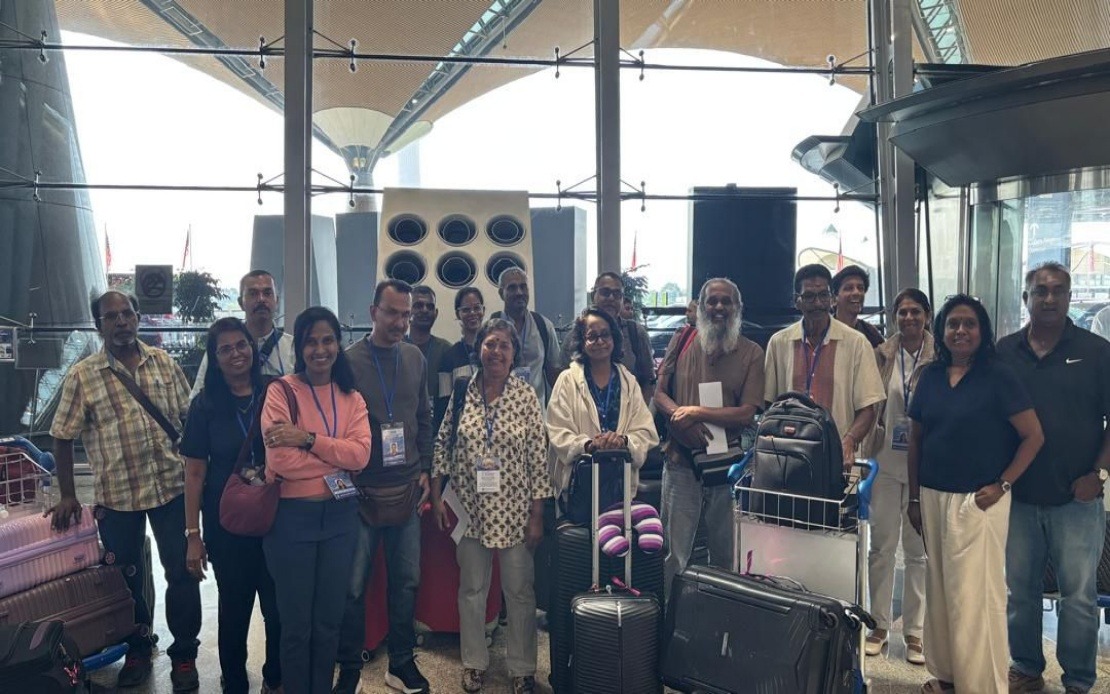
A group of seventeen Malaysians participating in a religious pilgrimage to Mount Kailash in Tibet has lost all contact with the outside world following catastrophic flash floods that struck the Nepal-Tibet border region on August 26. The communications blackout, now extending beyond 24 hours, has sparked significant anxiety among family members back home and prompted immediate intervention by Malaysian government agencies at the highest levels. The pilgrims, organised through Nepal-based tour operator Fishtail Tours & Travels, were last heard from in the early morning hours of August 26 when they reported being approximately two kilometres from the Nepal-Tibet Immigration Checkpoint.
R. Logadashini, a family member of four pilgrims in the group, disclosed that her relatives—her father S. Raman aged 59, mother M. Neelavany aged 54, uncle S. Murukan aged 60, and aunt G. Padmahwathi aged 58—are among those currently unreachable. The group had arrived in Nepal on August 23 and were scheduled to complete their pilgrimage itinerary until September 5. The final direct message from the tour group was recorded at approximately 8.18 am Nepal time (10.33 am Malaysian time) on August 26, after which all communication channels fell silent. A subsequent WhatsApp message received by family members at 8.40 am Malaysian time appears to be the last confirmed contact with anyone in the group.
The Foreign Ministry's Wisma Putra has indicated that a broader number of Malaysians—approximately 55 individuals—reported to the Malaysian Embassy in Kathmandu remain unable to be reached in the aftermath of the flooding. However, the ministry stressed that as of the reporting time, no official confirmation had been received regarding Malaysian casualties. The Malaysian Embassy in Kathmandu has mobilized its diplomatic resources to coordinate with Nepalese authorities, activate search and rescue operations, engage with travel agencies involved, and liaise with other pertinent organisations to determine the safety status and current location of the affected Malaysians. The embassy's efforts reflect the critical challenge posed by the disaster's location in a remote border region with severely compromised infrastructure.
Prime Minister Datuk Seri Anwar Ibrahim has issued direct instructions to all relevant government agencies to prioritize locating and establishing contact with Malaysian citizens affected by the natural disaster. Both the Malaysian Embassy in Kathmandu and the High Commission in New Delhi have been activated to provide comprehensive assistance to those impacted. This high-level intervention underscores the seriousness with which Malaysian authorities are treating the situation and indicates the government's commitment to ensuring the welfare of its citizens abroad during emergencies.
The flash flooding itself resulted from a combination of intense rainfall and a glacial collapse in Nepal's Rasuwa and Nuwakot districts. The resulting floods have severely compromised communications infrastructure and destroyed critical road networks that connect the affected region to Kathmandu, the nation's capital. These geographical and infrastructural challenges have significantly hampered rescue efforts and restricted the ability of authorities to reach those stranded in the affected areas. The Nepal-Tibet border route affected by the floods is regularly traversed by religious pilgrims journeying to Mount Kailash and adventure trekkers en route to the Everest region, making it a critical passage for international tourism and pilgrimage activities.
In a more positive development, a separate contingent of Malaysian pilgrims has been confirmed safe following the disaster. The group, comprising 56 individuals including 39 Malaysians, four Singaporeans, and three Canadians, is led by the renowned Datuk N. Mohanadas, a legendary Malaysian mountaineer celebrated for his climbing achievements on Mount Everest. Mohanadas confirmed that his group, which had been aware of the sudden heavy rainfall, flash flooding, and reported casualties occurring at the Nepal-Tibet border, was not affected by the disaster. Crucially, their planned route did not take them through the affected areas, allowing them to proceed safely with their pilgrimage objectives.
The distinction between the two groups highlights the significant risk variations inherent in different pilgrimage routes and schedules around the sensitive Nepal-Tibet border region. The groups may have been travelling on identical pilgrimage journeys but followed different timings and pathways, with the second group fortunately positioned away from the disaster zone when the floods struck. Mohanadas reported that his group had commenced the first of three days of ceremonial pilgrimage around Mount Kailash, indicating that those in his party were progressing normally with their religious observances despite the tragedy unfolding elsewhere in the region.
For Malaysian families with members among the unreachable seventeen, the situation represents an agonizing period of uncertainty. The loss of direct communication during a natural disaster in a remote international location creates particular challenges, as families lack real-time information about their relatives' circumstances while simultaneously navigating the complexities of coordinating with foreign authorities, diplomatic missions, and tour operators across different time zones and administrative jurisdictions. The delayed information flow typical in such situations often means that family members experience extended periods of not knowing whether their relatives are safe, injured, or worse.
The Mount Kailash pilgrimage holds profound religious and spiritual significance for devotees from various faiths, particularly those of Hindu, Buddhist, and other traditions that venerate the sacred mountain in the Tibetan plateau. Malaysian pilgrims undertake these journeys as meaningful spiritual undertakings, travelling thousands of kilometres to participate in ancient pilgrimage rituals. The organization of such religious expeditions typically involves careful planning, coordination with international tour operators, visa arrangements, and logistical preparations that span several months. The sudden intervention of a natural disaster disrupts these carefully orchestrated journeys and transforms what should be transformative spiritual experiences into crisis situations.
The Nepal-Tibet border region, while spiritually significant, presents inherent geographical and meteorological hazards. The area's elevation, weather patterns, and glacial terrain create conditions susceptible to sudden flooding, especially during monsoon seasons when heavy precipitation is common. The glacial collapse that contributed to the August 26 floods exemplifies the climate-related vulnerabilities of high-altitude border regions, phenomena that climate scientists increasingly associate with global temperature changes affecting mountain ecosystems. For Malaysian tourists and pilgrims, these risks may not be immediately apparent when planning such journeys, as promotional materials typically emphasize the spiritual and cultural dimensions of the pilgrimage rather than detailed meteorological or geological hazard information.
The incident raises important questions about tour operator liability, pre-trip risk assessment, and communication protocols for groups operating in remote international border regions. Fishtail Tours & Travels, as the organizing agency, faces scrutiny regarding how it prepared participants for potential hazards and what contingency protocols it maintains for emergency communications when groups are in isolated areas. The apparent breakdown in communication suggests either that the disaster's impact was so sudden and severe that established communication channels were instantly disabled, or that backup communication systems were insufficient for the situation's urgency. Post-incident investigations by Nepalese tourism authorities and Malaysian regulatory bodies will likely examine these operational aspects.
Malaysian diplomatic missions across South Asia have been placed on heightened alert regarding this incident, with the broader implications extending beyond the immediate seventeen pilgrims. The incident demonstrates the vulnerability of Malaysian citizens to natural disasters occurring in third countries, particularly in remote regions where Malaysian government presence is limited and infrastructure for emergency response may be inadequate. For the Malaysian government, such situations necessitate rapid coordination across multiple agencies including the Foreign Ministry, police, military, and civilian disaster response organizations, alongside engagement with host country authorities who maintain primary responsibility for rescue and recovery operations within their territories.

