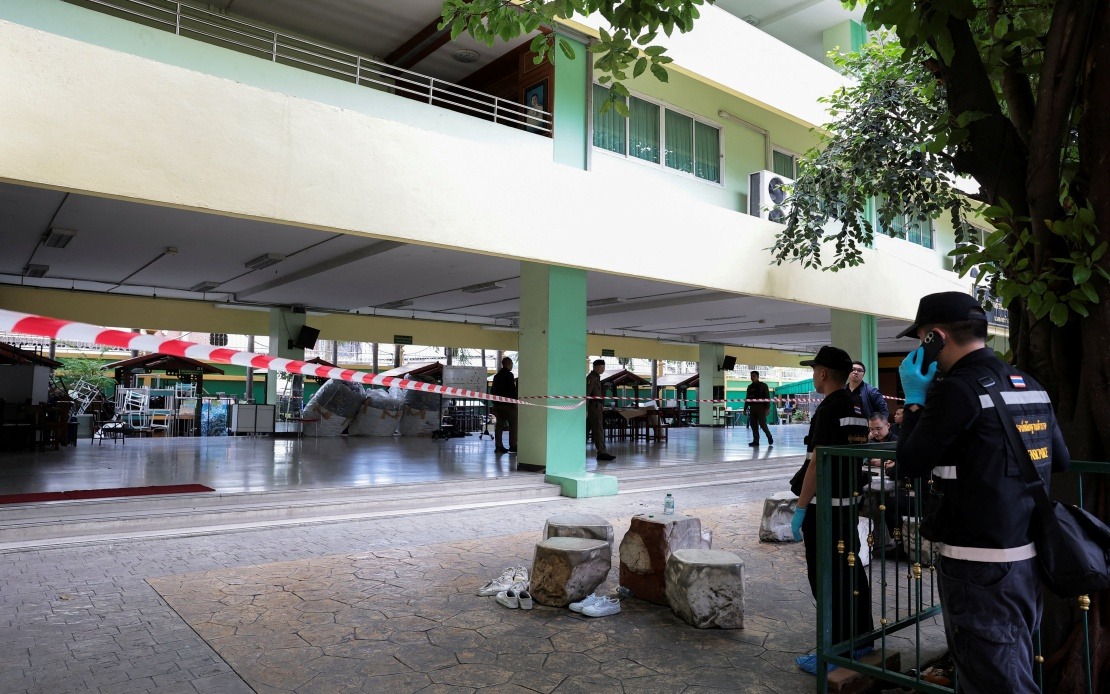
A tragic shooting at Debsirin Nonthaburi School in the Bang Kruai district northwest of Bangkok on Friday morning has left seven people dead and at least fifteen others wounded, marking another devastating incident of gun violence in Thailand's education sector. The incident unfolded around 10 am when a student at the school opened fire, claiming the lives of three teachers and three fellow pupils before turning the weapon on himself. The armed assailant was also among the fatalities, according to statements from Royal Thai Police deputy inspector-general and spokesperson Lieutenant General Trairong Piwpan, who addressed media personnel at the scene.
Police investigations into the circumstances of the shooting have uncovered significant details about the weapon used in the attack. Authorities recovered a 9mm handgun along with 34 rounds of ammunition that were not in the magazine at the time of discovery. According to Lieutenant General Trairong, the firearm had belonged to the suspect's grandfather, raising troubling questions about firearm storage and family access to weapons in Thai households. This revelation has intensified the focus on how legally registered weapons are secured and monitored, particularly in homes with younger family members who may pose a risk to themselves or others.
The fifteen individuals injured in the rampage were promptly transported to medical facilities, with two cases classified as serious injuries requiring intensive care. The rapid medical response helped prevent what could have been an even higher death toll, though the psychological trauma inflicted on survivors and the broader school community remains immeasurable. The incident has compelled authorities to mobilize comprehensive mental health support infrastructure across affected facilities.
In response to the crisis, school authorities swiftly evacuated teachers and students from Debsirin Nonthaburi School to the nearby Chanrat Wittaya School, while parents and guardians were instructed to collect their children. This orderly transition helped secure the remaining student population and prevent further chaos during an emotionally turbulent time. The national police chief has subsequently issued directives instructing the Police General Hospital to deploy trained psychologists to provide immediate counseling and support services to all those impacted by the tragedy.
Prime Minister Anutin Charnvirakul, who simultaneously holds the portfolio of interior minister, responded swiftly to the incident with expressions of profound sadness and extended condolences to bereaved families. His administration pledged urgent assistance to the injured and mobilized relevant government officials to coordinate response efforts on the ground. The Prime Minister's presence in the national conversation surrounding the shooting underscores the severity with which Thailand's leadership is treating this emerging pattern of school-based violence.
Anutin seized the opportunity presented by this tragedy to reinforce his government's firearms policy position, explicitly linking the shooting to the administration's decision to decline renewal of permits for civilian firearm carrying and possession. "This is exactly why the government does not allow gun-carrying and possession permits to be renewed," he stated, using the incident as evidence supporting stricter gun regulations. This policy stance reflects growing governmental concern about uncontrolled civilian access to weapons and the intersection between lax firearm oversight and violent incidents occurring in spaces where children gather.
The August shooting occurs within a deeply troubling timeline of school-based violence in Thailand. Just six months prior, in February, Hat Yai experienced a separate shooting incident in Songkhla province when an eighteen-year-old gunman opened fire at a school facility, killing the school director and injuring additional victims before being apprehended by authorities. The proximity of these two major incidents within a single academic year has intensified national debate about school safety protocols, mental health support systems for young people, and the fundamental adequacy of Thailand's approach to preventing firearm-related tragedies in educational environments.
For regional observers including Malaysian policymakers and security analysts, the Thailand incidents offer cautionary insights into how gaps in firearm regulation and inadequate mental health infrastructure can converge to produce devastating consequences. While Malaysia maintains different gun laws and enforcement mechanisms than Thailand, the recurrence of school shootings in neighboring countries warrants continued examination of security protocols in Malaysian educational facilities and the psychological support systems available to students experiencing crisis. The incidents demonstrate that prosperity and development alone do not insulate societies from gun violence, particularly when regulatory frameworks lag behind emerging threats.
The broader implications for Southeast Asia extend beyond immediate security concerns to encompass questions about how governments balance civil liberties related to firearm ownership with public safety imperatives, particularly in protecting vulnerable populations such as school-age children. Thailand's government response through stricter permit policies and mental health mobilization represents one regional approach, yet the persistence of school shootings suggests that regulatory measures alone require complementary investments in psychological intervention, threat assessment in educational settings, and family-level support systems that identify and assist young people at risk of harming themselves or others.

