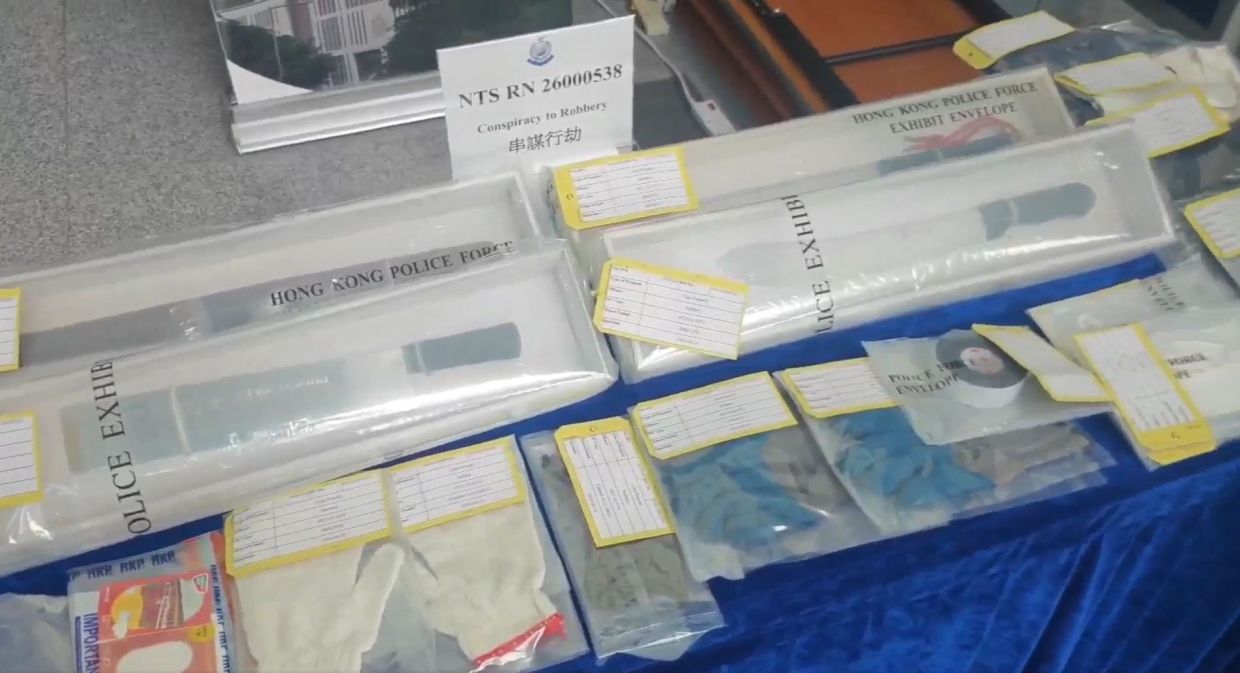
Seven suspects, including four men and three women aged between 20 and 39, have been detained by Hong Kong police following a violent robbery that saw a man stabbed and robbed of six gold bars valued at HK$7 million at Hong Kong International Airport's car park on Thursday, June 18. The swift apprehension came within 12 hours of the incident being reported to authorities, demonstrating a rapid investigative response to the brazen daylight attack that has drawn attention to security vulnerabilities at one of Asia's busiest aviation hubs.
The incident unfolded when a male victim, who had just arrived on an early-morning flight from Bali, Indonesia, was making his way to retrieve his vehicle from parking level 3. He was carrying six gold bars in his backpack destined for a mainland businessman—a detail that would later prove significant in police assessments of the crime's nature. Three masked assailants armed with knives descended upon him as he navigated the car park, launching a calculated attack that left him with stab wounds to his left hand and foot. The attackers grabbed his backpack and fled the scene in a seven-seater vehicle, suggesting a level of coordination and planning characteristic of organised robbery operations.
What distinguishes this case from opportunistic street crime is the apparent foreknowledge displayed by the perpetrators. Police investigators determined that the assailants possessed specific information about the victim's arrival flight and the location where he had parked his vehicle—details that would not be readily available to random criminals conducting a spontaneous mugging. This intelligence gap has led authorities to suspect an "insider" was involved in facilitating the heist, providing crucial operational details to the robbery gang. Such insider involvement is a hallmark of organised crime operations, where criminal networks cultivate relationships with workers across multiple sectors to gain access to valuable targets and timing information.
The arrested individuals present a mixed criminal profile that reinforces organised crime suspicions. Several of those detained have documented triad backgrounds, indicating connections to Hong Kong's traditional organised crime syndicates. However, not all suspects remained in custody within Hong Kong's jurisdiction. Police have stated that additional perpetrators believed to have participated in the robbery have evaded capture and fled across the border to mainland China. This cross-border dimension adds complexity to the investigation and highlights the challenges faced by Hong Kong law enforcement when pursuing criminals who exploit the relative ease of movement into Chinese territory.
Recognising the transnational nature of the case, Hong Kong police have formally requested assistance from mainland law enforcement authorities to locate and apprehend the fugitive suspects. Such cooperation between Hong Kong and mainland Chinese police forces has become increasingly routine in recent years, particularly in cases involving serious organised crime, human trafficking, and financial offences. The willingness of both jurisdictions to collaborate on criminal investigations reflects broader security cooperation frameworks that have evolved to address cross-border criminal activity in the Pearl River Delta region.
Investigators have recovered significant physical evidence from the crime scene and subsequent searches. The seven-seater vehicle used as the getaway vehicle has been located and retrieved, along with the knives employed in the stabbing attack. These items will undergo forensic analysis to establish connections between the arrested suspects and the crime itself, potentially strengthening the prosecution case. The recovery of the murder weapons is particularly important, as blade analysis and fingerprint evidence could definitively link specific individuals to the assault portion of the robbery.
The victim, who sustained injuries during the violent encounter, was transported to Princess Margaret Hospital for treatment. Medical staff assessed his condition as stable, indicating that while the stab wounds were serious enough to require hospitalisation, they did not pose an immediate threat to his life. His recovery should allow him to provide detailed testimony regarding the attackers' appearance, behaviour, and the sequence of events, testimony that will prove crucial in corroborating evidence gathered by investigators and supporting prosecutions of the detained suspects.
From a regional security perspective, this incident raises questions about access control and surveillance protocols at Hong Kong International Airport's car parking facilities. Airports across Southeast Asia, including Kuala Lumpur International Airport and Singapore Changi Airport, have invested heavily in CCTV coverage, access restrictions, and security patrols in parking areas to prevent precisely such incidents. The apparent ease with which the attackers identified their victim and executed their plan suggests potential gaps in situational awareness or preventive measures at the Hong Kong facility.
The case exemplifies evolving organised crime tactics in which syndicates target high-value individuals transporting precious metals or cash across borders. Similar thefts have been documented in Malaysia, where gold smuggling and theft rings have become increasingly sophisticated. Criminal networks utilise insider information, surveillance operations, and rapid transit routes through multiple jurisdictions to minimise the window during which law enforcement can intervene. The involvement of mainland-based fugitives underscores how such operations exploit geographic and jurisdictional boundaries to their advantage.
The conspiracy charges against the detained individuals represent the prosecution's assertion that these seven suspects coordinated the robbery rather than acting on individual impulse. Conspiracy charges typically carry substantial penalties under Hong Kong law and reflect the seriousness with which authorities treat organised criminal activity. The abetting charges indicate that some of the detained individuals may have played supporting roles rather than directly participating in the stabbing or physical theft, a distinction that may influence sentencing recommendations if convictions are secured.
Moving forward, the investigation will likely focus on identifying which specific individual acted as the insider, establishing the relationship between the various suspects and determining the intended destination for the stolen gold. Whether the bars were destined for illegal smuggling networks, illicit refining operations, or other criminal enterprises remains under investigation. Understanding the downstream market for the stolen gold could reveal broader criminal networks operating across the region and potentially prevent future similar offences.