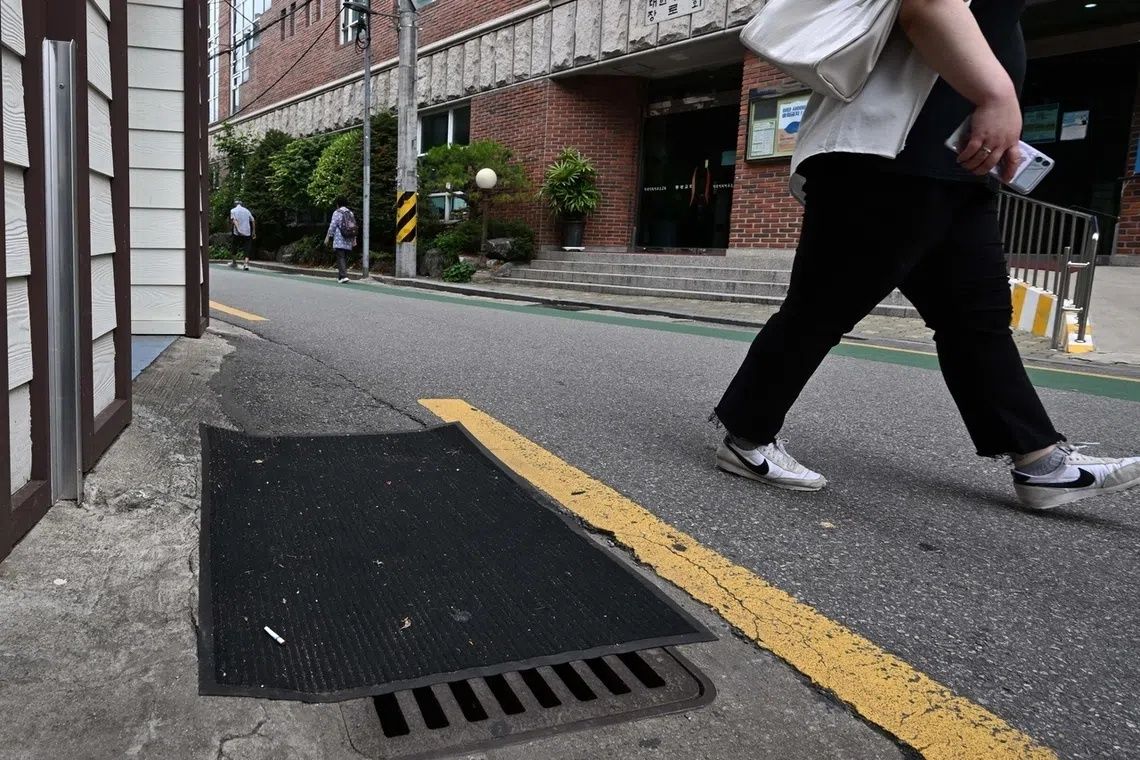
Seoul's urban landscape is periodically disrupted by an unmistakable stench that materialises without warning—pedestrians navigating busy sidewalks or waiting at bus stops suddenly encounter sharp, unpleasant odours that typically fade within seconds. Yet this fleeting experience for commuters masks a persistent municipal headache. The problem has generated substantial discussion in both Korean and international online forums, with residents and visitors consistently documenting episodes of overpowering sewer-like smells across the city. A 2025 report from the Seoul Institute reveals that sewer-related odours account for approximately half of all civil complaints regarding poor air quality in the city, underscoring the significance of this seemingly minor issue to the urban experience.
The root cause of Seoul's odour problem traces directly to hydrogen sulfide, a colourless gas produced when organic matter in sewage decomposes under anaerobic conditions. This chemical compound, notorious for its rotten egg-like smell, accumulates within the city's sewer infrastructure under specific environmental circumstances. Seoul's rapid expansion over recent decades has overwhelmed parts of its drainage infrastructure, creating bottlenecks in wastewater management. To manage this capacity shortage, many buildings have installed septic tanks as temporary holding facilities before waste enters the underground sewer network. While these tanks successfully remove solid waste materials, they prove inadequate at eliminating dissolved organic compounds suspended in the wastewater. These remaining organic substances continue downstream into the underground sewer system, where they eventually decompose in low-oxygen environments and generate hydrogen sulfide gas.
The city's complex combined sewer system further complicates odour control efforts. In this configuration, wastewater from residential and commercial buildings shares the same underground pipes with stormwater runoff from streets and public spaces. During periods of heavy rainfall, the increased water volume creates sufficient flow velocity to flush accumulated sewage through the system, which actively suppresses hydrogen sulfide accumulation and prevents odours from escaping. However, during prolonged dry spells and hot weather with minimal precipitation, water flow diminishes dramatically, allowing sewage to stagnate within pipes. In these conditions, hydrogen sulfide concentrations rise, and the gas escapes through accessible openings including storm drains, sewer maintenance holes, and other pipe penetrations at ground level.
Seoul's efforts to address this challenge date back over a decade, beginning with comprehensive odour reduction initiatives launched in 2015. These early interventions produced measurable results: sewer-related complaints declined substantially from 3,095 in 2015 to just 1,660 by 2020, representing a 46 per cent reduction. The city implemented odour reduction devices at large septic tanks and established dedicated administrative structures to oversee mitigation projects. Nevertheless, this initial progress has proven temporary. Complaints have surged again in recent years, reaching 2,302 in 2024 and suggesting that reactive symptom management has reached its limits. Officials acknowledge the fundamental challenge: addressing odours requires diagnosing complex, interconnected factors through expert analysis rather than applying one-size-fits-all solutions.
The most comprehensive long-term remedy would involve converting Seoul's combined sewer system into a separate system where wastewater and stormwater flow through independent pipe networks. This infrastructure modernisation would prevent the stagnation problem entirely by allowing stormwater runoff to bypass septic tanks and sewer pipes during dry periods. Seoul has recognised this necessity since the early 1990s and has pursued gradual conversion. Progress remains glacially slow, however, constrained by the enormous logistical complexity and financial burden of replacing extensive underground networks across a dense metropolitan area. As of 2025, only 20.4 per cent of Seoul's total sewer network had transitioned to separate systems, demonstrating how stubbornly this infrastructure problem resists resolution despite decades of acknowledgement.
Ki Dong-won, a researcher at the Seoul Institute, identifies a systemic weakness in Seoul's approach: the city's reactive, complaint-driven methodology prevents development of proactive, standardised solutions. Korea lacks the scientific tools that enable predictive management, including computational models that can forecast how sewer odours disperse into above-ground air or map their diffusion patterns through urban environments. While authorities have begun developing sewer odour maps to visualise problem areas, these efforts remain disconnected from measurable performance standards or evaluation frameworks for odour reduction facilities. Without such scientific infrastructure, the city struggles to deploy resources strategically or determine whether specific interventions genuinely improve conditions or simply shift problems to adjacent neighbourhoods.
The current legal framework governing odour management reflects this reactive orientation. Regulations primarily focus on controlling odours that exceed established legal thresholds rather than requiring local governments to implement preventive measures that suppress odours before they materialise. This enforcement-based approach prioritises responding to public complaints over eliminating underlying causes. Environmental engineering experts contend that Seoul, as a major global metropolitan centre, should embrace far more ambitious proactive strategies. Park Seok-soon, an emeritus professor of environmental engineering at Ewha Womans University, suggests that artificial water circulation through sewer pipes offers a practical intermediate solution while waiting for infrastructure conversion. By maintaining continuous water movement through the network—potentially drawing water from fire hydrants or municipal water systems—the city could prevent sewage stagnation and dramatically reduce hydrogen sulfide generation, even within the existing combined system structure.
Parallels to other developed nations suggest that Seoul's frustration is not inevitable. Major cities in Japan and other advanced economies continue operating combined sewer systems without generating persistent odour complaints, demonstrating that rigorous management protocols can neutralise this problem within existing infrastructure frameworks. The distinction lies not in the system design but in commitment to active, continuous maintenance and monitoring. These cities prioritise regular sewer flushing, sediment dredging, and water circulation to prevent the stagnation conditions that generate offensive smells. Seoul possesses the technical expertise and financial resources to implement such measures but has not yet reorganised its administrative priorities or budgetary allocations accordingly.
The persistence of Seoul's sewer odour problem into 2024 and beyond reflects broader challenges in municipal infrastructure governance across rapidly urbanised Asian metropolitan areas. Cities that expanded dramatically during recent decades often constructed centralised systems that struggle to serve contemporary populations without modifications. The sewer odour issue, while seemingly minor relative to air pollution or water contamination, nonetheless affects quality of life and public perception of urban management. For Malaysian and Southeast Asian cities facing similar infrastructure pressures from rapid growth, Seoul's experience offers an instructive cautionary tale about the perils of reactive management and deferred comprehensive modernisation. Solutions require sustained investment, technical sophistication, and fundamental restructuring of administrative approaches—changes that prove far more challenging to implement than initial system design.

