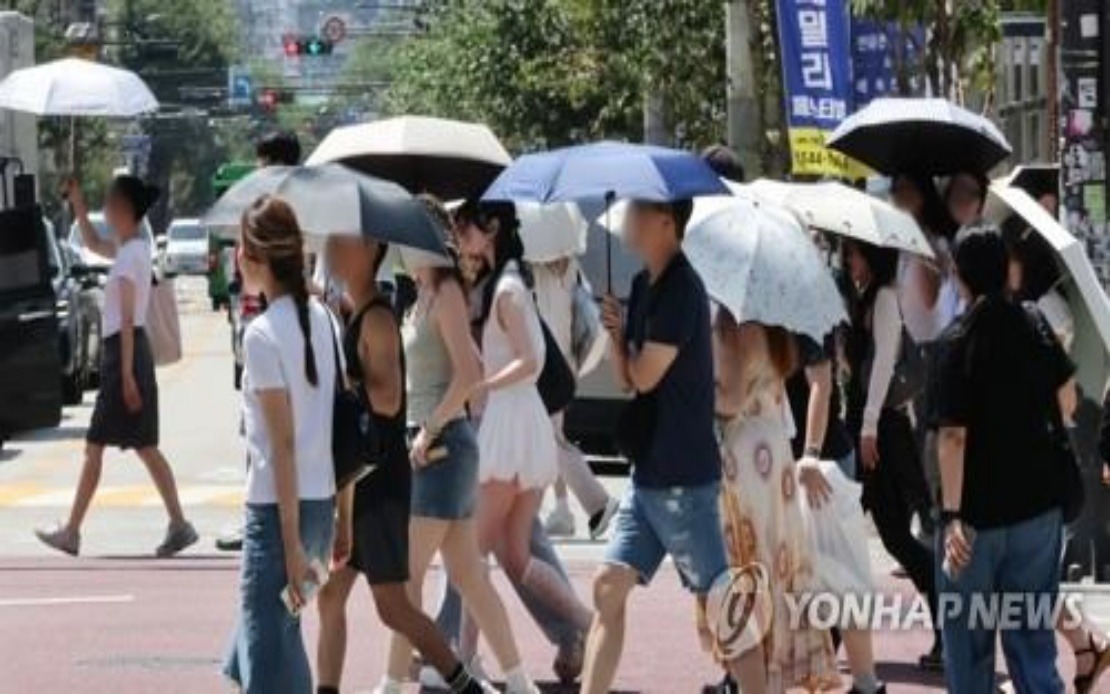
South Korea's capital and surrounding regions have been gripped by an exceptional heat wave, with Seoul recording temperatures of 40.2°C on Friday afternoon—marking a significant weather milestone for the country. The automatic weather station in Nowon, a northern district of Seoul, logged the reading at 3.28 pm, according to the Korea Meteorological Administration (KMA). This represents the first occasion since August 1, 2018, when Seoul experienced a peak of 41.8°C, that the capital has reached such extreme temperatures.
The intensity of the current weather system extended well beyond Seoul's boundaries, demonstrating the widespread nature of the meteorological disturbance affecting the Korean peninsula. In Hanam's Deokpung district, situated just southeast of the capital, readings climbed to 40.7°C at 2.32 pm, while Gwangyang—approximately 300 kilometres south—recorded 40.2°C at 2.37 pm. Inland areas in Gangwon Province and Gyeonggi Province also experienced temperatures approaching this threshold, with Yeongweol and Yeoju both reaching 39.8°C during the afternoon hours. The geographic distribution of these extreme readings underscores how the heat wave transcended typical urban heat island effects and reflected a broader atmospheric pattern affecting the entire nation.
Beyond the headline temperature figures, the Korea Meteorological Administration's data reveals the unprecedented duration and relentlessness of the current conditions. Across South Korea, the average number of heat wave days—defined as periods when daytime temperatures reach 33°C or above—tallied 14.8 days from June 1 through Thursday. This figure ranks as the fourth highest since the nationwide weather observation network was established in 1973, indicating that while not entirely without precedent, such sustained heat remains exceptionally rare. More remarkably, the nation experienced 13 consecutive tropical nights, a measurement defined by minimum temperatures of 25°C or higher, which constitutes a record since formal records began.
The physiological implications of such sustained elevated temperatures warrant consideration, particularly for vulnerable populations. The combination of record heat wave duration and unprecedented consecutive tropical nights prevents the customary nocturnal cooling that allows human bodies and urban infrastructure to recover from daytime stress. This compression of relief periods compounds the health risks associated with prolonged exposure to dangerous temperatures. The tropical night record, in particular, reflects a phenomenon increasingly observed in rapidly urbanizing nations experiencing accelerating climate change—cities retain daytime heat through the evening and night, creating environments where heat stress remains continuously elevated.
In response to the severity of conditions, the Korea Meteorological Administration had implemented its highest-level alert status, the serious heat wave warning, for Seoul beginning Tuesday. These warnings follow specific meteorological criteria: they are issued when apparent temperatures—a measure combining actual temperature with humidity and wind conditions—are projected to reach 38°C or higher, or when daily maximum temperatures exceed 39°C in regions already experiencing high perceived heat for two consecutive days or longer. The capital remained under this top-tier alert for several days as the heat wave intensified, reflecting official recognition of the public health emergency.
However, meteorological projections suggested the extreme conditions would moderate marginally heading into the weekend period. The Korea Meteorological Administration indicated that by Saturday, overnight lows would range between 21°C and 26°C nationally, while daytime highs would retreat to a range of 26°C to 35°C. Based on these forecasts, the authority announced plans to downgrade the serious heat wave warnings for Seoul, eastern regions, and southwestern areas to standard warnings effective at 6 pm Friday. While this technical downgrade might suggest meaningful relief, the continued expectation of temperatures in the mid-thirties Celsius indicates that hazardous conditions would persist despite the moderation.
The distinction between heat warning levels carries practical significance for emergency response planning and public health interventions. A serious heat wave warning triggers heightened protocols among hospitals, emergency services, and social support networks to identify and assist vulnerable individuals. Downgrading to ordinary warnings may reduce the intensity of these coordinated responses at precisely the moment when continued vigilance remains necessary. This technical adjustment reflects meteorological assessment of conditions rather than a return to safety, and residents and officials should remain cognizant of the ongoing threat despite the formal reduction in alert status.
For regional observers, the South Korean experience underscores the escalating severity of heat wave phenomena across East Asia. The country's advanced meteorological infrastructure and historical records spanning five decades provide robust documentation of how baseline temperature patterns have shifted. The fact that Seoul's current experience, while extreme, falls short of the 41.8°C recorded only six years prior suggests that successive heat waves are not necessarily becoming hotter in absolute terms—but they are becoming more frequent and more durable. This shift from peak temperature focus to duration focus reflects an important distinction in understanding climate change impacts.
The broader implications for Southeast Asia, including Malaysia, derive from understanding that extreme heat waves in developed East Asian economies are foreshadowing similar challenges for tropical and subtropical regions. While Malaysia's equatorial climate means that absolute temperatures may remain lower than those recorded in Seoul, the trend of longer heat wave durations and reduced nocturnal cooling could pose significant challenges for regional health systems, agricultural productivity, and energy infrastructure. The South Korean precedent demonstrates the necessity of developing early warning systems, cooling centers, and vulnerable population support networks before conditions become critical.

