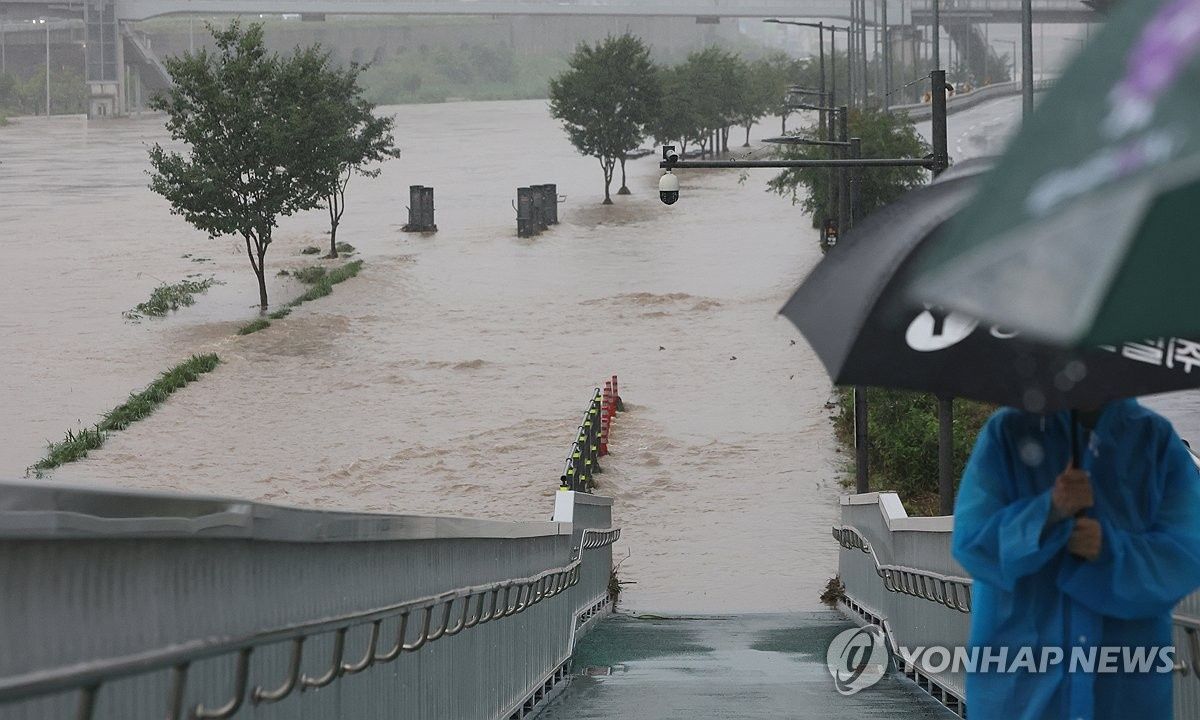
The Seoul metropolitan area and eastern Gangwon province experienced exceptionally heavy precipitation overnight, unleashing substantial flooding across residential zones and transportation networks while triggering widespread property damage that left thousands grappling with cleanup efforts. Authorities tallied approximately 540 separate incidents of property destruction in the aftermath, underscoring the intensity and geographic reach of the downpour that descended on the region between midnight and the morning hours.
Data released by the Central Disaster and Safety Countermeasure Headquarters documented rainfall accumulations approaching or surpassing 190 millimetres across multiple districts within the affected zone. The distribution of precipitation varied considerably by locality, with Paju recording 192.5 mm, Dongducheon capturing 189.5 mm, Pocheon measuring 179 mm, Gimpo registering 166.5 mm, and Cheorwon accumulating 159.5 mm during the critical ten-hour window from midnight through 10 a.m. local time. The concentration of such moisture in compressed timeframes creates conditions where drainage infrastructure becomes overwhelmed, particularly in densely populated urban centres where permeable ground surfaces have been replaced by concrete and asphalt.
The catalogue of damage included 148 documented instances of property flooding affecting both residential structures and roadways, whilst a further 392 reports catalogued fallen trees, downed power lines, and accumulated debris strewn across affected communities. Authorities characterised the debris field as extensive, suggesting that cleanup operations would require sustained effort and resources over subsequent days. By mid-morning Saturday, warning systems remained activated across ten separate regions throughout Gangwon Province, with Pocheon specifically designated as facing mudslide risk due to soil saturation and slope destabilisation from prolonged heavy precipitation.
Despite the scale of property losses and infrastructure disruption, South Korean emergency services reported no fatalities attributable to the weather event as of Saturday midday. However, a precautionary evacuation affected 95 individuals drawn from 44 separate households distributed across six municipalities, demonstrating that authorities maintained vigilant protocols for potential escalation of hazards. This proactive approach reflected lessons learned from previous severe weather incidents across the Korean peninsula, where early evacuation has proven instrumental in preventing loss of life when flooding or landslides develop rapidly.
The transportation sector absorbed substantial impacts from the deluge. Ten national parks spanning the region, including the popular Mount Bukhan destination, were shuttered to public visitors as mudslide risk and waterlogged trails rendered recreational access hazardous. Complementing the terrestrial closures, authorities suspended 275 designated hiking paths that traverse the affected topography. At sea, the disruption extended to maritime commerce and passenger services, with seven ferry routes operating from western coastal facilities forced to cease operations pending improved weather conditions and calmer seas.
Meteorological forecasts suggested that the challenging weather pattern would persist rather than rapidly dissipate. Rainfall was expected to continue through Sunday, with some districts potentially experiencing hourly precipitation intensities reaching 300 millimetres—rates that overwhelm most standard drainage systems and create flash flooding risks in low-lying zones and areas with inadequate stormwater infrastructure. This extended timeline implied that damage tallies would likely rise as precipitation accumulated further, potentially affecting additional communities as rain bands moved across the forecast area.
Prime Minister Han Seong-sook convened emergency response coordination meetings to orchestrate the governmental reaction to the unfolding crisis. She issued directives requiring the immediate mobilisation of heavy equipment, personnel, and logistical assets to areas experiencing the most acute flooding and infrastructure damage, emphasising that response speed and resource deployment would determine whether secondary damage—such as disease outbreaks in flood-affected areas or infrastructure collapse—could be minimised. Her statement acknowledged the fortunate absence of recorded deaths whilst simultaneously recognising the substantial material losses confronting affected households and businesses.
The prime minister's remarks during the emergency session conveyed formal sympathy to impacted residents whilst emphasising governmental commitment to rapid recovery assistance. However, her most consequential intervention focused on forward-looking risk mitigation, specifically directing officials to heighten preparedness protocols for the central Chungcheong province and the northeastern Gangwon region, where additional heavy rainfall was anticipated during the remainder of Saturday night and through early Sunday morning. Her emphasis on landslide preparation reflected awareness that successive days of precipitation could trigger geological failures that pose acute dangers to populations in mountainous or steeply sloped terrain.
The sequence of events illustrated both the vulnerability of modern urban infrastructure to extreme precipitation events and the institutional capacity of developed nations to respond with coordinated emergency management. The absence of casualties despite hundreds of damaged properties demonstrated effective warning systems, evacuation protocols, and public compliance with safety directives. However, the economic costs of repairing flood-damaged homes, replacing destroyed property, and restoring closed recreational facilities would accumulate across the subsequent weeks and months, creating downstream burdens for individual households and municipal budgets.
For Malaysia and other Southeast Asian nations monitoring the situation, the Seoul flooding episode offered instructive perspectives on disaster preparedness. While the geographic contexts differ substantially—Seoul's temperate climate produces distinct precipitation patterns compared to tropical monsoon systems affecting Malaysia—the fundamental challenges of managing intense rainfall within heavily urbanised zones present universal lessons. The speed at which drainage systems become overwhelmed, the cascading disruptions to transportation and tourism sectors, and the importance of pre-positioned equipment and trained personnel for rapid response remain consistent principles across different climatic regions and development contexts.

