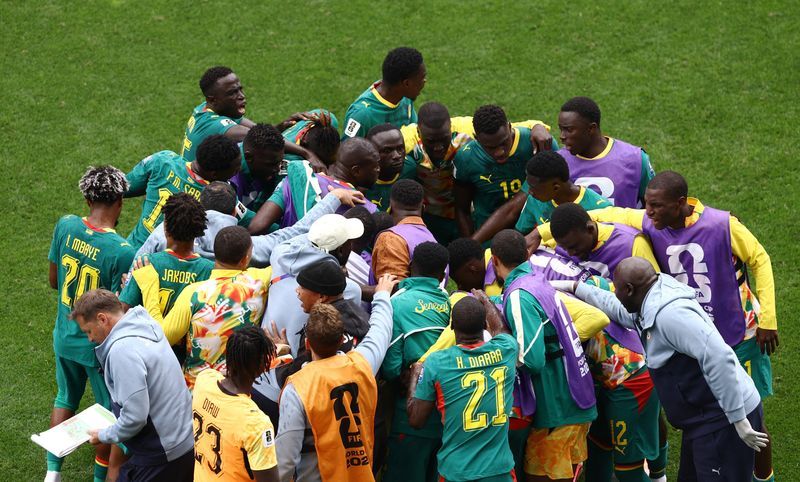
Senegal's football federation has come under scrutiny for its medical support infrastructure after federation president Abdoulaye Fall publicly criticised the team doctor's qualifications in the wake of a disappointing World Cup campaign in North America. Speaking at a press conference on Monday, Fall contended that the team physician lacked the specialist credentials necessary to provide appropriate medical care to the squad during the tournament, citing concerns among players about their healthcare support.
According to Fall's account, the team doctor was trained as a gynaecologist rather than possessing formal expertise in sports medicine, a revelation that emerged late in the tournament preparation process. The admission raised alarm bells within the squad about the adequacy of medical services available to them during their World Cup participation. Fall stated that feedback from players indicated they lacked confidence in the physician's ability to support them effectively, a situation that demanded immediate remedial action from the federation's leadership.
In response to the apparent crisis of confidence, the federation moved to bolster its medical team by sourcing additional medical expertise to reassure the players. Fall emphasised that the organisation prioritised player welfare and security, acknowledging that health considerations supersede all other factors in an athlete's career. The need to find credible medical professionals who could inspire player confidence became a priority once the federation recognised the severity of the issue.
The Senegalese Association of Sports Medicine moved swiftly to refute the federation president's claims, issuing a statement late Monday branding the allegations as "unfounded and defamatory". The professional body defended the physician's credentials, identifying him as Abderahmane Fediore and confirming that he holds a specialist diploma in sports medicine and sports biology from Cheikh Anta Diop University's faculty of medicine. This qualification directly contradicts Fall's characterisation of his training background.
Fediore's professional track record suggests considerable experience in sports medicine contexts. Before his appointment as Senegal's team doctor, he led the physiotherapy department at Fann Hospital, one of Senegal's major medical institutions. His tenure as the national team's physician has spanned seven years since 2017, encompassing participation in three FIFA World Cups and five Africa Cup of Nations tournaments. This extensive experience at the continental and global level would ordinarily be considered substantial evidence of specialist competence in sports medicine.
The controversy surrounding medical support erupted against a backdrop of Senegal's underwhelming World Cup performance, which saw the squad eliminated during the group stages and knockout rounds. The federation dismissed coach Pape Bouna Thiaw on Saturday, determining that the tournament's results necessitated a managerial change and fresh leadership for the national programme. This dismissal signalled the organisation's broader dissatisfaction with multiple aspects of the team's campaign.
Context adds weight to the federation's frustration. Senegal had arrived at the World Cup on the back of considerable continental success, having defeated Morocco in January's Africa Cup of Nations final. That trophy triumph had generated expectations of a credible World Cup challenge, making the subsequent underperformance all the more disappointing for stakeholders invested in the programme. The gap between pre-tournament optimism and actual results created pressure to identify systemic problems within the team's preparation and support structure.
The team's specific match results exemplified their struggles throughout the tournament. Opening games against France and Norway both ended in defeats, immediately placing Senegal on the back foot within their group. A particularly agonising moment came against Belgium in the knockout stages, where Senegal squandered a commanding two-goal advantage with just five minutes of regular time remaining. That collapse, ultimately resulting in a 3-2 defeat after extra time, crystallised the team's inability to maintain composure and control under pressure in crucial moments.
The dispute between the federation and the sports medicine association reflects broader tensions within Senegalese football regarding accountability and standards. Fall's public criticism, whether justified or not, raises questions about the federation's initial vetting procedures when appointing team medical staff and the governance mechanisms that should identify and address such concerns before they impact tournament performance. The fact that such a significant issue allegedly emerged late in the process suggests potential gaps in the organisation's due diligence protocols.
For Malaysian and Southeast Asian football observers, the Senegal case offers instructive lessons about the importance of robust institutional frameworks within national football programmes. Many countries in the region similarly grapple with resource constraints and the challenge of attracting world-class specialists to national team support structures. The degree to which medical support quality influences on-field performance remains contested, but player confidence in healthcare providers undoubtedly affects team cohesion and mental preparation.
The controversy also highlights the political dimensions of sporting failure. When teams underperform at major tournaments, administrators frequently seek scapegoats to deflect criticism from strategic decision-making or player quality. Whether Fall's allegations about medical expertise constitute legitimate institutional critique or post-hoc rationalisation of a disappointing campaign remains subject to interpretation. The sports medicine association's vigorous defence suggests the accusations may reflect internal federation politics as much as genuine medical concerns.
Moving forward, Senegal faces the challenge of rebuilding confidence in its football programme and establishing clearer governance standards. The new coaching appointment and any consequent adjustments to the medical team will be scrutinised closely as the federation attempts to restore credibility. For African football more broadly, the incident underscores the ongoing struggle to professionalise national team operations and establish standards consistent with the financial and technical investments made in competitive campaigns.

