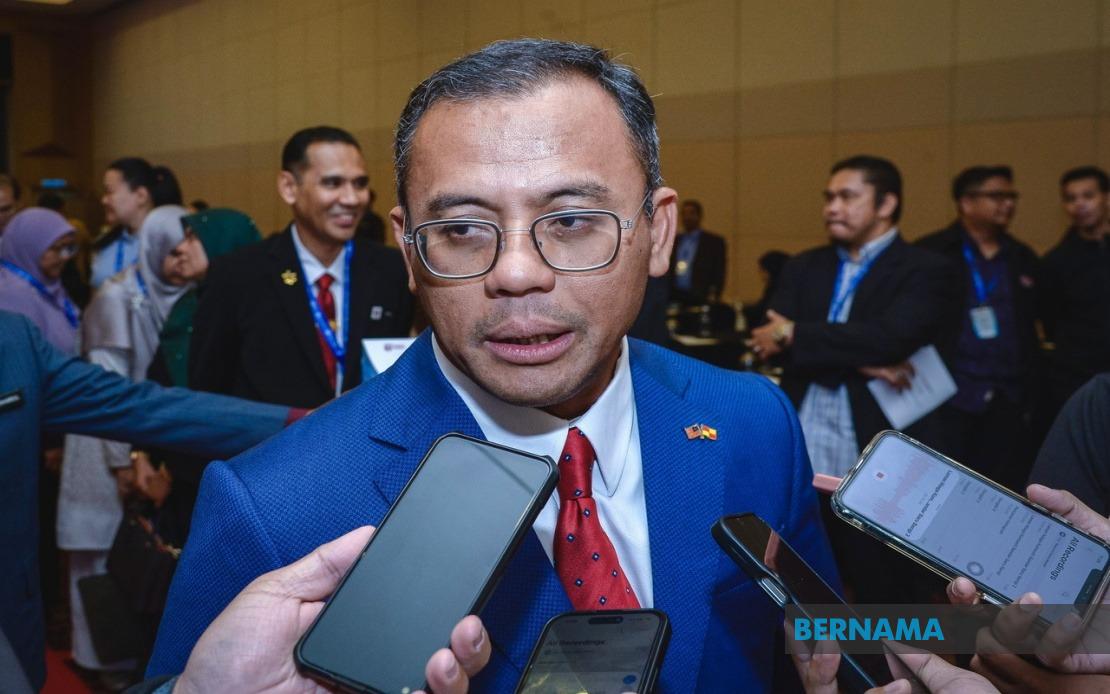
At the Human Ecology International Conference II 2026 in Bangi, Selangor Menteri Besar Datuk Seri Amirudin Shari delivered a pointed critique of conventional policymaking, arguing that governments must fundamentally rethink how they design and implement initiatives. Rather than treating public challenges as discrete problems requiring separate solutions, Amirudin contended that effective governance demands recognition of the deeply interwoven nature of contemporary life, where decisions in one domain cascade into others with profound consequences for citizens and their families.
The essence of Amirudin's argument centres on a conceptual shift from what he termed "isolated interventions" towards what he described as "connected environments." This distinction carries significant implications for Malaysia's approach to governance at both state and federal levels. Citizens navigating healthcare systems, childcare arrangements, commuting patterns, employment prospects and household budgets do not experience these domains as separate administrative silos. Instead, they encounter them as aspects of a unified daily reality where choices in one area inevitably constrain or enable possibilities in others. A parent's ability to access quality childcare, for instance, directly shapes employment opportunities and household financial stability, which in turn affects health outcomes and educational choices for children.
Amirudin articulated this interconnectedness by highlighting the constellation of structural pressures that modern families confront simultaneously. Rising living costs have placed unprecedented strain on household budgets across Malaysia and Southeast Asia, particularly affecting the middle and working classes. Long commutes—a persistent feature of life in major Malaysian cities and surrounding areas—consume both time and money that families might otherwise allocate to childcare, rest or skill development. The increasing prevalence of caregiving demands, whether for aging parents or young children, has intensified the time poverty that many households experience. Concurrent with these pressures, employment patterns have become less stable and predictable, housing remains unaffordable for many, and rapid technological change creates both opportunities and anxieties about job security and skill relevance.
The Selangor leader's framing introduces a crucial evaluative question for policymakers: rather than asking merely whether families are coping, governments should examine whether systemic conditions allow families to flourish. This reorientation represents a substantive departure from deficit-focused assessment towards capability-focused evaluation. It recognizes that survival and thriving operate on different planes, and that policies enabling bare survival may actively prevent human flourishing. For Malaysian households navigating inflationary pressures, housing affordability crises and evolving work landscapes, this distinction carries immediate relevance.
Amirudin's intervention also implicitly challenges the institutional fragmentation that characterizes much governance in Malaysia. Different ministries, agencies and state governments operate according to separate mandates, performance metrics and budgetary cycles, often with minimal coordination. Healthcare officials optimize health outcomes through one lens, transport authorities through another, education administrators through yet another. What gets lost in this compartmentalization is the lived experience of families trying to navigate across these institutional boundaries. A parent seeking childcare support, employment flexibility and affordable housing may encounter contradictory guidance, competing requirements and institutional indifference across different agencies.
Beyond his diagnostic observations, Amirudin extended an invitation to universities and research institutions to fundamentally reposition themselves within governance ecosystems. Rather than functioning as external evaluators or occasional consultants, higher education institutions should become integral partners throughout the entire policy lifecycle. This encompasses problem definition, where academics help frame challenges in their full complexity; intervention design, where evidence-based approaches inform program architecture; and rigorous evaluation, where researchers assess what genuinely produces improved outcomes rather than what merely appears successful through narrow metrics.
The conference itself, held under the theme "Sustaining Human Well-being," brought together a diverse constituency spanning academics, researchers, practitioners, policymakers, institutional leaders, students and community representatives from Malaysia, Indonesia, the Philippines and beyond. This convening reflects growing recognition within the region that human ecology—the study of relationships between people and their environments—provides essential frameworks for understanding and addressing contemporary challenges that transcend disciplinary and national boundaries.
A significant development emerging from the conference was the establishment of the ASEAN Human Ecology Consortium, formalized through a Memorandum of Understanding between Universiti Putra Malaysia and the University of the Philippines Los Baños. This regional platform creates mechanisms for joint research initiatives, facilitating student and faculty mobility across ASEAN institutions, coordinating academic publications, fostering policy dialogue and supporting community engagement. For Malaysia, participation in such a consortium offers opportunities to learn from peer nations' policy experiments while contributing Malaysian experience to regional knowledge-building.
The consortium's emphasis on regional cooperation proves timely given that many challenges Amirudin identified—housing affordability, employment precarity, technological disruption, demographic change—manifest similarly across Southeast Asia. Solutions developed and evaluated in one context may inform approaches in others, provided they account for local institutional, cultural and economic variations. This knowledge-sharing capacity becomes particularly valuable as the region grapples with digital transformation, urbanization and shifting family structures simultaneously.
For Malaysian policymakers and administrators, Amirudin's call for integrated, human-centered governance frameworks presents both philosophical and practical challenges. It requires moving beyond departmental silos, adopting longer-term evaluative horizons than electoral cycles typically permit, and developing genuine partnerships with universities and civil society. It demands acknowledging that families' lived experiences constitute valid data for policy evaluation, not merely anecdotal background to quantitative indicators. Most fundamentally, it necessitates recognizing that government's ultimate measure of success should be whether systemic conditions enable citizens to build meaningful lives, not merely whether institutions efficiently deliver services within their designated domains.
Amirudin's intervention at HEIC II 2026 thus transcends commentary on abstract governance principles. It articulates a vision of policy coherence where healthcare, employment, housing, transport and education systems operate not as competing bureaucracies but as mutually reinforcing elements of comprehensive human development. Whether Malaysian government institutions possess the structural flexibility and political will to embrace such integration remains an open question, but the intellectual case for doing so has become increasingly compelling to policymakers and academics alike.

