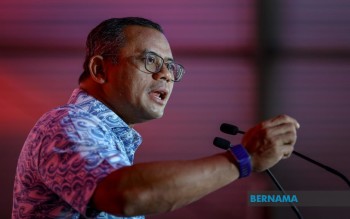
Malaysia's wealthiest state has consolidated its position as the nation's primary economic powerhouse, with Selangor recording a gross domestic product of RM460.1 billion in 2025 according to official data released by the Department of Statistics Malaysia. The RM28 billion expansion from the preceding year marks a remarkable achievement that Menteri Besar Datuk Seri Amirudin Shari characterised as at least double the economic growth recorded by any competing state across the country, underscoring the vast gap between Selangor and its peers.
The state's economic expansion demonstrates a trajectory far exceeding earlier projections, surpassing forecasts prepared collaboratively by Universiti Putra Malaysia and the Selangor Research Institute, which had anticipated growth to approximately RM455.3 billion. This outperformance reflects the underlying dynamism of Selangor's diversified economy and the effectiveness of policy frameworks guiding development across the state. The achievement gains further significance when measured against Malaysia's broader economic performance, with Selangor recording a growth rate of 6.3 per cent compared to the nation's overall expansion of 5.2 per cent, demonstrating the state's capacity to drive national prosperity.
With the latest figures, Selangor has elevated its contribution to Malaysia's total GDP to 26.5 per cent, up from 26.2 per cent in the previous year, a seemingly modest percentage point increase that actually represents billions in additional value creation. The state's economic scale now dwarfs that of other major economies within Malaysia, with Selangor's output exceeding Kuala Lumpur's by more than 1.7 times, despite the federal territory's status as the nation's capital and primary financial centre. When compared to Johor, Malaysia's second-largest state economy, Selangor's GDP is nearly 2.7 times larger, a disparity that reflects the concentration of economic activity and investment within the Klang Valley corridor.
The composition of Selangor's economic growth reveals a well-balanced expansion across multiple sectors rather than reliance on any single driver. The services sector contributed RM15.9 billion of the expansion, reflecting the state's dominance in finance, retail, hospitality, and professional services. Manufacturing contributed RM5.3 billion to the increment, while construction activity added RM3.7 billion, together painting a picture of an economy thriving across traditional and modern industries. This sectoral diversity provides resilience, as downturns in one area can be offset by strength in others, a strategic advantage that positions Selangor to weather economic volatility more effectively than less diversified competitors.
Selangor's sectoral dominance extends well beyond its own borders, with the state accounting for more than one-third of Malaysia's entire construction activity at 35.9 per cent of the national total. This concentration reflects both the ongoing infrastructure transformation of the Klang Valley region and the continued migration of businesses and population toward Selangor's economic zones. The manufacturing sector similarly demonstrates Selangor's pull, with the state capturing 32.8 per cent of national manufacturing output, up from previous years, as multinational corporations and local producers consolidate operations within proximity to ports, transportation networks, and skilled labour markets. The services sector, representing 27.1 per cent of national activity, further cements Selangor's status as the destination for business, trade, and consumer services across the country.
The state government attributes this sustained expansion to the structured economic approach embodied in the First Selangor Plan, a comprehensive five-year development roadmap spanning 2021 to 2025. Under this framework, Selangor's economy expanded by 33.94 per cent over the five-year period, equivalent to RM116.6 billion in additional output, lifting the state's GDP from RM343.5 billion at the plan's inception to the current RM460.1 billion. This disciplined approach to economic management, combining policy consistency with investment in infrastructure and human capital, demonstrates how strategic planning at the subnational level can compound growth and create measurable improvements in productive capacity.
Menteri Besar Amirudin has publicly cautioned against complacency despite these achievements, framing the results as a foundation for more ambitious targets. He has called for a collective push to make Selangor the first Malaysian state to achieve a RM500 billion economy, a milestone that would represent a symbolic breakthrough and further entrench the state's position within regional and global economic hierarchies. This aspiration demands sustained cooperation between the public and private sectors, continued investment in competitiveness, and productivity improvements that translate economic expansion into tangible benefits for workers and residents rather than profits concentrating among capital owners.
The economic growth documented in 2025 carries significant implications for living standards and quality of life across Selangor's rapidly urbanising population. While headline GDP figures demonstrate national importance, their value to individual Selangor residents depends on how wealth distributes and translates into wage growth, job creation, and public service improvements. The state administration has explicitly committed to ensuring that continued economic expansion improves the standard of living for the broader population rather than widening inequality between prosperous sectors and those left behind by structural economic shifts.
Selangor's sustained momentum reflects broader patterns of economic concentration within Southeast Asia, where primary urban centres accumulate disproportionate shares of regional GDP. The state's RM400 billion-plus economy for two consecutive years, achieved first among Malaysian states, positions Selangor within the economic weight class of entire nations regionally. Investment agency Invest Selangor framed the 2025 results as confirmation of this trajectory, noting that the RM406.1 billion recorded in 2023 has now expanded to RM460.1 billion, demonstrating consistent year-on-year expansion. For Malaysian policymakers and investors tracking domestic economic dynamics, Selangor's performance sets benchmarks against which other states' development strategies must be measured and evaluated.
The implications for the broader Malaysian economy are profound, as continued reliance on Selangor for approximately one-quarter of national GDP creates both opportunities and vulnerabilities. A state-level shock affecting Selangor's economic performance would reverberate through national statistics and government finances, while the state's success can obscure stagnation or decline in less dynamic regions. These dynamics highlight the importance of balanced regional development policies that distribute investment and opportunity more evenly across Malaysia's peninsula and broader territories, ensuring that prosperity and employment growth extend beyond the Klang Valley to communities throughout the nation.

