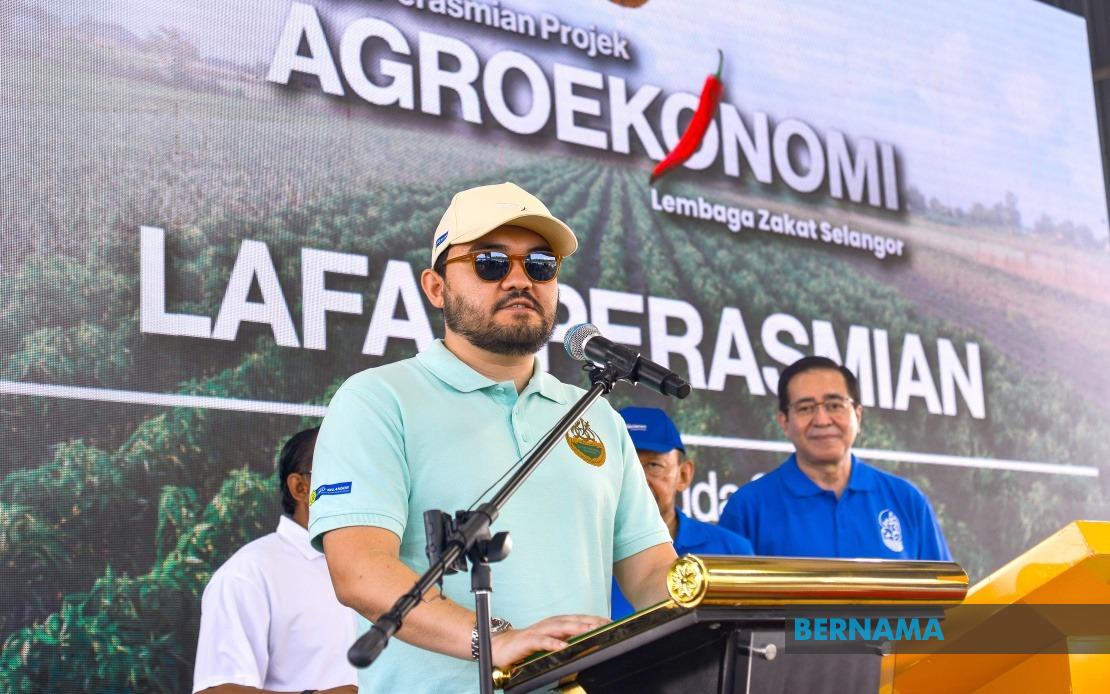
Zakat Selangor has shifted its approach to poverty alleviation beyond conventional cash assistance, unveiling a comprehensive agro-economic initiative designed to empower low-income Muslim recipients through agricultural enterprise. The RM26 million Agroeconomic Project, officially launched by the Raja Muda of Selangor, Tengku Amir Shah Sultan Sharafuddin Idris Shah, at Laman Agro Ehsan in Bukit Beruntung on July 1, represents a significant departure from traditional welfare models toward building long-term financial independence among asnaf communities across the state.
The venture occupies 110 acres of agricultural land, with 76 acres actively dedicated to agro-development operations centred on sophisticated fertigation chilli cultivation—a modern farming technique that maximizes water and nutrient efficiency while increasing yields. This carefully selected crop aligns with Malaysia's growing domestic demand for fresh produce and the regional export market, positioning participants within a commercially viable agricultural segment rather than subsistence farming. The infrastructure investment reflects recognition that asnaf empowerment requires not just capital but also technical capacity, supportive facilities, and market-ready production systems.
Forty-eight asnaf participants underwent a rigorous screening process conducted jointly with the Kuala Langat Area Farmers' Organisation, ensuring selection based on commitment, capability, and demonstrated need. These individuals represent diverse backgrounds within the low-income Muslim demographic, including parents seeking to stabilize family finances and individuals transitioning from precarious employment. Each participant manages a 0.5-acre plot containing 2,000 chilli plant bags, collectively cultivating 96,000 plants per growing cycle—a scale designed to achieve commercial productivity while remaining manageable for individual operators.
The structural support framework distinguishes this initiative from conventional agricultural projects. Participants receive comprehensive technical training covering crop management protocols, pest and disease monitoring, irrigation system operation, and harvest optimization. This three-year development programme provides continuous hands-on guidance rather than one-time instruction, recognizing that agricultural competency develops through sustained mentoring and problem-solving experience. The involvement of experienced agricultural advisors and the organizational support from Zakat Selangor ensures participants transition from instruction to independent operation rather than remaining dependent on continuous external direction.
Financial projections indicate that successful participants could generate monthly incomes reaching RM4,000 once production systems mature and crop management techniques are fully integrated into operational practice. This figure represents a substantial income stream for asnaf households, potentially lifting families above poverty thresholds and enabling investment in education, housing improvements, and business diversification. The timeline for achieving stable income reflects realistic agricultural timescales rather than speculative promises, grounding expectations in agronomic realities and seasonal production cycles.
Beyond agricultural activities, Zakat Selangor provides housing accommodation at Prima Beruntung, with all rental costs absorbed throughout the programme duration. This comprehensive support addresses a critical barrier for rural agricultural participants who lack existing agricultural land or secure housing near productive facilities. By removing housing insecurity, the initiative allows participants to concentrate on developing agricultural skills rather than managing multiple precarious economic challenges simultaneously, a holistic approach often absent from conventional welfare interventions.
The project achieved financial realization through collaborative partnerships, with strategic wakalah contributions totalling RM2.07 million mobilized from the Pilgrims Fund Board, RHB Islamic Bank Berhad, and Cagamas Berhad. This collaborative financing model demonstrates how religious institutions can leverage corporate partnerships and specialized financial vehicles to expand development capacity beyond standalone zakat collection mechanisms. The approach also distributes institutional risk across multiple parties while strengthening partnerships across Islamic banking, corporate, and governmental sectors.
Participant testimonies reveal the psychological and practical dimensions of this initiative beyond income generation. Norfhadilah Mohd Shafiin, a 45-year-old mother of five, emphasized how the programme strengthened her family's financial position while building personal agency and confidence in managing agricultural operations independently. Similarly, Raimi Rusydi Rodi highlighted how structured skill development and peer collaboration created learning communities rather than isolated beneficiary experiences. These narratives indicate that sustainable poverty alleviation involves restoring dignity, capability, and self-determination alongside income provision.
From a regional perspective, this initiative carries implications for how Southeast Asian zakat institutions conceptualize and operationalize poverty reduction. Malaysia's experience demonstrates that religious social welfare mechanisms can be retrofitted toward productive economic engagement without abandoning welfare principles. As other Muslim-majority nations in Southeast Asia seek to strengthen zakat governance and impact, the Selangor model offers a replicable framework combining traditional Islamic redistribution with contemporary development methodology—agricultural productivity, technical training, organizational support, and collaborative financing.
The project also addresses Malaysia's broader agricultural sustainability agenda by training new producers within modern farming systems. Fertigation-based cultivation reduces water consumption relative to conventional irrigation while improving yield consistency, aligning poverty alleviation with environmental stewardship. As climate-related pressures intensify across Southeast Asia, developing agricultural capacity among vulnerable communities through sustainable methods builds climate resilience at household level while contributing to national food security.
The Raja Muda's ceremonial engagement—arriving for the 10 am launch, meeting participants directly, and touring cultivation areas—signals high-level institutional commitment to this development approach. Such symbolic endorsement from Selangor's royal leadership elevates the initiative beyond routine bureaucratic implementation, signalling that asnaf empowerment through productive enterprise represents state policy priority rather than peripheral welfare activity. This level of engagement may influence other state administrations to consider similar frameworks within their jurisdictions.
Implementation sustainability remains the critical variable determining whether this initiative achieves lasting impact. Three-year programme structures require careful transition planning ensuring participants maintain productivity and income generation beyond formal programme termination. Market access arrangements, input supply chains, and buyer relationships must be sufficiently established by programme end to enable independent operation. Zakat Selangor's ongoing monitoring and support mechanisms will prove essential during this transition phase, potentially requiring sustained institutional commitment extending beyond the initial development cycle.
The Agroeconomic Project ultimately reflects evolving understanding of Islamic social responsibility in contemporary Malaysia. Rather than positioning asnaf recipients as passive welfare dependents requiring perpetual assistance, the initiative recognizes untapped productive potential within vulnerable communities. By combining capital investment, technical expertise, organizational support, and dignified engagement, Zakat Selangor demonstrates that religious institutions can function as transformative development actors—not merely providing immediate poverty relief but building sustainable livelihoods and restoring agency among those whom conventional economic systems have marginalized.

