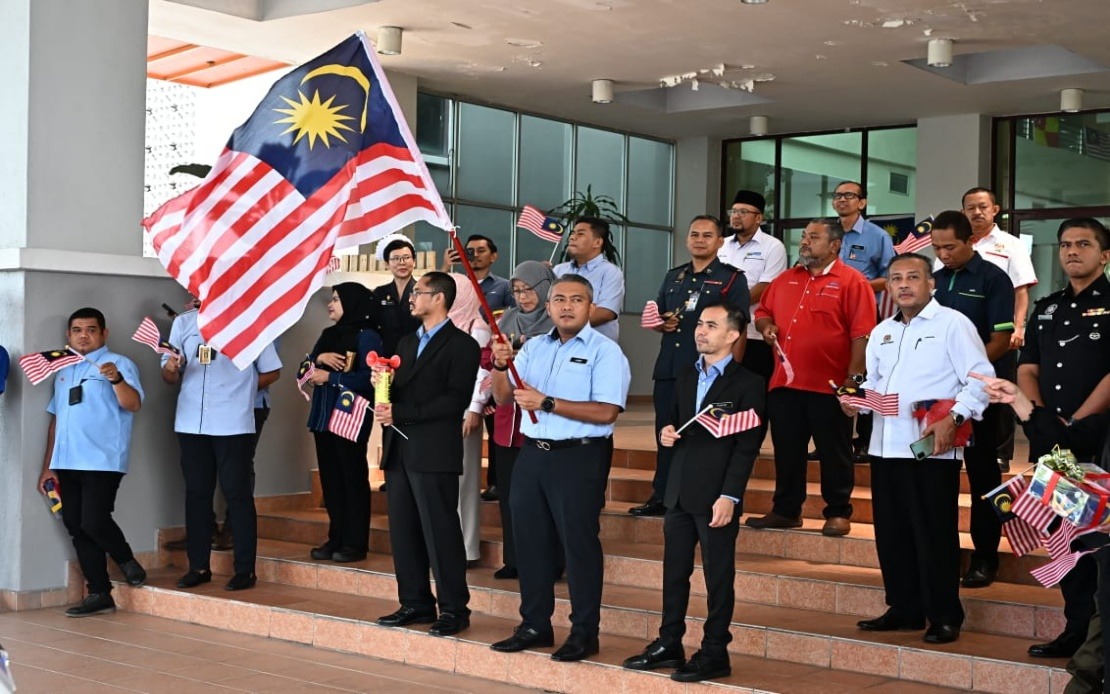
Cross-agency collaboration in Selangor has taken on renewed significance with the launch of KMJG X JAGO 2026, an integrated initiative designed to cultivate deeper patriotic sentiment across diverse communities. Held in Shah Alam on August 24, the programme exemplifies how government departments, law enforcement agencies, and private-sector organisations can work in concert to deliver messaging around national pride and unity during Malaysia's celebration months. The convergence of formal governmental structures with grassroots community mobilisation represents a strategic approach to embedding patriotic values beyond ceremonial observance.
The Selangor Information Department's Cyber Media Branch has positioned this initiative as part of a broader communications strategy aimed at transcending traditional barriers to civic engagement. According to Herlina Ainizawati Zakaria, Assistant Director of the department's Cyber Media Branch, the collaboration reflects recognition that nurturing patriotism requires contributions from institutions across sectoral lines rather than relying solely on top-down governmental messaging. This philosophy acknowledges that authentic national pride emerges when citizens from varied backgrounds and professional contexts collectively champion shared values, creating a more organic foundation for national cohesion.
At its core, KMJG X JAGO Selangor 2026 continues a longstanding tradition of physically transferring the Jalur Gemilang between designated locations throughout the state, but with expanded programming that situates the national flag within broader conversations about identity and belonging. The initiative deliberately enhances the symbolic weight of the flag by tying its movement to substantive community activities centred on patriotism, social unity, and national affection. This layering of symbolic and practical dimensions suggests the organisers understand that flag-based nationalism gains traction when accompanied by tangible expressions of civic participation rather than abstract appeals to sentiment.
The programme functions simultaneously as a platform for the One House One Jalur Gemilang campaign, which seeks to normalise the display of Malaysia's flag throughout National Month by reconceptualising it as a fundamental marker of household identity and pride. Rather than treating flag-flying as an episodic practice confined to official commemorations, this campaign positions it as an expression of everyday patriotism that citizens should embrace year-round. For Malaysian households, particularly in urban settings where communal observance has sometimes declined, this messaging attempts to revitalise connection to national symbols through personal agency and domestic choice.
The Central Zone in Selangor witnessed the programme's initial rollout across three strategically selected pit-stops: Wisma Persekutuan Klang, the Klang District and Land Office, and AEON Bukit Tinggi Shopping Centre. These venues represent a deliberate mix of administrative infrastructure, governmental headquarters, and commercial public space, suggesting that patriotic messaging requires penetration across multiple sectors of daily life. By anchoring the programme in spaces where citizens routinely conduct administrative business and engage in leisure activity, organisers aimed to embed national messaging within the normal rhythms of community life rather than confining it to dedicated civic ceremonies.
Approximately fifty participants representing ten government agencies and private organisations participated in the Shah Alam launch, including personnel from the Klang Selatan District Police Headquarters, Klang Utara IPD, Klang Royal City Council, and the Klang District Civil Defence Force. This breadth of institutional representation reflects a deliberate strategy to demonstrate interagency commitment to shared patriotic objectives. In Malaysian governance contexts where departmental silos sometimes inhibit coordinated action, such visible collaboration carries symbolic weight beyond the immediate programme scope, signalling to the public that national objectives command unified institutional response.
The Selangor Information Department's framing emphasises inclusivity and creative communication methodologies as essential components of contemporary patriotic messaging. This approach represents a departure from more didactic models of civic education, instead attempting to meet communities where they congregate and engage through formats that resonate with contemporary cultural practices. By deploying language around creativity and inclusivity alongside traditional patriotic rhetoric, programme architects acknowledge that modern Malaysians, particularly younger demographics, respond more readily to messaging that feels organically integrated into their lived experience rather than externally imposed.
For Malaysian and Southeast Asian observers, this initiative illustrates broader regional patterns around the management of national identity amid urbanisation and economic development. As societies become more heterogeneous and geographically dispersed, governments increasingly recognise that maintaining cohesive national sentiment requires deliberate, multi-channel strategies rather than assuming patriotism as a default civic orientation. Selangor's approach of combining symbolic gestures like flag transfers with substantive community programming reflects this recognition and positions the state as experimenting with contemporary mechanisms for national integration.
The programme's timing and focus on 2026 suggests preparation for a significant commemorative cycle, potentially positioning patriotic messaging as a multiyear project rather than an annual ritual. This longer temporal horizon implies that programme designers view the cultivation of national pride as requiring sustained effort and repeated engagement across diverse community segments. For Malaysian policymakers observing this initiative, the model demonstrates that patriotism in plural societies requires patience, institutional coordination, and willingness to engage communities through their existing social and commercial gathering spaces rather than expecting civic participation to emerge spontaneously or respond primarily to formal governmental appeals.

