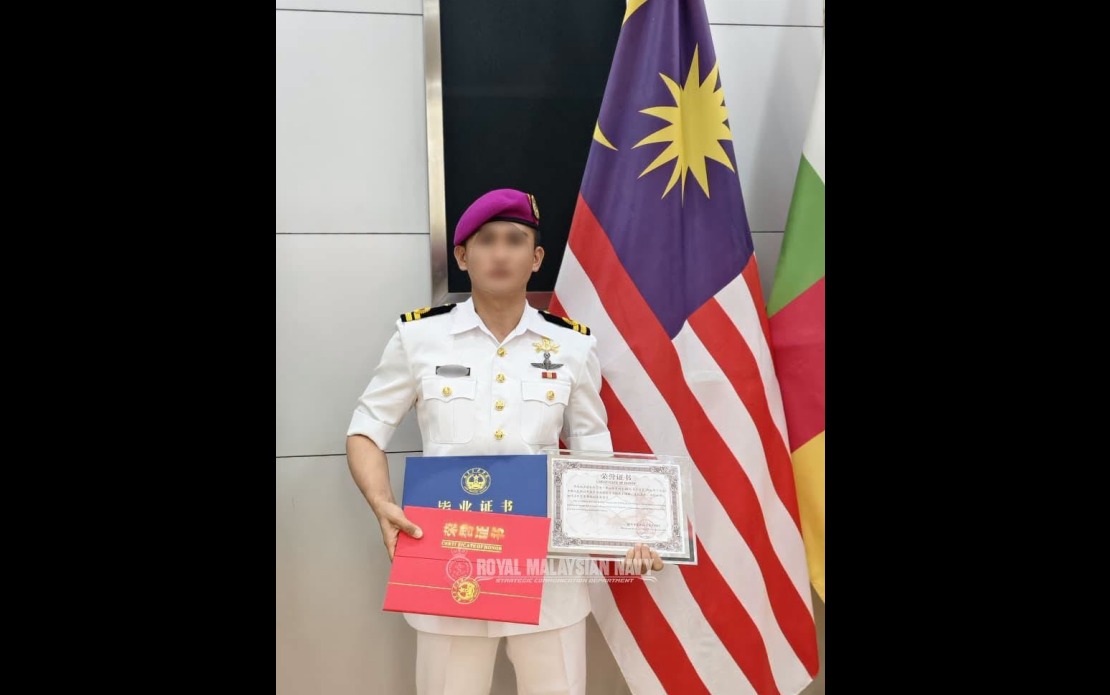
Sultan Sharafuddin Idris Shah, in his capacity as Captain-in-Chief of the Royal Malaysian Navy, has publicly recognised an exceptional achievement by a PASKAL officer who completed the Sniper Infantry Course at the PLA Infantry Academy's Shijiazhuang Campus in Hebei, China. The Malaysian serviceman distinguished himself among a highly competitive international cohort spanning more than five months of intensive training between March and July.
The PASKAL officer's accomplishment reflects the rigorous standards of advanced military education at China's premier infantry training facility. By securing the Excellent Student Award and achieving top honours among 131 participants from more than 24 countries, the Malaysian trainee demonstrated superior technical proficiency, tactical acumen, and the mental resilience demanded by elite sniper operations. The breadth of the international contingent underscores the regional and global significance of such training programmes in developing military expertise.
Beyond the primary Excellent Student Award, the officer received the Certificate of Honours for Excellent Cadre alongside the Silver Badge Medal, certifications that recognise sustained excellence across multiple assessment criteria throughout the course. These distinctions indicate that the recognition extended beyond a single examination or exercise but reflected comprehensive performance across the entire curriculum. The accumulated credentials signal mastery of both technical marksmanship and the broader operational competencies expected of elite special forces personnel.
Sultan Sharafuddin's statement positioning this achievement as a source of national pride carries significance within Malaysia's defence establishment and broader civil-military relations. As the constitutional head of state for Selangor and formal military patron, the Sultan's public acknowledgement elevates the matter beyond routine personnel recognition, framing individual excellence as contributing to national prestige and soft power. This approach aligns with how monarchies traditionally reinforce institutional loyalty and professional standards within armed forces.
The selection of a PASKAL member for such advanced foreign military training reflects deliberate capability-building by the Royal Malaysian Navy. PASKAL, the specialised amphibious and counter-terrorism unit, represents Malaysia's most elite naval personnel. Investing in their advanced training at international institutions ensures they remain operationally current with global best practices in unconventional warfare, reconnaissance, and precision operations—critical competencies for a nation with extensive maritime borders and strategic regional positioning.
The decision to pursue this training in China represents a significant element of Malaysia's defence diplomacy strategy in the region. Military partnerships involving personnel exchanges and joint training programmes serve both practical and political purposes, strengthening bilateral relationships while exposing Malaysian officers to Chinese military doctrine, technology, and operational methodologies. For Malaysia, such engagement diversifies its defence partnerships beyond traditional Western relationships, reflecting the country's pragmatic, non-aligned approach to security cooperation.
The PLA Infantry Academy's selection of Malaysian personnel for advanced courses indicates China's interest in developing closer defence ties with Southeast Asian nations. By providing world-class military education to Malaysian officers, particularly from elite units like PASKAL, China cultivates professional relationships and goodwill that extend beyond the immediate training period. These graduates become informal ambassadors for Chinese military excellence and can influence procurement decisions, doctrine development, and strategic outlook within Malaysian defence circles.
The Sultan's commendation of RMN Chief Admiral Tan Sri Dr Zulhelmy Ithnain and the broader PASKAL and naval personnel acknowledges the institutional framework enabling such achievements. This recognition reinforces hierarchical accountability and shared institutional pride, signalling that individual excellence reflects well on military leadership and organisational culture. By distributing credit across the chain of command, the Sultan reinforces cohesion and mutual support within the naval hierarchy.
For Malaysia's defence sector, this achievement demonstrates that professional military personnel can compete and excel at the highest international levels. The performance validates investments in training, recruitment, and professional development, providing evidence that Malaysian servicemen and women possess the aptitude and discipline required for advanced military specialisation. Such accomplishments are particularly important for institutional morale and attracting high-calibre recruits to specialised units that demand exceptional commitment.
The international composition of the training course—drawing 131 students from over 24 countries—illustrates the growing globalisation of advanced military education. Nations increasingly view military-to-military training exchanges as components of broader strategic engagement. For Malaysia, participation in such programmes ensures its defence forces remain interoperable with international partners and exposed to diverse operational approaches that enhance tactical flexibility and innovation.
The recognition also carries implications for Malaysia's position within regional security architecture. Demonstrating that Malaysian military personnel can achieve top-tier performance internationally contributes to regional credibility and deterrent posture. In Southeast Asia's complex strategic environment, where multiple powers maintain competing interests, national defence capabilities—particularly elite units—play symbolic and practical roles in signalling resolve and competence to both allies and potential adversaries.

