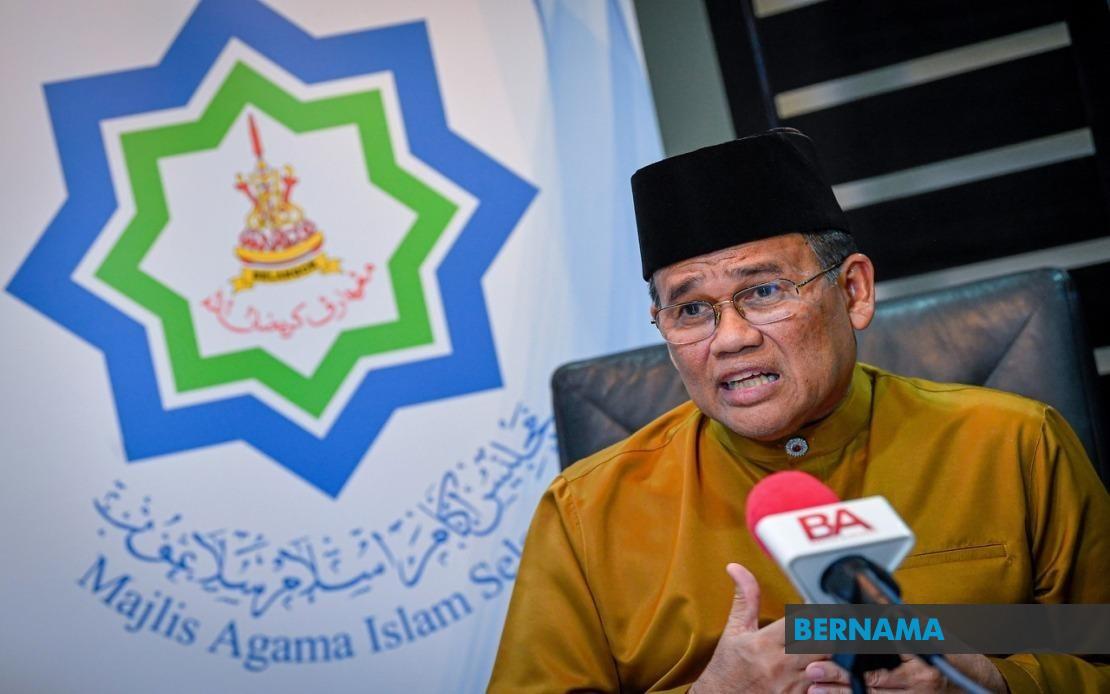
The Sultan of Selangor, Sultan Sharafuddin Idris Shah, has declined to grant approval for Friday prayers to be conducted at prayer facilities located within shopping malls across the state, according to a statement released by the Selangor Islamic Religious Council on Monday. The decision, articulated through MAIS chairman Datuk Salehuddin Saidin, reflects growing concerns about the potential erosion of traditional mosque infrastructure and its foundational importance to Muslim religious and social cohesion in the state.
The rationale underpinning this withholding of consent centres on protecting what religious authorities regard as the irreplaceable institutional significance of mosques. MAIS leadership contends that permitting prayer facilities in commercial spaces to host Friday congregations would fundamentally undermine efforts to preserve mosques as primary worship destinations for Selangor's Muslim population. The council argues that offering Muslims an alternative venue for Friday prayers—a significant religious obligation—within the convenience of shopping complexes would inevitably draw worshippers away from established facilities, particularly harming smaller or newly established institutions that depend on consistent congregations for operational sustainability.
Current mosque and prayer facility distribution across Selangor presents a comprehensive infrastructure, according to MAIS. The state maintains 448 mosques and 379 surau (small prayer rooms) officially authorised to conduct Friday prayers, figures that religious officials characterise as sufficient to meet the spiritual needs of Selangor's Muslim population. Moreover, MAIS emphasises that many existing mosques and surau already occupy locations adjacent to or within close proximity of shopping centres, negating any genuine convenience argument for establishing additional prayer venues in commercial settings. This proximity, the council suggests, already accommodates worshippers seeking to combine leisure or shopping activities with religious obligations.
Beyond capacity concerns, MAIS raises substantive governance and administrative considerations that would complicate any expansion of Friday prayer privileges to shopping mall facilities. The appointment of qualified personnel—including imams, muezzins (bilal), and support staff—falls within MAIS's purview and would require the council's direct involvement in staffing these facilities. Without council-appointed clergy and support personnel, monitoring compliance with religious standards and ensuring uniformity in sermon content and religious instruction becomes logistically challenging. MAIS underscores that maintaining doctrinal consistency and regulatory oversight across authorised prayer venues represents a critical institutional responsibility that cannot be easily replicated through third-party management in commercial environments.
However, the council's position is not entirely inflexible. MAIS has previously granted temporary authorisation to one shopping mall prayer facility in Selangor to conduct Friday prayers, a concession that reflects pragmatic recognition of specific circumstances. This approval, Datuk Salehuddin explained, remains conditional and limited to situations where no established mosque exists within reasonable proximity of the location. Importantly, MAIS has signalled that this temporary status would be revoked if a purpose-built mosque subsequently opens near the shopping centre and proves capable of accommodating the local Muslim population—a provision that clearly establishes shopping mall facilities as interim arrangements rather than permanent alternatives to traditional houses of worship.
The decision by Selangor's Sultan aligns with broader Islamic administrative principles concerning the hierarchical importance of different prayer venues. Beyond practical concerns about congregation distribution, MAIS positions this decision as reinforcing Islamic teaching that emphasises mosques and authorised surau as primary institutional centres for worship, religious education, and dakwah (Islamic propagation). This philosophical stance reflects a religious worldview in which the mosque transcends its function as merely a prayer location, instead serving as a communal anchor that binds Muslims together and facilitates religious knowledge transmission and spiritual formation.
Constitutionally, Selangor's authority to determine such matters rests firmly within state jurisdiction. Under Malaysia's Federal Constitution Ninth Schedule, Islamic religious administration—including regulation of mosques, surau, and prayer facilities—falls squarely under state purview rather than federal authority. The Sultan of Selangor, in his capacity as Head of the Islamic Religion in the state, possesses constitutional prerogative to make determinations regarding Islamic affairs administration, including decisions about authorising specific facilities to conduct particular religious functions. This framework means that Selangor's decision, while noteworthy, operates independently of any national policy direction.
The timing of this clarification carries particular significance given broader national discussions about religious facility modernisation. Minister in the Prime Minister's Department (Religious Affairs) Dr Zulkifli Hasan had previously articulated a federal government position supporting exploration of shopping mall prayer facilities with Friday prayer capability nationwide. By explicitly acknowledging this federal perspective while simultaneously confirming Selangor's distinct decision, MAIS navigates the delicate constitutional relationship between federal religious policy guidance and state-level Islamic administrative authority. This scenario underscores how Malaysia's constitutional framework creates multiple decision-making centres on religious matters, sometimes producing divergent policy outcomes across different states.
MAIS invokes the Administration of the Religion of Islam (State of Selangor) Enactment 2003, which legally mandates prior written council approval for any building's designation or use as a mosque, surau, or musolla (prayer facility). This legislative foundation provides MAIS with formal authority to regulate prayer venue designations and distinguishes between properly authorised facilities subject to ongoing oversight and informal arrangements that fall outside regulatory frameworks. The council's emphasis on this legal requirement reinforces that its gatekeeping role extends beyond mere preference and reflects binding statutory obligations.
The broader implications of Selangor's position extend beyond administrative hierarchy to reflect wider concerns within Malaysian Islamic institutional leadership about balancing modernisation pressures with preservation of traditional religious structures. Shopping mall prayer facilities represent one manifestation of evolving urban Muslim life and the desire to integrate religious observance seamlessly into contemporary consumption and leisure patterns. Yet the council's resistance articulates a countervailing institutional interest in maintaining the social centrality and religious preeminence of mosques as distinct spaces dedicated exclusively to spiritual purposes, rather than allowing prayer to become another service function within commercialised environments.
MAIS's closing appeal to Selangor Muslims to continue actively supporting mosques and authorised surau reflects awareness that institutional vitality depends on congregational participation rather than regulatory provision alone. The council's framing implicitly acknowledges that availability of convenient alternative venues could genuinely shift worship patterns, and that sustaining mosque-centred religious life requires not merely permissive policies but active commitment from the Muslim community itself. This appeal represents the ultimate stakes beneath the administrative decision: whether mosques remain as central gathering points for Malaysia's Muslim population or become peripheral to an increasingly privatised, commercialised, and individualised approach to religious observance.

