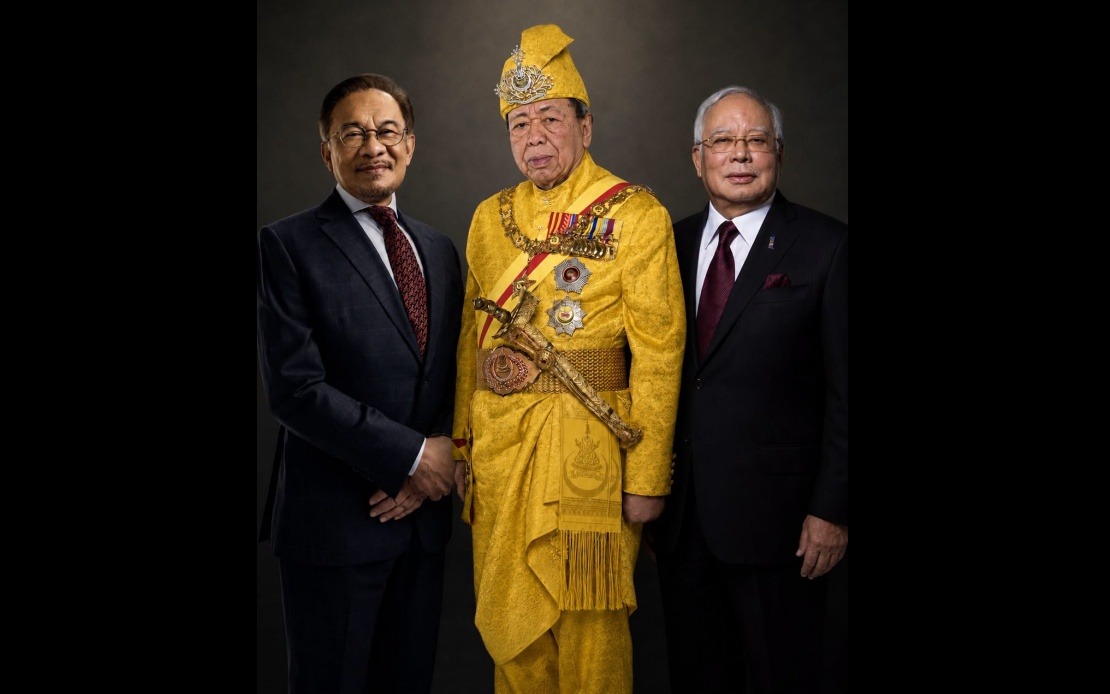
The Sultan of Selangor, Sultan Sharafuddin Idris Shah, has publicly recognised Prime Minister Datuk Seri Anwar Ibrahim's commitment to completing the Shah Alam Line LRT3, which commenced operations on Monday, marking a significant milestone for the state's transport infrastructure. In his statement, the Sultan acknowledged not only the project's completion but also the additional measures undertaken by the current administration to enhance the development's scope and public benefit.
When assuming his dual role as Prime Minister and Finance Minister in 2022, Anwar moved swiftly to reverse a controversial decision made by the previous government. Five stations that had been eliminated from the original plan were reinstated, restoring connectivity to communities that would have been overlooked. Beyond simply reopening these stations, the administration also proposed developing affordable housing near LRT3 stations, recognising that transport infrastructure's success depends on accessible residential options for those who will use it daily.
The Sultan's appreciation extends to his firm directive that no further obstacles should impede the project's progress—a statement reflecting his determination to see the initiative completed without further political or administrative complications. This intervention underscores the royal institution's role in maintaining continuity on major infrastructure projects that transcend electoral cycles and change-of-government transitions, a particularly important function in Malaysia's constitutional monarchy.
The genesis of the LRT3 project lay in practical concerns rather than prestige-driven ambitions. The Sultan had received numerous complaints from residents, particularly housewives who bore witness to their husbands' gruelling commutes home during peak traffic hours. This public grievance translated into a specific policy response: the region needed a dedicated rail connection linking Klang, Shah Alam, and Kuala Lumpur. At the time, only two bridges spanned the Klang River, creating severe bottlenecks during rush periods and limiting the area's economic potential.
Former Prime Minister Datuk Seri Najib Tun Razak responded to the Sultan's advocacy by authorising the rail link's development. As an interim measure while the LRT3 was under construction, his administration abolished the Batu Tiga and Sungai Rasau toll plazas in 2018, attempting to provide immediate traffic relief. However, the project would encounter substantial headwinds. Following the 2018 general election, the LRT3 faced a 18-month delay as the new government reviewed and restructured earlier commitments. The subsequent COVID-19 pandemic imposed an additional 19-month setback that lasted until 2021, further disrupting progress.
During these extended delays, cost-cutting measures significantly altered the project's specifications. Station dimensions were reduced, the fleet of train coaches was diminished, and crucially, five proposed stations along the planned route were axed entirely. These modifications, while necessary to maintain financial viability, threatened to undermine the transport link's effectiveness in serving outlying communities. The Sultan's successful advocacy for reinstating these stations therefore represented a partial restoration of the project's original ambitions, even if not all design elements could be recovered.
What the Sultan emphasises most forcefully is that the LRT3 was never conceived as a vanity project designed to burnish any administration's legacy. Rather, it represents an essential public service initiative grounded in genuine community needs and pragmatic urban planning. This distinction matters considerably in Malaysia's political context, where major infrastructure projects can become flashpoints for partisan credit-claiming and divisive debates about who deserves acknowledgment for achievements spanning multiple electoral terms.
Indeed, the Sultan took the unusual step of explicitly requesting that no single individual or political party claim exclusive responsibility for the LRT3's realisation. Such a statement, while diplomatically framed, carries underlying significance: it reflects the royal institution's concern about infrastructure becoming weaponised in partisan battles and its commitment to emphasising continuity of governance across different administrations. The LRT3, in the Sultan's framing, represents the product of sustained planning, institutional commitment, and cross-party cooperation spanning more than a decade—a narrative that transcends individual leaders.
The operational launch of the LRT3 carries substantial implications for Selangor's broader development trajectory. The region encompassing Klang, Shah Alam, Petaling Jaya, and their connections to Kuala Lumpur constitutes one of Malaysia's most economically vital zones, yet transportation constraints have historically limited its potential. The Sultan's hopes for the new line centre on reducing chronic traffic congestion while offering commuters a faster, more comfortable alternative to private vehicles. Beyond immediate convenience, he envisions the project spurring economic development and improving quality of life across the corridor.
Operationally, the Sultan has also emphasised the critical importance of continuous, reliable maintenance by Prasarana Malaysia Bhd, the transport operator responsible for the line. This focus reflects a mature understanding that infrastructure's social benefit depends not merely on construction completion but on sustained operational excellence. Malaysians have witnessed examples of transport systems whose initial promise diminished through inadequate maintenance and service degradation, making the Sultan's emphasis on this point particularly relevant.
Looking forward, the LRT3's success will likely shape perceptions of whether Malaysia's governance institutions can deliver complex, long-term infrastructure projects despite political changes and external crises. The project demonstrates that some level of bipartisan commitment can survive electoral transitions, though not without costs and modifications. Its completion also suggests that royal advocacy, exercised judiciously, can help maintain policy continuity on matters of genuine public importance.
For Malaysian readers and policymakers, the LRT3's journey offers lessons about infrastructure governance. The project's delivery, despite substantial obstacles, required multiple administrations to subordinate partisan concerns to public interest, a standard that remains frustratingly inconsistent across Malaysian governance. The Sultan's framing of the achievement—as a multi-generational effort rather than any leader's individual accomplishment—provides a useful model for how major projects might be discussed and delivered with less toxic partisanship. Whether future projects will benefit from this precedent remains an open question in Malaysia's evolving political landscape.

