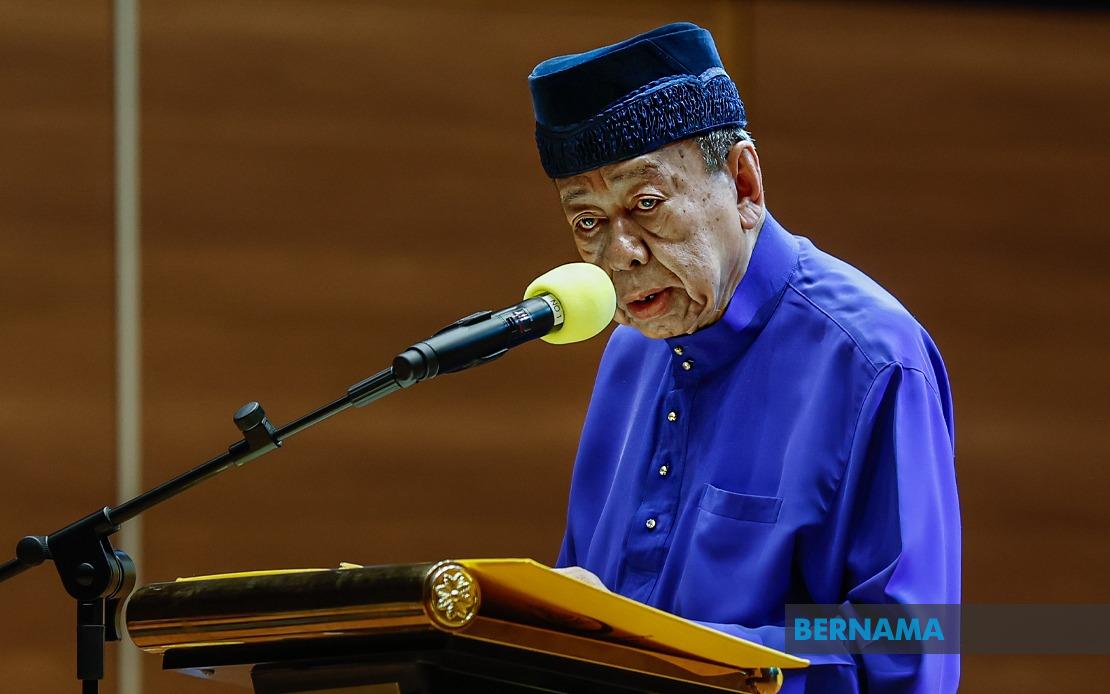
Sultan Sharafuddin Idris Shah has called on Universiti Teknologi MARA (UiTM) to maintain academic programmes that respond dynamically to shifting global economic realities, ensuring its graduates possess the skills and competitiveness demanded by contemporary labour markets. Speaking at the UiTM Royal Address 2026 in Shah Alam, the Selangor ruler articulated a vision that bridges institutional legacy with future relevance, stressing that academic excellence must evolve hand in hand with the institution's foundational commitment to Bumiputera advancement.
The Sultan identified critical fields requiring particular attention within UiTM's curriculum architecture, singling out digital technology, artificial intelligence, science, engineering, medicine, finance, accounting, law, and the creative industries as domains that will substantially shape Malaysia's economic trajectory. His Royal Highness positioned these sectors not as isolated specialisations but as interconnected pillars of national competitiveness, implicitly acknowledging Southeast Asia's intensifying competition for talent and investment in knowledge-intensive industries. The emphasis reflects broader regional trends where countries across ASEAN are racing to develop workforces capable of competing in digitally transformed economies.
Central to the Sultan's message was a reframing of the contemporary educational challenge in Malaysia. He contrasted the historical struggle for university access with today's imperative: ensuring graduates do not merely secure employment but excel and lead within an increasingly demanding global arena. This distinction carries significant implications for how Malaysian institutions approach pedagogical strategy and curriculum design, suggesting that quantity of graduates matters far less than their capacity to drive innovation and secure leadership positions in multinational and regional enterprises.
While reaffirming UiTM's constitutional mandate to empower Malays and Bumiputeras—grounded in Article 153 of the Federal Constitution and formalised through the Universiti Teknologi MARA Act 1976—the Sultan simultaneously cautioned against complacency or intellectual insularity. His Royal Highness argued that honouring this mandate requires unflinching acknowledgement of institutional weaknesses and a commitment to continuous improvement rather than satisfaction with historical achievements. This nuanced position attempts to reconcile constitutional protections with meritocratic demands of contemporary knowledge economies, a tension that has periodically generated public debate in Malaysian higher education policy.
The Sultan highlighted UiTM's demonstrable success in producing Bumiputera professionals who have risen to prominence in corporate, governmental, and international spheres, presenting these achievements as empirical validation of the institution's model. However, he argued that future success demands a qualitative shift from producing professional job-holders to cultivating entrepreneurs, innovators, and business proprietors capable of generating rather than merely occupying employment. This distinction addresses a structural challenge in Southeast Asian economies, where professional workforces often remain dependent on multinational corporations and government sectors rather than driving indigenous enterprise creation.
Industry engagement emerged as another critical concern in the Sultan's address. He cautioned against the phenomenon of graduates possessing formal qualifications but lacking practical competencies, confidence, linguistic proficiency, and critical thinking capacity demanded by employers. This critique resonates across Malaysian higher education, where recurring employer feedback suggests a gap between academic credentials and workplace readiness. The Sultan's concern implies that UiTM must fundamentally strengthen collaborative relationships with industry partners throughout curriculum development and delivery, moving beyond token internships toward deeply integrated, practically oriented learning experiences.
Language proficiency received particular emphasis, with the Sultan urging every UiTM student and graduate to achieve competency in at least two foreign languages beyond Bahasa Malaysia. This recommendation reflects the multilingual reality of regional business environments and recognises that English alone—while essential—may prove insufficient for graduates competing for positions across ASEAN and beyond. Mandarin, for instance, has become increasingly valuable in Southeast Asian commerce, while Arabic, Spanish, and other languages open distinct professional pathways.
The Sultan's reaffirmation of UiTM's constitutional foundation attempted to position debate about the institution's identity within a legal and historical framework rather than merely administrative discretion. By anchoring UiTM's Bumiputera mandate within Article 153 of the Federal Constitution, he argued that any fundamental restructuring of the institution's purpose cannot be treated as routine policy adjustment but requires constitutional consideration. This framing proved significant given periodic discussions about widening access to UiTM among non-Bumiputera communities.
Simultaneously, the Sultan stressed that defending UiTM's constitutional role does not require denying educational opportunities to other Malaysian citizens, noting that the country's higher education system encompasses diverse institutions serving all communities. This balancing statement acknowledges persistent sensitivities around Bumiputera education privileges while suggesting they need not preclude broader access to higher learning across Malaysia's pluralistic society. The Sultan framed UiTM's original mandate as responsive to historical socioeconomic disparities, implying that its continued relevance depends on whether such gaps remain unresolved.
For Malaysian policymakers and regional observers, the Sultan's address encapsulates tensions inherent in positioning national institutions within globalised knowledge economies while honouring constitutional commitments to specific communities. His emphasis on continuous academic evolution while maintaining institutional mission suggests a model where relevance and tradition need not conflict, but rather can be mutually reinforcing when pursued thoughtfully. The implications extend beyond UiTM, offering a framework for considering how Southeast Asian universities generally can serve both nation-building agendas and international competitiveness imperatives in an increasingly complex regional landscape.

