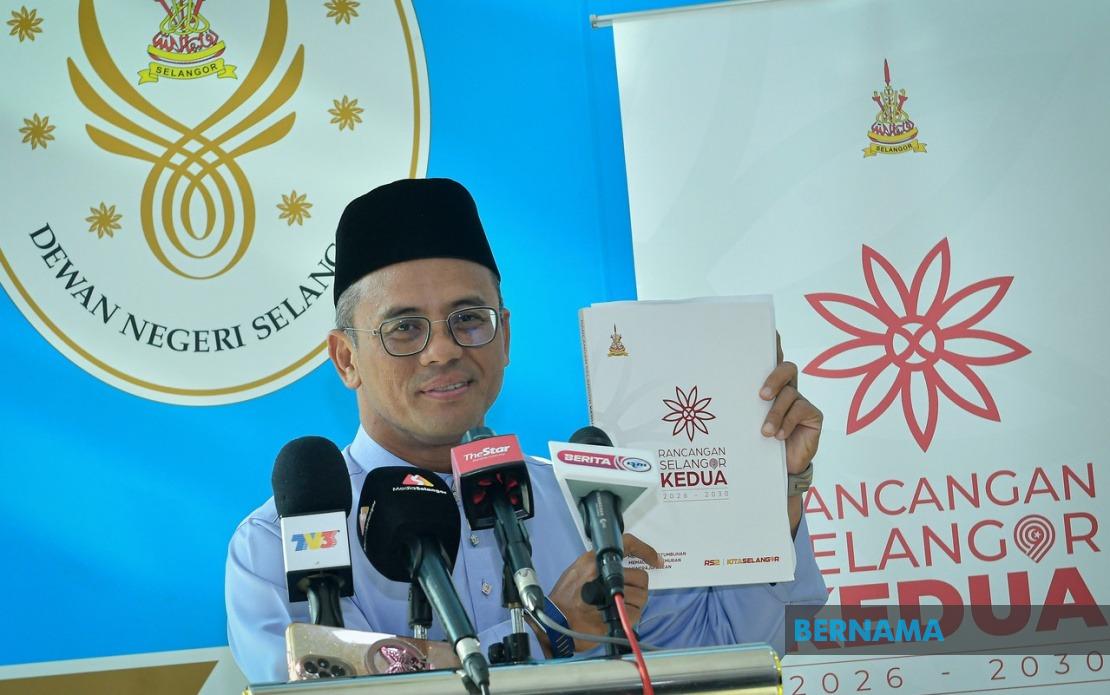
Selangor's Menteri Besar Datuk Seri Amirudin Shari has set an ambitious performance benchmark for the state's local authorities, declaring that all 41 municipal and municipal corporations must achieve and sustain a 95 per cent score under the PBT Star Rating System by the end of the decade. This sweeping directive, unveiled during tabling of the Second Selangor Plan (RS-2) at the state legislature, signals a determined push to standardise service quality across urban and suburban councils rather than allowing excellence to concentrate in wealthier or more developed municipalities.
The emphasis on uniform performance represents a philosophical shift in local governance philosophy. Rather than accepting a two-tier system where certain PBTs deliver premium services whilst others lag, the state government is using measurable metrics to enforce accountability. This approach recognises that Selangor residents in smaller towns and fringe areas deserve equivalent standards regardless of their locality's economic profile or political complexion. The 95 per cent threshold—neither unattainable nor lenient—reflects realistic aspirational governance calibrated to drive genuine improvement without demoralising underperforming councils.
Centrally positioned within this modernisation agenda is an aggressive digitalisation roadmap targeting 85 per cent End-to-End Digital Government Service Sharing by 2030. This metric encompasses not merely the digitisation of forms or filing systems, but comprehensive architectural redesign where data flows seamlessly between agencies, residents submit documents once and access multiple services through unified portals, and administrative decision-making accelerates through automated workflows. For Malaysian residents accustomed to fragmented government service delivery, where separate visits to different counters remain routine, this transformation would represent meaningful quality-of-life improvement.
Amirudin framed these performance demands within a broader state imperative: ensuring that public service excellence becomes democratised across Selangor rather than remaining concentrated geographically or administratively. The Menteri Besar specifically directed local authorities to treat all feedback channels—social media complaints, direct submissions, online portals—with equivalent seriousness and responsiveness. This instruction tacitly acknowledges how digital communication has shifted constituent expectations; delays in addressing grievances posted publicly now carry reputational consequences that demand institutional response.
Underlying this service delivery agenda sits a more fundamental fiscal anxiety. Amirudin candidly identified that Selangor's revenue structure remains dangerously dependent on land-related income streams—premiums and rental fees—which currently comprise approximately 75 per cent of state coffers. This concentration represents what he termed a structural risk, rendering the state vulnerable to property market downturns, regulatory changes affecting land availability, or shifts in development patterns. The Second Selangor Plan therefore embraces revenue diversification as economically imperative, not merely desirable.
To achieve this fiscal rebalancing, the Menteri Besar outlined strategic deployment of government-linked companies and closer private sector partnership through innovative financing mechanisms. Critically, the state plans establishing a fully integrated State Investment Holding company designed to consolidate GLCs currently operating semi-independently, generate superior returns through coordinated capital deployment, and eliminate duplicative administrative expenses. This institutional restructuring acknowledges that state entities often pursue contradictory objectives, waste capital through redundant functions, and fail to leverage collective bargaining power or market positioning.
The alignment of GLCs with state strategic priorities responds to persistent inefficiency in Malaysian state-owned enterprise governance. Currently, subsidiary companies operating under different holding structures frequently duplicate services—multiple GLCs handling real estate, utilities, or technology services—whilst pursuing incompatible targets and maintaining parallel administrative hierarchies. By consolidating decision-making and performance accountability, Selangor aims transforming GLCs from politically-patronised employment vehicles into genuinely productive engines generating returns that fund public services rather than depleting the revenue base.
These interconnected initiatives—service delivery standardisation, digital transformation, revenue diversification, and GLC restructuring—constitute an integrated approach to state governance modernisation. Rather than addressing each dimension separately, the Second Selangor Plan treats them as mutually reinforcing. Enhanced digital services reduce transaction costs for councils, enabling greater efficiency even with uniform service standards; revenue diversification diminishes political pressure to monetise land aggressively through sprawling development; improved GLC performance generates investment returns funding better local authority budgets.
For Malaysian observers, the Selangor initiative carries broader national implications. As the wealthiest and most urbanised state, Selangor functions as a governance laboratory where policy innovations subsequently diffuse to other states or federal policy-making. If the Second Selangor Plan successfully drives local authority performance improvements and revenue diversification, other states facing similar fiscal pressures may adopt comparable approaches. Conversely, if implementation stumbles—councils resist digitalisation, GLCs prove resistant to integration, land-income dependency persists—the failure would signal that structural fiscal reform remains politically infeasible across Malaysian state governance.
The timeline to 2030 provides reasonable implementation duration whilst maintaining urgency. Eight-year planning horizons permit institutional behaviour change, technology infrastructure deployment, and organisational culture reorientation without imposing impossible immediate deadlines. However, the target's mathematical precision—95 per cent, 85 per cent—requires that performance metrics remain technically robust and politically insulated from manipulation. Malaysian experience with performance indices suggests consistent measurement standards and transparent reporting frameworks represent critical implementation requirements easily compromised by administrative convenience.
Amirudin's emphasis on principle-guided governance—including specific instruction that local authorities grant serious attention to all complaints irrespective of channel—suggests recognition that technical performance improvement requires underlying cultural transformation. Councils cannot achieve service excellence through procedural compliance alone; they must internalise constituent service orientation as institutional priority. This cultural dimension proves considerably more difficult to mandate than establishing digital systems or consolidating companies, yet ultimately determines whether these structural reforms generate meaningful public benefit or merely represent administrative reshuffling.
The Second Selangor Plan therefore represents ambitious state governance modernisation spanning service delivery standardisation, technological transformation, fiscal restructuring, and organisational consolidation. Success would demonstrate that Malaysian state governments can proactively modernise institutions and diversify revenue bases without awaiting federal intervention. Implementation challenges will likely emerge—political resistance from councils reluctant to cede autonomy, technological complications in integrating legacy systems, persistent land-income dependency—yet the framework itself addresses core governance deficiencies long recognised but rarely tackled systematically.

