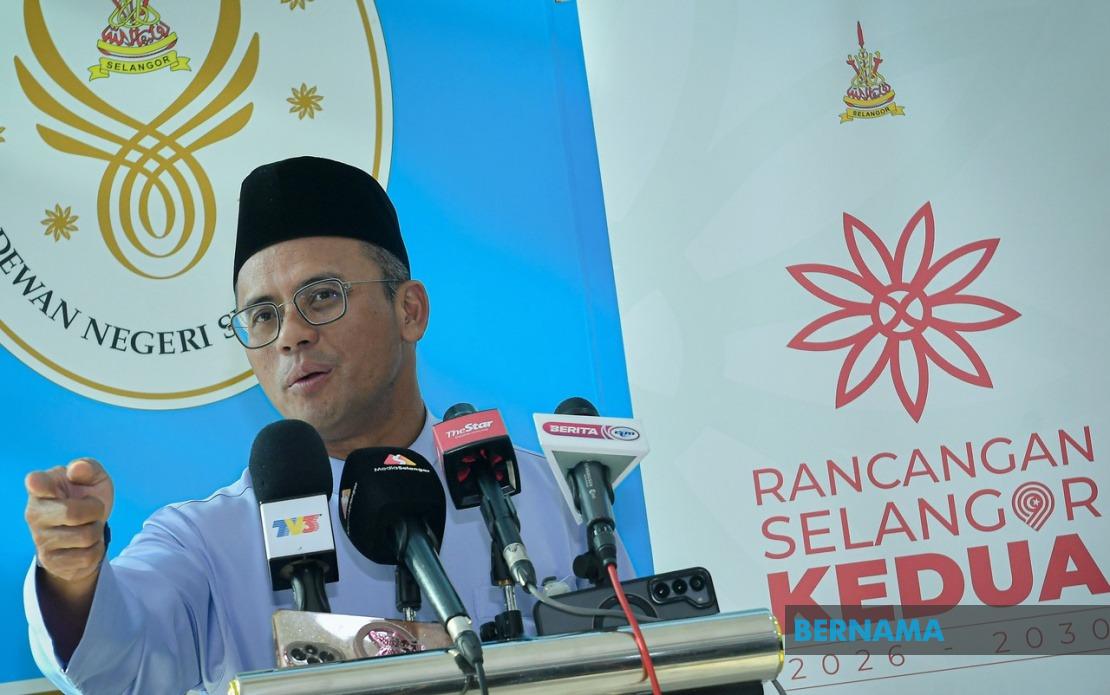
Selangor's government is doubling down on its affordable housing ambitions, committing to deliver 200,000 homes as part of the RS-2 initiative aimed at broadening homeownership among the state's growing population. Menteri Besar Datuk Seri Amirudin Shari revealed the comprehensive strategy during the recent state legislative assembly sitting, signalling the administration's determination to address the persistent housing affordability crisis that has shaped electoral politics and policy debates across the Klang Valley and beyond.
The trajectory of the programme demonstrates measurable momentum. To date, 64,188 units have already been completed and occupied, while construction continues on another 69,014 homes, collectively representing 133,202 units delivered or in progress. This substantial foundation positions the initiative as one of the region's most substantial affordable housing deployments, rivalling or exceeding comparable schemes in other Malaysian states and offering a model that increasingly draws interest from housing policy observers across Southeast Asia.
Beyond simply constructing homes, the Selangor government has engineered a progressive rental-to-ownership mechanism designed to lower barriers for lower-income households. Under this approach, 30 per cent of monthly rental payments are systematically accumulated by the Selangor Housing and Property Board (LPHS) and held in trust, eventually returned to tenants as a housing deposit once they reach a position to purchase. This mechanism transforms rent into equity, addressing a fundamental structural challenge in affordable housing markets where renters lack pathways to asset accumulation.
The state has also prioritised establishing a comprehensive welfare assessment framework that transcends simple housing provision. A new statistical unit within the state government will develop what officials describe as an index to measure the real-world effectiveness of household assistance and support programmes. Rather than assuming completion automatically translates to resident welfare, the framework mandates systematic evaluations at 12 and 24-month intervals, tracking how households progress after receiving assistance and identifying which interventions produce lasting improvements in living standards.
Recognising that housing without connectivity becomes suburban isolation, the administration has embedded transit-oriented principles throughout the scheme. Public transport frequency to LRT and MRT stations will be increased, directly improving accessibility for residents in new developments and reducing commuting friction. This aligns with broader global urban planning trends emphasising the integration of housing, transit, and walkability rather than reproducing the car-dependent sprawl that characterised earlier Malaysian suburban development.
Selangor's commitment to creating walkable communities extends to infrastructure details often overlooked in housing announcements. The state plans to construct covered walkways at every transit station, a climate-adaptive design choice particularly relevant in Malaysia's tropical environment where unshaded pedestrian routes become impassable during afternoon downpours. This attention to livability features distinguishes the RS-2 approach from purely volumetric housing targets that prioritise unit numbers over resident experience.
Every Rumah Selangorku Harapan and Rumah Selangorku Idaman development will incorporate bus stops directly within residential areas, moving beyond reliance on distant main transit corridors. This decentralised approach requires sophisticated planning that identifies micro-mobility bottlenecks within each neighbourhood. The government intends to leverage technology and data analytics to map traffic patterns, identify high-volume pedestrian areas, and pinpoint gathering points where small bus stops would generate genuine utility rather than serving as symbolic infrastructure.
The convergence of these elements—volume, affordability mechanisms, welfare tracking, transit access, and walkability—represents a departure from earlier housing schemes often criticised for delivering units without attending to broader livability questions. Selangor's RS-2 explicitly attempts to construct not merely homes but functioning neighbourhoods where residents can work, commute, and access services without prohibitive transport costs or time burdens.
For Malaysian policymakers beyond Selangor, this programme offers instructive lessons. The rental-to-ownership mechanism provides a scalable alternative to outright subsidy models that strain government budgets. The welfare tracking framework addresses a persistent gap in Malaysian housing policy—the tendency to measure success through units delivered rather than resident outcomes. The transit integration demonstrates how housing, urban planning, and transport policy function most effectively when coordinated rather than siloed across separate departments.
The 200,000-unit target itself warrants context. Selangor's population growth continues outpacing supply across most price segments, meaning even completing the full programme would address only a portion of demand among lower-income households. Nonetheless, the initiative represents the state's largest coordinated response to housing affordability, potentially influencing how other state governments approach their own housing challenges. As Malaysia's property market confronts persistent concerns about affordability and inclusivity, Selangor's willingness to experiment with integrated solutions—combining construction, finance, welfare assessment, and urban design—suggests the state may be positioning itself as a testing ground for more comprehensive housing policy approaches across the region.

