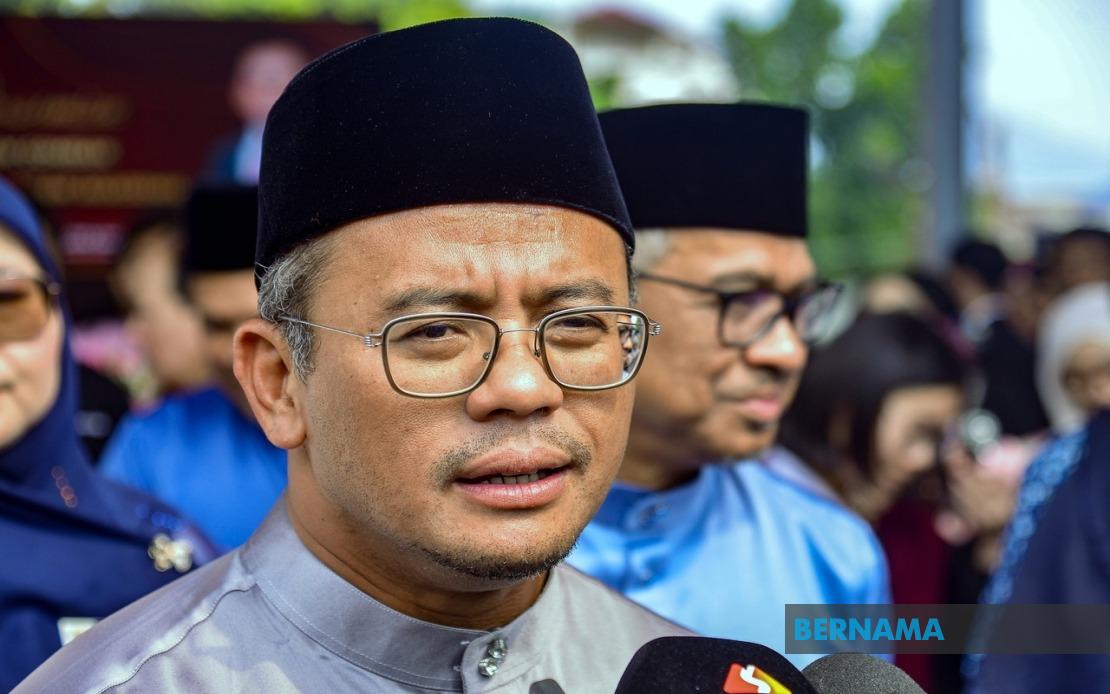
The Selangor government has signalled a significant reorientation of its fiscal priorities towards education in the coming year, with Menteri Besar Datuk Seri Amirudin Shari unveiling plans to substantially revamp how the state approaches student development and academic performance. Announced at the opening of Gombak Form Six College and the 2026 Academic Excellence Awards ceremony, the 2027 State Budget will direct considerable resources into two interconnected areas: elevating the foundational support mechanisms that allow students to thrive academically, and dramatically expanding access to Science, Technology, Engineering and Mathematics programmes that increasingly define career pathways in the modern economy.
The scope of this educational pivot becomes apparent when considering the scale of the student population under Selangor's purview. With approximately one million students spread across the state's educational institutions, any systemic improvement in academic outcomes or skills development carries implications that ripple far beyond individual schools or classrooms. Amirudin framed this demographic reality as both a challenge and an opportunity, emphasising that when such a large cohort achieves excellence, the consequences for societal development and national competitiveness become substantial. This reasoning positions education spending not merely as a social service but as an investment in human capital formation that directly strengthens economic prospects.
The Menteri Besar's articulation of the budget strategy reveals a deliberate attempt to interweave academic rigour with practical contribution to community. Rather than treating STEM participation as an isolated curricular choice, the state government envisions these disciplines as avenues through which young people can meaningfully engage with their surroundings and address tangible local needs. This approach reflects growing recognition across Southeast Asia that technical and scientific literacy must combine with social consciousness to produce graduates capable of solving real-world problems rather than merely accumulating credentials.
Infrastructural enhancement represents a foundational component of these ambitions, though the government has adopted a methodical approach to planning. Rather than hastily committing funds, Amirudin indicated that Selangor is currently undertaking detailed information gathering to establish precise requirements across the school system. The timeline for finalising allocations has been set for September or October, suggesting that this process of assessment and consultation will extend through the coming weeks. This deliberate pace contrasts sharply with the urgency surrounding educational reform rhetoric, hinting at potential constraints—whether budgetary, logistical, or bureaucratic—that shape the pace of implementation.
A particularly innovative component of Selangor's educational strategy emerges through the Himpunan Pelajar Tingkatan Enam Selangor, commonly known as HIPSTERS, a support platform designed to prepare Form Six students for the transition to higher education. The programme extends beyond academic mentoring to provide tangible material support through book vouchers and complimentary internet data—recognising that digital access and learning resources remain unevenly distributed across socioeconomic groups. In 2026 alone, ten thousand Form Six students benefited from book vouchers, representing a substantial expansion from earlier iterations when such benefits primarily extended to university-level students.
The expansion of HIPSTERS downward to Form Six cohorts signals a strategic shift in how Selangor allocates educational benefits across age groups. Traditionally, state support for educational needs has concentrated on tertiary education, often leaving secondary students without equivalent material assistance. By frontloading support to Form Six students—the critical juncture at which academic trajectories sharply diverge based on performance and institutional quality—Selangor attempts to intervene at a point where such assistance can meaningfully influence educational pathways. This preventative logic suggests recognition that support later in the educational pipeline proves less effective than intervention during formative secondary years.
Amirudin signalled receptiveness to further expanding HIPSTERS coverage to additional Form Six schools, contingent on demonstrated demand and evolving requirements across the state's educational landscape. This conditional openness suggests that while the government views the programme as successful, resource limitations and the need to assess genuine take-up and impact will constrain rapid scaling. Such caution reflects prudent fiscal management, yet it also potentially signals constraints on the budget available for educational initiatives—a tension that often defines education policy in Malaysian states despite rhetorical commitments to reform.
The emphasis on examination excellence alongside STEM participation reveals an underlying assumption about educational quality that remains prevalent across Malaysian society: that measurable academic achievement through standardised examinations remains the primary metric of educational success. While this focus ensures accountability and provides clear benchmarks for progress, it may inadvertently perpetuate educational paradigms that privilege conventional academic disciplines over emerging technical fields or alternative approaches to learning. The challenge facing Selangor will involve advancing STEM participation without allowing examination pressure to overwhelm exploration and genuine curiosity in scientific and technological domains.
From a broader Southeast Asian perspective, Selangor's educational strategy reflects regional trends towards upskilling workforces in response to technological disruption and competition from lower-cost manufacturing economies. Malaysia's positioning as a regional economic hub increasingly depends on developing human capital capable of competing in knowledge-intensive sectors. By directing state resources towards STEM and academic excellence, Selangor positions itself to contribute disproportionately to the talent pipeline that sustains national economic competitiveness, particularly in sectors like semiconductor manufacturing, digital services, and renewable energy development that increasingly define Malaysia's industrial trajectory.
The implications for Malaysian parents and students extend beyond Selangor's borders, as the state's educational policies often influence approaches adopted elsewhere. A successful model for integrating STEM with academic rigour while providing material support to disadvantaged students could offer a template for other states managing their own educational challenges. Conversely, implementation obstacles or budgetary constraints that hinder Selangor's plans may illuminate practical challenges that other state governments must navigate when attempting similar reforms.
Ultimately, the 2027 State Budget announcement represents Selangor's attempt to position education as central to its development strategy, recognising that one million students represent both immediate responsibility and future potential. The success of these initiatives will depend not merely on budgetary allocation but on effective implementation, coordination between state education departments and school administrations, and sustained political commitment as competing priorities inevitably emerge during the budget cycle.

